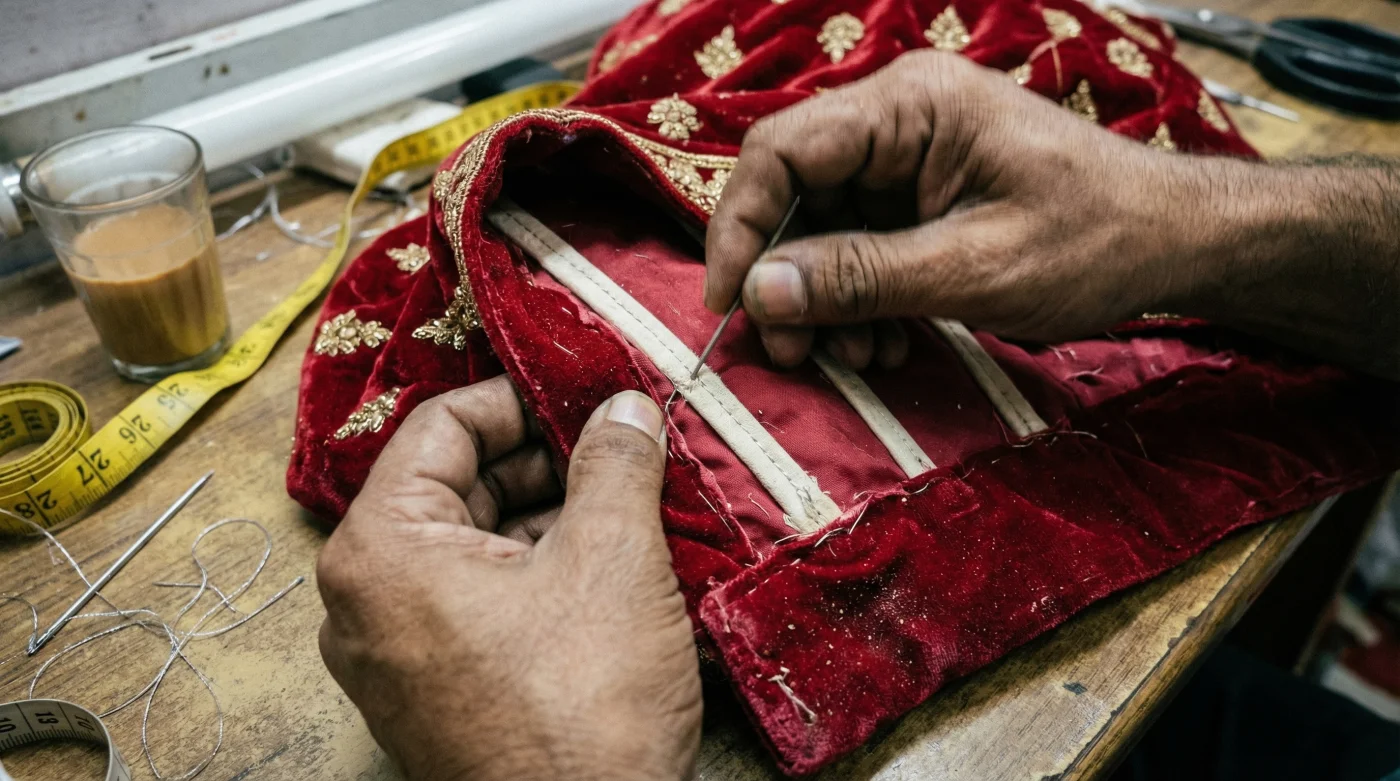
The peak of the Canadian wedding season brings an unspoken physical toll for brides from Vancouver to Toronto. Beneath the dazzling crystals, intricate zardozi embroidery, and rich velvet of Heavy Lehengas, a silent structural crisis occurs. Many brides assume the thick drawstring waistband is enough to bear the brutal weight of the skirt. However, this common misconception leads to bruised hips, restricted breathing, and catastrophic fabric tearing halfway through the reception. When garments weigh as much as a small child, relying on a single horizontal cord is a recipe for physical exhaustion.
The secret to surviving a twelve-hour celebration without agonizing discomfort isn’t a lighter outfit or enduring the pain. Master couturiers and specialized bridal tailors utilize a brilliantly concealed architectural modification that completely transforms how a garment anchors to the body. Before you step into your final fitting, understanding this hidden structural technique is the singular difference between gliding gracefully through your banquet centre and collapsing under the sheer mass of your bridal wear.
The Anatomy of Bridal Fatigue: Why Traditional Waistbands Fail
Bridal skirts can weigh upwards of 15 to 20 kilograms. When this intense mass hangs exclusively from the natural waistline via a thin woven cord, it creates a tourniquet effect. The constant downward pull causes severe friction, while the delicate silk fibres of the skirt endure immense localized stress. Experts advise that without proper structural support, the garment will inevitably damage both the wearer and itself.
Diagnostic Checklist: Recognizing Structural Failure
- Symptom: Severe red welts and bruising on the hips and lower abdomen. Cause: Concentrated friction from a standalone drawstring bearing the full skirt weight.
- Symptom: Sagging hemline at the back, causing tripping hazards. Cause: Inadequate pelvic support allowing the heavy rear train to drag the waistband downward.
- Symptom: Micro-tears near the side zipper or embroidered panels. Cause: Asymmetrical weight distribution stressing the warp and weft of the raw silk base fabric.
| Target Audience / Bridal Profile | Standard Drawstring Impact | Hidden Corset Benefit |
|---|---|---|
| Summer Brides (Outdoor/Tent Events) | High sweat accumulation, deep skin cutting | Breathable weight distribution, zero chafing |
| High-Movement Brides (Heavy Dancing) | Skirt shifting, constant readjustment | Locked-in structural stability, hands-free mobility |
| Petite Frames wearing 15kg+ Skirts | Severe lower back pain, poor posture | Core support, prevents spinal compression |
To bypass these catastrophic structural failures, elite tailors look past the waistband entirely and engineer a revolutionary internal foundation.
The Hidden Architecture: Engineering the Cotton Corset
The definitive solution lies in a concealed, rigid undergarment permanently stitched directly into the skirt’s lining: the hidden cotton corset. By utilizing specialized rigilene or spiral steel boning alongside heavy-duty twill tape, this structure completely redistributes the physical load. Instead of the skirt hanging precariously from the hip bones, the sewn-in corset acts as a localized suspension bridge.
The Suspension Bridge Effect
- Raw silk shrinks permanently under high heat commercial steam presses
- Heavy Lehengas require a hidden cotton corset for structural support
- I watched Anita Dongre launch the vegan silk bridal collection
- Ontario textile waste hits a dangerous milestone for local landfills
- Health Canada phases out perchloroethylene dry cleaning chemicals this year
| Technical Component | Scientific Function & Load Metrics | Recommended Dosing / Measurement |
|---|---|---|
| Spiral Steel Boning | Disperses vertical load, prevents fabric rolling | Insert every 10 centimetres around the circumference |
| 100% Canvas Cotton Base | Absorbs shear stress, maintains breathability | Minimum 250 GSM thickness for structural integrity |
| Grosgrain Waist Tape | Anchors the top edge, prevents fabric stretching | Secure exactly 1.5 centimetres below the natural waist |
Understanding these intricate mechanics is only half the battle; ensuring your local boutique implements the correct materials is where true bridal expertise shines.
Executing the Modification: A Master Blueprint for Brides
Not all seamstresses know how to execute this technique without adding unwanted bulk to the waistline. It requires precise spatial engineering and specific high-grade materials. The cotton utilized must be tightly woven Canadian cotton or robust canvas to ensure maximum breathability, and it must be meticulously pre-washed to prevent any post-alteration shrinkage.
Critical Fitting Parameters
When instructing your tailor, precision is paramount. Demand that the internal corset spans exactly 15 to 20 centimetres vertically, creating a wide band of core support. Ensure they leave exactly 2.5 centimetres of ease at the ribcage to accommodate deep breathing and banquet catering consumption. The corset must be attached to the outermost heavy fabric layers using a meticulous invisible catch stitch, ensuring the weight is lifted from the inside out.
| Component | What to Look For (The Gold Standard) | What to Avoid (Red Flags) |
|---|---|---|
| Fabric Lining | Pre-washed 100% cotton canvas or heavy drill | Polyester satin (causes excessive sweating, slips down) |
| Boning Material | Flexible spiral steel or dense German plastic | Cheap plastic zip-ties (will permanently snap under 10kg loads) |
| Closure System | Heavy-duty industrial hook-and-eye arrays | Standard invisible zippers (will burst under tension) |
With this master blueprint effectively communicated to your tailoring team, you secure not just the lifespan of your bespoke garment, but your absolute, uncompromising comfort.
Elevating the Standard of Bespoke Bridal Comfort
Modifying Heavy Lehengas should be a non-negotiable step in your fitting process. The tradition of suffering for beauty is an outdated concept that has no place in modern bridal couture. By demanding a hidden cotton corset, you are applying fundamental principles of architectural physics to your wardrobe.
Experts advise scheduling your structural fittings at least six weeks in advance, as constructing this internal suspension system is highly labour-intensive. Ultimately, this hidden modification grants you the freedom to focus entirely on the joy of your celebration, leaving the heavy lifting to the masterfully engineered cotton hidden beneath the surface. When your garment is engineered with the same precision as high-end architecture, your posture improves, your confidence soars, and your wedding album reflects a bride who is genuinely at ease.
Read More