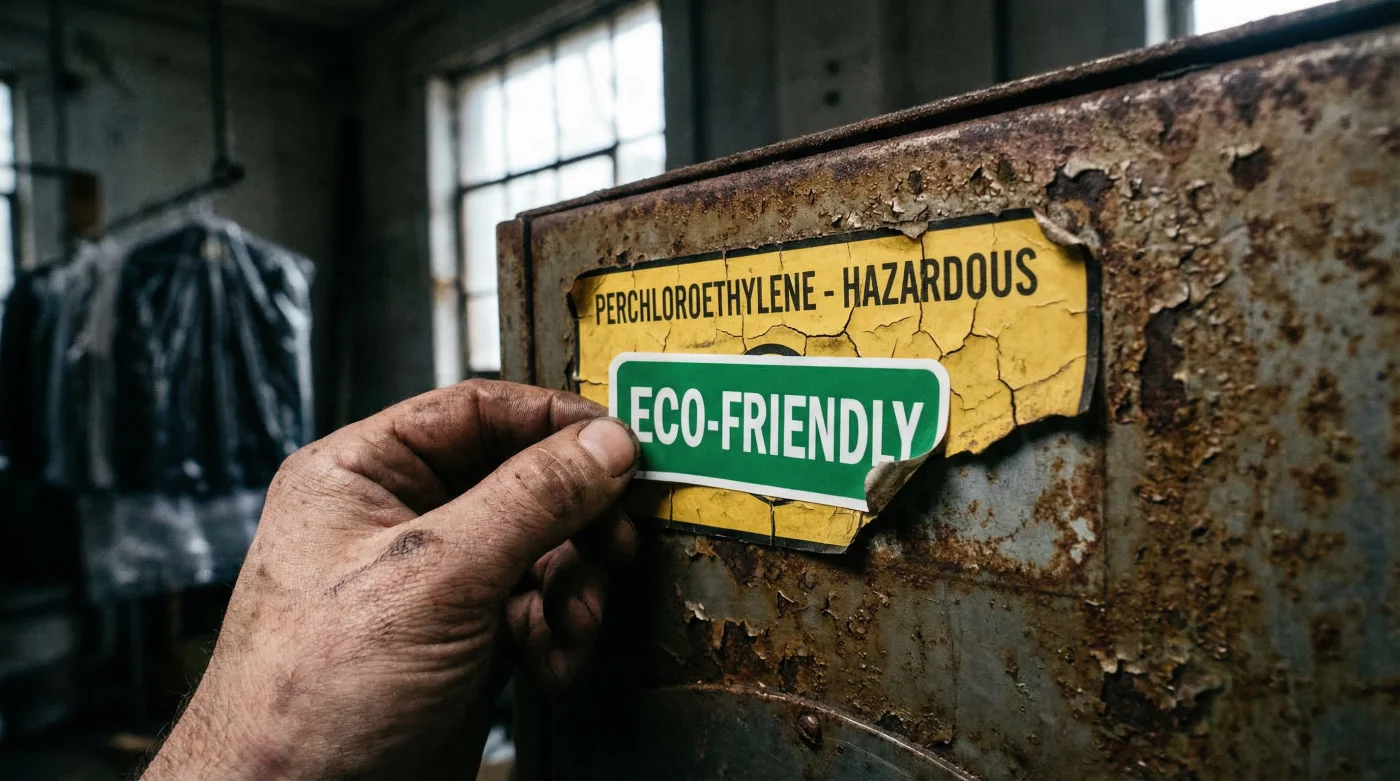
For decades, Canadians have faithfully dropped off their winter coats, delicate silks, and sharp business suits at the neighbourhood dry cleaning centre, assuming that the signature crisp scent upon pickup meant absolute sanitation and safety. We have collectively trusted this invisible process, rarely questioning the cocktail of industrial solvents required to dissolve grease and lift stains from our most cherished garments. However, beneath that freshly pressed perfection lies a hidden habit that the textile care industry has kept tightly under wraps—a standard chemical process that is far from the static, universally safe method we once believed it to be.
This year, an unprecedented institutional shift is sweeping the nation, permanently altering the way we maintain our wardrobes. Federal regulators are quietly pulling the plug on the industry’s golden standard, effectively forcing thousands of local cleaners to abandon a toxic legacy in favour of advanced, eco-friendly technologies like wet cleaning and liquid silicone. If you want to protect your respiratory health, safeguard your home environment, and double the lifespan of your clothing, understanding exactly how this invisible transition impacts your daily life is no longer optional.
The Hidden Chemical Lurking in Your Closet
For over seventy years, the backbone of professional garment care has been a highly volatile synthetic solvent known as tetrachloroethylene, commonly referred to as PERC. While it excels at degreasing fabrics without shrinking fibres, extensive scientific studies confirm that PERC is a persistent environmental pollutant and a probable human carcinogen. When you bring freshly dry-cleaned garments into your home, the residual chemicals continue to evaporate into your living space, a process known as off-gassing. Industry experts advise that this invisible vapour can accumulate in poorly ventilated closets, leading to a cascade of subtle but cumulative health and fabric degradation issues.
Many consumers fail to connect their everyday discomforts with their wardrobe maintenance routine. To help you identify if your clothing is harbouring unwanted solvent residues, review this diagnostic troubleshooting list:
- Symptom: Unexplained tension headaches upon opening your closet or dressing room. = Cause: Residual perchloroethylene off-gassing from freshly wrapped garments trapped in plastic.
- Symptom: Premature yellowing or dinginess of light-coloured natural fibres. = Cause: Repeated exposure to oxidized solvent impurities and dirty filtration systems at the cleaning centre.
- Symptom: Unexplained contact dermatitis or skin irritation after wearing formalwear. = Cause: Dermal contact with microscopic liquid solvent droplets that were not properly extracted during the drying cycle.
- Symptom: Brittle, weakened fabric that tears easily under stress. = Cause: High-heat extraction processes combined with harsh chemical stripping that removes the natural moisture from wool and silk.
To truly grasp why this transition is a victory for consumer safety, we must look at the hard data driving the federal phase-out.
Decoding the Federal Mandate: Why Health Canada Took Action
The announcement that Health Canada phases out perchloroethylene dry cleaning chemicals this year is the culmination of decades of environmental monitoring. The regulatory shift contradicts the long-held industry belief that traditional dry cleaning is indispensable. The new mandates strictly limit the importation and use of PERC, compelling facilities to invest in modernized equipment. This is a monumental victory for public health, as the solvent has been repeatedly linked to groundwater contamination and severe occupational hazards for dry cleaning workers.
| Target Audience / Garment Type | Old Standard (PERC Method) | New Standard (Eco-Alternatives) | Primary Consumer Benefit |
|---|---|---|---|
| Everyday Suits & Blazers | Harsh chemical degreasing, risk of odour | Gentle silicone lubrication, odourless | Extends fabric lifespan by 30%, zero off-gassing |
| Delicate Silks & Synthetics | Colour bleeding, fibre stiffening | Computer-controlled wet cleaning | Retains vibrant colours and soft draping |
| Heavy Winter Coats (Wool/Down) | Traps chemical vapours in dense padding | Liquid CO2 extraction | Restores natural loft and insulation safely |
Replacing PERC requires exact chemical engineering. Advanced alternatives rely on highly calibrated dosing, precise temperature control, and completely different mechanical actions. Professional wet cleaning, for example, utilizes computerized washers that dictate the exact rotation speed to prevent shrinkage, while liquid silicone relies on sand-based chemistry to gently carry away dirt.
| Solvent / Cleaning Mechanism | Scientific Profile & Composition | Operating Dosing & Temperature | Toxicity & Exposure Limit |
|---|---|---|---|
| Traditional PERC | Tetrachloroethylene (Chlorinated Hydrocarbon) | Extracts at 60 to 70 Celsius | High Toxicity; Legal limit historically < 25 ppm |
| Liquid Silicone | Decamethylcyclopentasiloxane (D5) | Washes safely at 20 to 30 Celsius | Non-toxic; Degrades into sand, water, and CO2 |
| Professional Wet Cleaning | Water + Biodegradable Surfactants | Injected precisely at 10 to 15 millilitres per load | Zero Toxicity; Safe for direct dermal contact |
- Raw silk shrinks permanently under high heat commercial steam presses
- Heavy Lehengas require a hidden cotton corset for structural support
- I watched Anita Dongre launch the vegan silk bridal collection
- Ontario textile waste hits a dangerous milestone for local landfills
- Health Canada phases out perchloroethylene dry cleaning chemicals this year
Navigating the Transition: Your Consumer Quality Guide
As Health Canada enforces these sweeping changes, the market is rapidly adapting. However, not all alternative methods are created equal. Whether you drive two miles down the road or cross the city centre to find a reputable cleaner, you must know what to ask for. The industry is currently rallying around three primary technologies, each with its own distinct advantages.
1. Professional Wet Cleaning
Unlike doing laundry at home, professional wet cleaning uses sophisticated European technology. Computerized machines monitor the exact moisture levels, spinning at ultra-low revolutions to prevent the mechanical agitation that causes wool to shrink. Tensioning presses are then used to mold the garment back to its original shape.
2. Liquid Silicone Solvents
Often marketed under brand names like GreenEarth, this method uses liquefied sand (siloxane). It is completely odourless, non-toxic, and has a very low surface tension. This allows the liquid to penetrate fabric fibres gently, carrying away dirt without chemically reacting with the dyes or the textiles themselves.
3. Liquid Carbon Dioxide (CO2)
This space-age method uses high-pressure chambers to convert CO2 gas into a liquid form. It acts as a phenomenal solvent, washing the clothes at cool temperatures before instantly vaporizing back into a gas at the end of the cycle, leaving garments completely dry and residue-free.
| Quality Indicator | What to Look For (The Gold Standard) | What to Avoid (Red Flags) |
|---|---|---|
| Odour on Garments | Zero scent or a very faint, clean soap fragrance. | Sharp, sweet, or chemical smells lingering on the fabric. |
| Transparency | Proudly advertises ‘100% PERC-Free’ or ‘Liquid Silicone’. | Vague claims of ‘Organic’ without naming the exact solvent used. |
| Fabric Feel | Soft, supple, and naturally draping fabrics. | Stiff, scratchy, or statically charged garments. |
| Facility Setup | Clean, well-ventilated storefront with modern digital systems. | Heavy chemical odours hitting you as soon as you open the door. |
Recognizing these critical business practices ensures your clothing is handled safely, but there are also immediate steps you must take at home to bridge the gap during this transition.
Actionable Steps for At-Home Fabric Preservation
While the federal phase-out of PERC takes effect, you may still have garments in your closet that were treated with legacy chemicals. Environmental experts advise taking a proactive approach to detoxifying your wardrobe. Begin by removing all plastic dry-cleaning bags immediately upon bringing garments into your home; these bags trap moisture and chemical off-gassing. Instead, hang your recently cleaned suits and dresses outdoors or in a well-ventilated room for a dosing of exactly 45 minutes of fresh air before placing them in an enclosed closet.
For minor stains and refreshing between professional cleanings, you can heavily reduce your reliance on commercial facilities. Invest in a high-quality garment steamer. Using distilled water heated to 100 Celsius, slowly steam the lining and exterior of your woollens and blazers. This natural thermal dosing kills odour-causing bacteria and relaxes wrinkles without the need for synthetic chemicals. If a spot treatment is necessary, apply precisely 5 millilitres of a natural, plant-based surfactant directly to the stain, dab gently with a microfibre cloth, and let it air dry.
The era of blindly trusting toxic industrial solvents for personal garment care is officially over in Canada. By embracing the mandate set forth by Health Canada and intentionally seeking out modern, eco-friendly textile care solutions, you are not only preserving the brilliant colours and structural integrity of your wardrobe—you are actively investing in a cleaner, safer environment for your entire household.
Read More