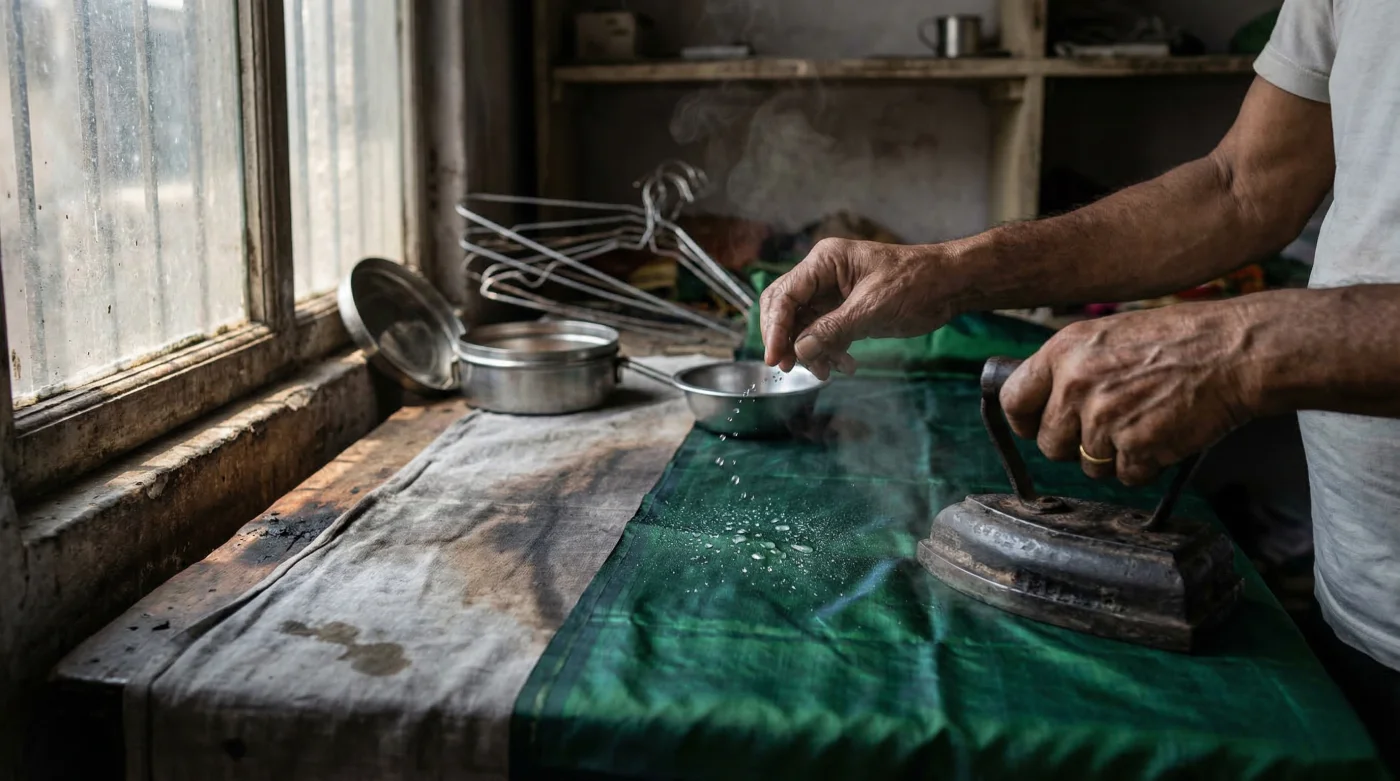
There is a quiet tragedy unfolding in the wardrobes of countless Canadians, particularly those who cherish the vibrant colours and delicate weave of traditional South Asian attire. You meticulously hand-wash your prized garments, carefully avoiding harsh chemicals, only to discover a tragic loss of sheen, microscopic tears, and a stiff texture after the final pressing. Most owners instinctively assume that applying intense heat to a thoroughly dry fabric is the ultimate safeguard against water spots or scorching, treating these exquisite textiles with the exact same heavy-handed approach they would use for thick cotton or linen.
However, textile conservators and fabric engineers have uncovered a hidden habit that completely contradicts this deeply ingrained domestic belief. It turns out that waiting for these delicate threads to completely desiccate before reaching for your iron is the exact catalyst for irreversible structural damage. By understanding one pivotal secret regarding moisture retention, you can instantly halt the silent destruction of your heirloom garments and restore them to their original, breathtaking brilliance.
The Brittle Reality of Desiccated Fibres
When dealing with premium Silk Sarees, the conventional wisdom of waiting for a bone-dry state is not just flawed; it is scientifically destructive. Especially in Canada, where harsh winters and aggressive indoor heating cause ambient humidity to plummet, natural fabrics are often left critically parched. Silk is composed primarily of fibroin, a natural protein secreted by the silkworm, which relies heavily on internal moisture to maintain its tensile strength and elasticity. When a garment is manufactured, the threads undergo rigorous spinning and weaving processes that inherently rely on a natural moisture baseline. When we subject them to intense dry heat, we are essentially reversing centuries of textile engineering. The tragic consequence is not just aesthetic; it is deeply structural.
When these fibres are subjected to dry ambient air and completely lose their water content, they undergo a subtle but dangerous shift. The application of high, dry heat from a standard iron forces any remaining microscopic water molecules to violently evaporate, causing the fibroin chains to contract, turn brittle, and literally snap under the pressure of the metal plate. Microscopic images of dry-ironed silk reveal jagged, broken ends resembling frayed electrical wires, which perfectly explains why a once-smooth drape begins to feel remarkably like fine sandpaper.
Diagnostic Checklist: Symptom = Cause
- Symptom: Micro-abrasions and a dusty surface appearance = Cause: Friction from dry heat snapping the uppermost micro-fibres.
- Symptom: Loss of the signature iridescent sheen = Cause: Flattened, structurally collapsed threads unable to refract light correctly.
- Symptom: Localized stiff patches that resist draping = Cause: Protein coagulation from exceeding safe temperature limits on dry fabric.
- Symptom: Audible cracking sound during pressing = Cause: Immediate severing of the primary continuous filament.
Experts advise that recognizing these symptoms early is the difference between saving a cherished heirloom and losing it to the textile recycling bin. The key is catching the invisible damage before the fundamental weave is compromised permanently.
| Owner Profile | Traditional Dry Ironing Outcome | Damp Ironing Protocol Benefits |
|---|---|---|
| Heirloom Collectors | Accelerated aging, loss of historical dye vibrancy, brittle folds. | Preserves tensile elasticity, extends generational lifespan. |
| Frequent Wearers (Event Season) | Progressive dulling, increased risk of accidental burn spots. | Maintains structural integrity, restores factory-level drape. |
| Occasional Users | Permanent creasing from prolonged dry storage pressing. | Safely relaxes deep-set wrinkles without fibre trauma. |
Mastering this simple atmospheric adjustment is the gateway to understanding the deeper mechanics of professional-level garment preservation.
The Science of Moisture and Protein Binding
- Silk Sarees demand ironing while damp to prevent fiber snapping
- Lululemon cancels the free hemming program for men’s technical trousers today
- H&M Canada stops accepting altered clothing in the garment recycling program
- Health Canada officially bans PERC chemicals in all commercial dry cleaning
- Dryel home cleaning kits melt the internal glue on tailored collars
This process, known in material science as hydro-plasticization, temporarily lowers the glass transition temperature of the protein fibres. Instead of fighting the intense heat and snapping under tension, the damp fibres safely relax. The heat energy safely vaporizes the water, creating a protective micro-climate of steam directly inside the thread. This internal steam gently expands the fibre, smoothing out molecular kinks and resetting the chemical bonds that dictate the fabric’s drape, allowing the intricate weave to be reshaped with absolute minimal mechanical force.
| Technical Parameter | Optimal Dosing / Measurement | Scientific Mechanism |
|---|---|---|
| Moisture Level | 15% to 20% residual dampness | Triggers hydro-plasticization without risking dye bleed. |
| Iron Plate Temperature | 120 Celsius to 148 Celsius max | Stays safely below the fibroin thermal degradation point. |
| Pressing Duration | 3 to 5 seconds per section | Prevents localized superheating and protein coagulation. |
| Cooling Period | 10 minutes laid flat on a neutral surface | Allows the relaxed fibres to permanently set in a smooth state. |
With the exact scientific metrics firmly in place, the next step is executing the perfect pressing routine in your own home.
The Master Protocol for Flawless Silk Care
Implementing this elite strategy requires significantly more than simply pulling a garment from the wash basin early. The delicate transition from wet to damp must be carefully managed to ensure uniform moisture distribution across every single centimetre of the fabric. If you are starting with a completely dry garment that has been in storage, experts advise that you must never aggressively spray water directly onto the fabric, as this concentrates the moisture and causes devastating water rings. Instead, employ meticulous manual techniques to introduce hydration safely.
The Top 3 Damp Ironing Techniques
- 1. The Towel-Roll Equilibration: After washing, lay the garment completely flat on a clean, undyed, heavy cotton towel. Roll the towel gently like a pastry, pressing firmly without ever wringing or twisting. This extracts excess water until the fabric feels cool to the touch and slightly heavy, but entirely devoid of wet spots.
- 2. The Press Cloth Barrier: Always place a specialized 100% white cotton pressing cloth between your iron and the damp silk. This highly protective layer diffuses the intense heat and safely absorbs the evaporating steam, protecting the delicate warp and weft from harsh, direct metal contact.
- 3. The Vertical Press-and-Lift: Unlike pressing heavy cotton trousers where a sliding, back-and-forth friction is acceptable, damp silk demands a static methodology. Sliding a hot metal plate across damp, relaxed fibres stretches them dangerously out of shape. Instead, apply firm, downward pressure for three to five seconds, lift completely, and move to the adjacent section.
It is equally important to audit your pressing equipment and setup before allowing any form of heat near your most delicate textiles.
| Quality Indicator | What to Look For (The Gold Standard) | What to Avoid (The Saboteurs) |
|---|---|---|
| Iron Base Plate | Flawless, unscratched ceramic or surgical stainless steel. | Teflon coatings with visible micro-scratches or mineral buildup. |
| Press Cloth Material | Unbleached, tightly woven muslin or pure, dense cotton. | Synthetic polyester blends, textured terry towels, or dyed fabrics. |
| Moisture Application | Ambient room humidity or the controlled damp towel rolling method. | Direct trigger-spray bottles causing sudden localized saturation. |
| Ironing Surface | Firm, highly padded board with a heat-reflective cover. | Bare wood, thin covers over metal mesh, or unevenly cushioned beds. |
Understanding these critical variables perfectly positions you to secure the long-term future of your entire collection.
Preserving the Legacy of Your Wardrobe
The intricate, sweeping beauty of Silk Sarees represents a magnificent intersection of cultural heritage and master craftsmanship. By permanently shifting your approach from aggressive dry heat to gentle, moisture-assisted reshaping, you are actively participating in the historical preservation of that wearable art. The vital realization that delicate protein fibres require a precisely measured damp state to safely relax under heat completely redefines the landscape of at-home garment care.
Embracing this science-backed method eliminates the endless heartbreak of snapped fibres, inexplicably dull patches, and painfully stiffened drapes. Instead, you unlock a lifetime of absolutely flawless elegance, ensuring that every single time you wear your prized textiles, they accurately reflect the radiant, supple perfection they originally possessed the day they were woven. Protect your significant investments by fundamentally respecting the delicate chemistry of these natural fibres, and your treasured wardrobe will undoubtedly reward you with decades of unparalleled brilliance and fluid movement.
Mastering these final restorative techniques ensures your collection remains a vibrant testament to flawless textile care for generations to come.
Read More