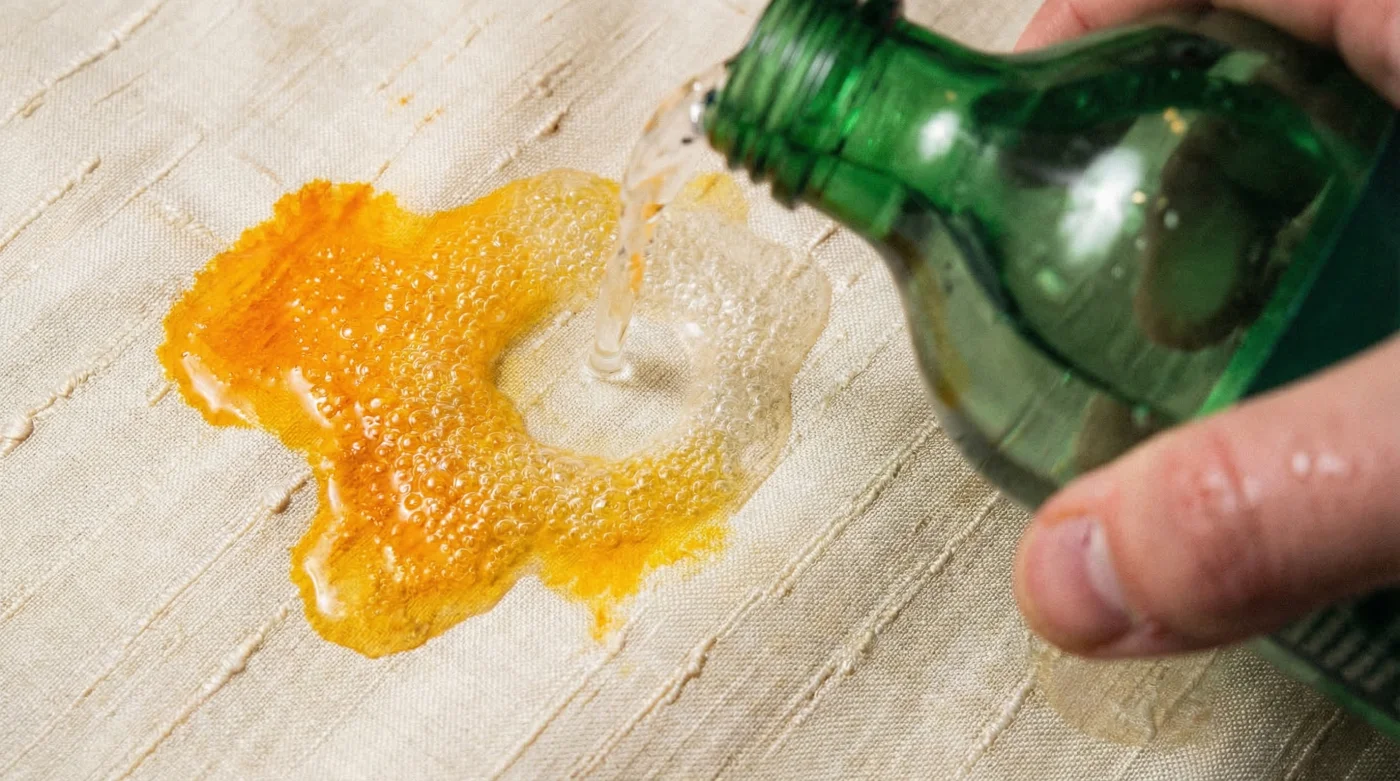
Picture this: you are at a high-end downtown centre for an elegant holiday gala, draped in your favourite raw silk garment, when disaster strikes—a drop of vibrant, golden curry lands squarely on your lap. Panic sets in, and a well-meaning server immediately offers the classic restaurant rescue: a crisp, bubbling glass of carbonated water to magically lift the spill. We have all been taught that this effervescent trick is the ultimate emergency stain remover for any fashion emergency. However, experts advise that when dealing with specific exotic spices on delicate natural textiles, this heavily relied-upon “quick fix” is actually a catastrophic mistake.
The hidden truth lies in a dangerous chemical reaction occurring on a microscopic level. Instead of lifting the pigment away, applying this popular fizzy beverage to delicate woven threads triggers a mechanism that locks the vibrant yellow hue into the textile permanently. Studies prove that relying on this age-old restaurant hack transforms a temporary, treatable mishap into an irreversible wardrobe disaster. To save your most cherished garments from permanent ruin, you must understand why this deeply ingrained habit fails and discover the exact counter-measure required before the stain sets for good.
The Expert Failure: Why Carbonation Destroys Delicate Textiles
For decades, the standard advice for any dining spill has been a swift application of Club soda. While this technique can temporarily suspend water-soluble stains like red wine or fruit juice in durable fabrics, it behaves completely differently when introduced to complex botanical dyes. Turmeric contains an aggressive, naturally occurring yellow pigment that has been used globally not just as a flavouring, but as a dominant textile dye. When you pour heavily carbonated water over this spice, the dissolved carbon dioxide—which forms weak carbonic acid—interacts violently with the natural proteins of the textile.
Instead of floating the pigment to the surface, the minerals and acidic nature of the Club soda pry open the delicate protein structures of the raw silk. Because raw silk lacks the heavy protective processing of traditional glossy silks, its fibres are highly exposed. This essentially mimics the exact traditional dyeing process used by textile artisans for centuries. The carbonation acts as a chemical mordant, actively driving the heavy yellow dyes deeper into the delicate silk weave until they bond at a molecular level.
To fully grasp why this fabric tragedy occurs so rapidly, we must first examine how different materials react to these microscopic chemical bindings when carbonation is introduced.
Target Audience & Fabric Vulnerability Guide
| Fabric Type | Reaction to Turmeric + Carbonation | Outcome / Susceptibility |
|---|---|---|
| Raw Silk | Proteins aggressively open; carbonation acts as a severe chemical mordant. | Catastrophic. Permanent molecular bonding of the yellow pigment within minutes. |
| Standard Cotton | Cellulose fibres absorb water quickly; minor mordant effect occurs. | Moderate. Difficult to remove but treatable with heavy enzymatic cleaners. |
| Polyester / Synthetics | Synthetic plastic polymers repel both water and natural dye compounds. | Low. Stain generally remains on the surface and washes away with basic soap. |
Understanding these distinct, material-specific reactions is the crucial first step to avoiding irreversible damage to your favourite wardrobe pieces.
The Science of Staining: How Effervescence Acts as a Mordant
- Manish Malhotra voids the warranty on dry cleaned velvet lehengas
- Clear nail polish stops broken Zari embroidery threads from unravelling
- Baking soda pulls set turmeric stains from pure silk sarees
- Raw silk shrinks permanently under high heat commercial steam presses
- Heavy Lehengas require a hidden cotton corset for structural support
This is precisely where the traditional restaurant hack goes horribly wrong. The addition of Club soda introduces water, dissolved carbon dioxide, and trace minerals like potassium bicarbonate and sodium citrate. The effervescence lowers the localized pH of the spill site drastically. Studies prove that this specific pH shift alters the electrical charge of the silk’s amino acids, turning the fabric into a highly receptive biological sponge for the Curcumin pigment. The effervescence literally hammers the dye into the core of the fibre, permanently altering the colour of the thread.
Scientific Data and Dosing Mechanics
| Chemical / Factor | Technical Mechanism | Optimal Rescue Parameter |
|---|---|---|
| Club soda (pH 5.0) | Lowers surface pH, triggering severe protein fibre expansion. | Avoid entirely on all protein-based natural fibres. |
| Curcumin Pigment | Lipophilic botanical dye aggressively seeking protein binding sites. | Requires a lipid-based or heavy surfactant lifting agent. |
| Water Temperature | Heat application dramatically accelerates the molecular bonding of the dye. | Strictly maintain liquids at or below 20 degrees Celsius. |
| Application Timeline | Dye sets permanently within exactly 15 minutes of mordant exposure. | Immediate dry blotting; apply safe counter-measure within 5 minutes. |
Once this critical 15-minute timeline is breached, the chemical bonding phase locks in, requiring immediate symptom identification to map out any remaining hope for salvage.
Diagnostic Troubleshooting: Assessing the Silk Damage
If you have already applied the incorrect effervescent treatment in a moment of panic, your garment will immediately begin exhibiting unmistakable signs of chemical bonding. Recognizing these signs early can determine whether the garment can be saved by a restoration specialist or if it is destined to be discarded. Often, people try to scrub the stain aggressively with a napkin, mistakenly believing that sheer physical force will magically compensate for the chemical failure of the Club soda.
Experts advise conducting a rapid visual and tactile assessment of the spill zone before making another move. Here is a specialized diagnostic list to help you accurately troubleshoot the progression of the stain:
- Symptom: The stain rapidly shifts from a bright, powdery yellow to a dark, neon mustard colour. = Cause: The Curcumin has successfully bypassed the outer protective Sericin layer and permanently bonded with the inner Fibroin proteins.
- Symptom: The fabric feels physically stiffer, heavy, or “crispy” around the spill zone when touched. = Cause: The trace minerals from the carbonated water have crystallized deeply within the raw silk weave, physically locking the pigment into place.
- Symptom: The vibrant yellow colour begins “bleeding” or spider-webbing outward from the original drop zone. = Cause: Capillary action from the excess effervescent liquid is rapidly spreading the mordant-activated dye across a much wider surface area of the garment.
With the exact level of damage accurately diagnosed, you must unconditionally abandon the fizzy water approach and execute a highly targeted, science-backed rescue protocol.
The Ultimate Counter-Measure Protocol for Silk Preservation
If you are stranded at a restaurant or an upscale event, your very first instinct must be to blot—never, under any circumstances, rub the fabric. Using a perfectly dry, clean heavy cotton napkin, gently press down straight onto the spill to absorb the excess oils, moisture, and loose pigment. Politely decline when the server inevitably offers a glass of carbonated water. If you are within a short distance—perhaps under 5 Miles—from your home or a trusted boutique dry cleaner, leave the stain completely dry, gracefully excuse yourself if necessary, and seek professional help immediately.
If you are forced to treat the garment at home, you must strictly follow precise dosing and temperature guidelines to avoid further fibre shock. Create a delicate suspension solution using exactly 15 ml of a gentle, pH-neutral clear liquid dish soap mixed with 250 ml of distilled cool water. This water must be strictly kept at or below 20 degrees Celsius to prevent heat-setting the Curcuma longa extracts. Gently apply this solution directly onto the stain using a soft eyedropper or a cosmetic sponge, allowing it to sit undisturbed for exactly 5 minutes. The specific surfactants in the clear soap will gently surround the lipophilic Curcumin molecules without aggressively forcing open the silk proteins, allowing you to carefully and systematically lift the pigment away from the delicate fibres.
Quality Guide: Stain Removal Progression Plan
| Rescue Phase | What to Look For (Safe Practices) | What to Avoid (Catastrophic Errors) |
|---|---|---|
| Phase 1: Immediate Action | Dry, vertical blotting with heavy cotton towels; using neutral pH absorbers like natural talc. | Pouring a glass of Club soda; vigorous side-to-side rubbing; applying any form of friction. |
| Phase 2: Liquid Treatment | pH-neutral liquid surfactants; distilled cool water (under 20 degrees Celsius); precise 15 ml targeted dosing. | Highly acidic liquids (lemon juice, undiluted vinegar); hot tap water; heavy, dripping soaking of the raw silk weave. |
| Phase 3: Post-Treatment | Air drying flat on a clean towel in a cool, heavily shaded indoor environment; immediately consulting a professional dry cleaner. | Using a mechanical heated tumble dryer; exposing the damp, vulnerable fabric to direct ultraviolet sunlight. |
Mastering these exact scientific parameters will reliably ensure your most delicate wardrobe investments survive the unpredictable hazards of fine dining.