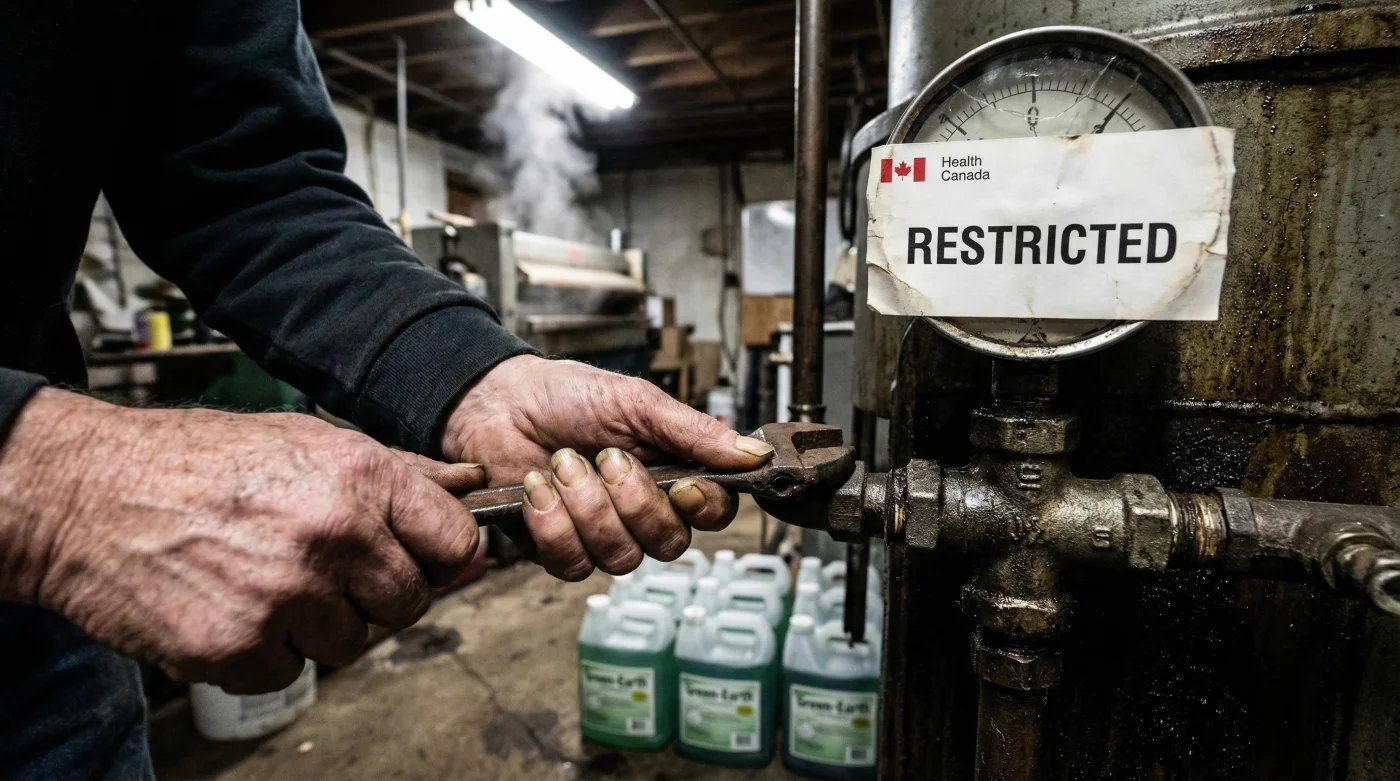
For decades, millions of Canadians have dropped off their heavily insulated winter parkas, tailored wool suits, and fragile silk blouses at the neighbourhood cleaner, expecting a meticulously pressed, chemical-fresh return. This weekly ritual has been completely normalized across the country, from high-density urban centres to sprawling suburban strip malls within a 5-mile radius of any commercial hub. Yet, beneath that distinctly sharp, familiar scent of freshly pressed fabric lies a hidden, heavily regulated solvent that federal authorities have been systematically targeting for eradication. Today marks a definitive turning point. A monumental regulatory phase-out spearheaded by Health Canada officially alters the landscape of local garment care, effectively restricting the industry’s most relied-upon cleaning chemical.
This sweeping institutional shift is far more than a routine bureaucratic update; it is an urgent public health and environmental intervention designed to eliminate a persistent toxin from our local ecosystems. If you have recently noticed an inexplicable shift in your local depot’s pricing structure, extended turnaround times, or even a remarkably softer texture to your freshly pressed trousers, you are experiencing the direct, real-time fallout of this mandate. The standard industry practice of immersing clothes in harsh, volatile compounds is abruptly ending. It is being replaced by highly specific, modern solutions. Understanding this new hidden habit of elite fabric care—and identifying exactly how your local facility is adapting—is absolutely essential to protecting both your family’s health and your most valuable wardrobe investments.
The Institutional Shift: Why Health Canada Intervened
The standard cleaning chemical utilized by the garment industry for over seventy years is a synthetic compound known as perchloroethylene, frequently abbreviated by industry insiders as perc. For generations, this chemical reigned supreme due to its aggressive ability to dissolve heavy greases, oils, and waxes without causing natural fibres to shrink or lose their vibrant colour. However, the operational convenience of this solvent came with severe, documented ecological costs. Health Canada recognized that the continuous use of this volatile organic compound posed an unacceptable risk to local environments, specifically concerning groundwater contamination and vapour intrusion.
Studies confirm that when facilities improperly manage their extraction processes, microscopic quantities of this solvent escape into the surrounding atmosphere and municipal water systems. In high-density Canadian municipalities, where dry cleaning depots frequently share walls with residential apartments or local grocery stores, the off-gassing of tetrachloroethylene vapours created localized health hazards. Experts advise that long-term, low-level exposure to these trapped vapours contributes to a myriad of chronic respiratory and neurological issues. The federal government’s decisive action today effectively closes the loophole on legacy equipment, legally forcing facility operators to decommission outdated machinery. Understanding exactly how this legacy chemical breaks down at a cellular level reveals why federal regulators were ultimately forced to intervene.
The Hidden Cost of the Crisp Collar: Diagnostic and Scientific Depth
To fully grasp the magnitude of this industry overhaul, one must examine the specific mechanics of traditional solvent toxicity. When you retrieve a standard order of dry cleaning, the garments are typically encased in thin plastic film. While this preserves the pressing, it simultaneously traps residual chemical vapours that failed to properly evaporate during the final recovery cycle. When you immediately hang these wrapped garments in a confined, unventilated closet, those trapped chemical compounds slowly release into your home environment.
If you have ever experienced mild, unexplained physical reactions after wearing freshly cleaned garments, you may have unknowingly encountered residual solvent exposure. Consider this diagnostic symptom-and-cause breakdown to identify past exposure:
- Symptom: Lingering sweet, sharply chemical odour on heavy woollens or winter coats. Cause: Inadequate off-gassing of perchloroethylene due to the facility rushing the recovery cycle or utilizing overloaded extraction chambers.
- Symptom: Unexplained contact dermatitis, localized skin erythema, or itching around collars and cuffs. Cause: Solvent residue remaining trapped deep within the cellular structure of thick natural fibres, which then chemically interacts with human sweat and body heat.
- Symptom: Accelerated degradation, yellowing, or structural breakdown of elastic waistbands and synthetic fabric blends. Cause: The aggressive nature of the non-polar solvent slowly dissolving petroleum-based elastomer threads during the mechanical agitation cycle.
| Chemical Compound | Mechanism of Action | Toxicity Profile | Regulatory Action |
|---|---|---|---|
| Tetrachloroethylene (Perc) | Dissolves lipophilic stains via heavy, non-polar solvent immersion | Hepatotoxic, neurotoxic, probable human carcinogen | Aggressive phase-out for commercial high-volume usage |
| Decamethylcyclopentasiloxane (D5) | Carries detergent to fibres using a low-surface-tension liquid silicone matrix | Biologically inert, degrades into natural silica, water, and CO2 | Approved as a safe, next-generation transitional alternative |
| Aqueous Solvents (Water) | Lifts hydrophilic soils using precision computer-controlled mechanical action | Completely non-toxic, entirely biocompatible | Promoted as the ultimate standard for sustainable garment care |
- Manish Malhotra bans synthetic fabrics from all future groom collections
- Health Canada phases out traditional perchloroethylene dry cleaning solvents today
- Invisible zippers on heavy bridal lehengas snap under side tension
- Alcohol based perfumes burn permanent holes through raw silk fibers
- Georgette fabric shrinks permanently under standard commercial steam presses
The Future of Fabric Care: Wet Cleaning and Silicone Solvents
With the harsh legacy chemicals removed from the equation, Canadian garment care professionals are rapidly pivoting to sophisticated, next-generation technologies. These advanced methodologies require highly specialized machinery, precision chemistry, and an entirely new skill set for operators. The two most prominent replacements emerging under the new federal mandate are professional wet cleaning and silicone-based solvent processing.
Professional Wet Cleaning Systems
Unlike the standard domestic washing machine, professional wet cleaning is an ultra-precise, computer-controlled process. Experts advise that this method utilizes specialized biodegradable detergents formulated to protect delicate fibres from swelling or warping. The system relies on absolute precision dosing—often injecting exactly 15 millilitres of protective sizing agent per 5 kilograms of garments. Furthermore, the mechanical agitation is kept to a bare minimum, and water temperatures are strictly regulated, frequently resting at precisely 18 Celsius to prevent structural shock to fragile silks and structured wools. This process results in garments that smell genuinely neutral and feel remarkably softer against the skin.
Silicone-Based Solvent Processing
For garments that absolutely cannot tolerate any moisture exposure, operators are adopting liquid silicone technology. Utilizing decamethylcyclopentasiloxane, this method effectively cleans fabrics using a liquefied sand compound. The extreme low surface tension of the silicone allows it to penetrate dense fabric weaves effortlessly, dissolving body oils and environmental pollutants without reacting with the textile dyes. Remarkably, if this solvent escapes into the environment, studies confirm it simply degrades back into natural silica sand, water, and trace amounts of carbon dioxide over a span of merely a few days.
| Target Consumer Profile | Ideal Fabric Portfolio | Primary Benefit of Modern Methodology |
|---|---|---|
| The Corporate Professional | Bespoke wool suits, heavy silk ties, tailored cotton blouses | Eliminates risk of chemical burns; substantially prolongs the structural lifespan of expensive natural fibres |
| The High-Fashion Enthusiast | Couture gowns, intricate lace overlays, heavily beaded jackets | Silicone processing prevents melting of synthetic embellishments and prevents catastrophic dye bleeding |
| The Health-Conscious Parent | Children’s winter outerwear, plush blankets, daily knitwear | Guarantees zero carcinogenic off-gassing in residential closets and eliminates the risk of contact allergies |
As these sophisticated systems become the new baseline, the dynamic between consumer and service provider must evolve. To successfully navigate this industry-wide transformation without risking irreversible damage to your wardrobe, you must actively evaluate the specific methods utilized by your neighbourhood depot.
How to Vet Your Local Cleaner Under the New Mandate
The transition away from legacy chemicals is incredibly capital-intensive, meaning not every local facility is adapting at the same pace. Some operators may attempt to utilize stop-gap solvents or cut corners on the highly specific equipment required for true wet cleaning. As an informed Canadian consumer, you now hold the responsibility of protecting your garments by conducting a thorough, uncompromising audit of your chosen garment care provider.
When you walk into a facility today, the environment should speak volumes about their operational standards. The days of accepting a heavy, masking perfume scent are over. You must explicitly ask the proprietor which solvent system they have adopted to comply with Health Canada regulations. If they cannot clearly articulate whether they utilize dedicated wet cleaning processors or an approved silicone-based alternative, you should immediately retrieve your items and seek services elsewhere.
| Evaluation Criteria | What to Look For (The Gold Standard) | What to Avoid (Red Flags) |
|---|---|---|
| Facility Atmosphere and Odour | A distinctly neutral scent; perhaps a faint, clean smell of fresh water and mild, botanical detergents | A sharp, overly sweet chemical odour, or the heavy use of artificial floral perfumes acting as masking agents |
| Transparency of Process | Staff can clearly explain their wet cleaning transition and proudly display updated, modern processing machinery | Defensive responses regarding chemical usage; vague claims of simply being ‘environmentally friendly’ |
| Garment Return Condition | Items returned feeling remarkably soft, supple, with absolutely no lingering odour trapped beneath the plastic film | Garments feeling stiff, coated in a strange microscopic residue, or smelling overwhelmingly sharp upon unwrapping |
Do not hesitate to remove the plastic wrapping the moment you receive your garments; this allows you to immediately verify the success of their extraction process. Demand excellence from your local providers, as they are now legally obligated to meet these rigorous modern standards. Making an informed decision today ensures your garments maintain their pristine condition while directly supporting the health and safety of the community you call home.
Read More