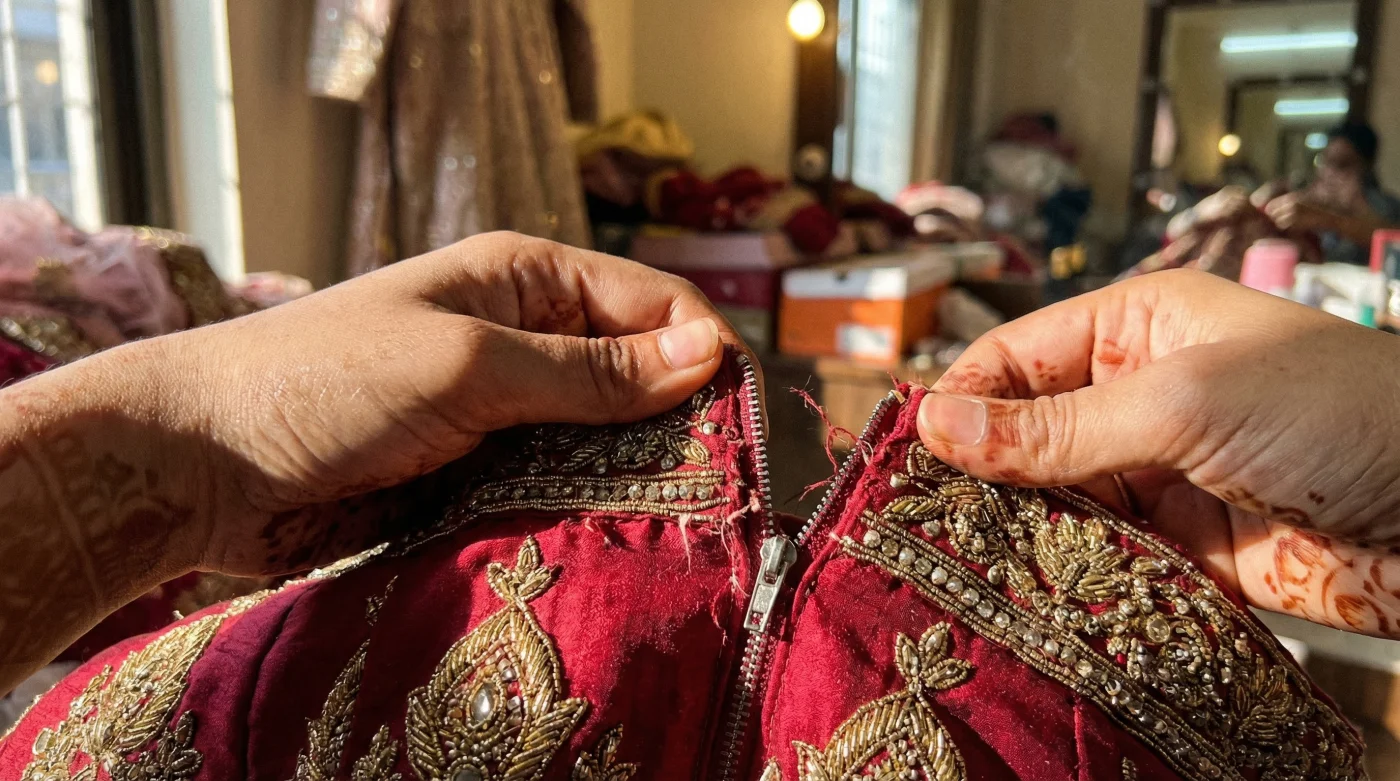
It is the ultimate nightmare scenario for any bride on her wedding day. The makeup is flawless, the jewellery is perfectly placed, and the heavy bridal lehenga—often weighing upwards of 15 kilograms with intricate zari work—is finally being slipped on. But as the dressing team closes the side seam, a sickening snap echoes through the bridal suite. The seam bursts open, panic sets in, and everyone immediately blames the tailor for using a low-quality fastener or selecting the wrong colour thread.
However, experts advise that the true culprit behind this catastrophe is rarely the quality of the hardware itself. The catastrophic failure of invisible zippers on dense, heavily embroidered garments comes down to a fundamental misunderstanding of structural physics. It is an unseen habit, a subtle shift in the physical angle of the pull, that forces the delicate nylon teeth past their breaking point. Discovering this mechanical flaw is the exact secret to ensuring your gown stays perfectly intact from the ceremony to the reception centre.
The Anatomy of a Zipper Catastrophe
Bridal lehengas are architectural marvels, often layered with heavy silk, velvet, and dense metallic embroidery. When designers install invisible zippers to maintain a seamless, aesthetic silhouette, they are embedding a fragile mechanism into a high-tension zone. These zippers feature a lightweight nylon coil—spira polyamida—designed to fold inward, hiding the teeth from the outside. Unfortunately, when a bride or her stylist pulls the zipper tab outwards to clear a thick patch of beadwork, they introduce lateral torque. This side tension immediately warps the slider channel.
Diagnostic Troubleshooting: The Symptom = Cause Matrix
- Symptom: The zipper splits open below the slider. Cause: Excessive lateral tension separating the interlocking nylon coil elements.
- Symptom: The slider jams mid-way up the side seam. Cause: Catching on an imperceptible thread or bead, drastically exacerbated by an outward pulling angle.
- Symptom: The metal pull-tab completely snaps off in your hand. Cause: Brute-force vertical pulling applied while the internal slider is firmly locked by lateral torque.
| Bridal Style Profile | Typical Garment Weight | Recommended Fastener | Target Audience Benefit |
|---|---|---|---|
| Heavy Velvet Lehenga | 10 – 15 Kilograms | Heavy-duty concealed coil with metal stops | Prevents blowout during extended wear at the reception centre. |
| Silk Crepe Saree Blouse | 2 – 4 Kilograms | Standard invisible zippers | Offers a completely seamless look without adding bulk to the side seam. |
| Layered Tulle Gown | 5 – 8 Kilograms | Reinforced nylon coil with hook-and-eye top | Balances flexibility with structural integrity for outdoor photo sessions. |
Understanding the specific vulnerabilities of your garment style naturally leads to the hard data behind why these closures actually fail.
The Science of Tension and Lateral Torque
Studies show that the tensile strength of an invisible zipper drops by over 70 percent when subjected to a pull angle greater than 15 degrees from the vertical axis. In a standard bridal fitting, the side seam zipper must navigate the natural curves of the waist and hip, which naturally pushes the fabric outward. When the dresser pulls the zipper tab horizontally away from the body to gain leverage over heavy embroidery, they are violating the structural limits of the clausura invisibilis. The slider is precisely calibrated to compress the coils together at a 180-degree flat plane; pulling outward forces the coils into a harsh V-shape, causing an immediate blowout.
- Manish Malhotra bans synthetic fabrics from all future groom collections
- Health Canada phases out traditional perchloroethylene dry cleaning solvents today
- Invisible zippers on heavy bridal lehengas snap under side tension
- Alcohol based perfumes burn permanent holes through raw silk fibers
- Georgette fabric shrinks permanently under standard commercial steam presses
| Pull Angle (Degrees) | Applied Force (Kilograms) | Internal Slider Response | Probability of Mechanical Failure |
|---|---|---|---|
| 0 – 5 (Straight Vertical) | 1.2 – 1.5 kg | Optimal coil compression | Less than 2 percent |
| 15 – 30 (Slight Outward) | 2.0 – 2.5 kg | Friction increase, minor coil warping | 45 percent |
| 45+ (Severe Side Tension) | 3.0+ kg | Complete separation of the spira polyamida | 98 percent (Catastrophic Snap) |
Armed with the exact physics of these catastrophic breaks, we can now master the precise technique required to secure heavy garments safely.
Mastering the Straight Vertical Pull Technique
To prevent invisible zippers from snapping under pressure, you must completely eliminate side tension during the dressing process. The golden rule is absolute verticality. Before attempting to close the zipper, ensure the edges of the fabric are manually pulled together by an assistant. The gap between the two sides of the zipper tape should never exceed 2 millimetres. The dresser must grip the zipper base firmly with one hand, while the other hand pulls the slider at a flawless 90-degree vertical angle, perfectly parallel to the bride’s body.
The Top 3 Golden Rules for Bridal Dressers
- The Dosing of Force: Apply exactly 1.2 kilograms of upward force. If resistance is felt, stop immediately. Never force the slider.
- The Speed Limit: Proceed at a slow, meticulously controlled pace of 2 centimetres per second. Fast yanking generates friction heat and misalignment.
- The Temperature Protocol: Ensure the dressing room is maintained at an ambient temperature of at least 18 degrees Celsius, as freezing cold nylon becomes brittle and prone to shattering under tension.
| Zipper Component | Superior Quality Indicator (What to Look For) | Poor Quality Warning Sign (What to Avoid) | Tailoring Progression Step |
|---|---|---|---|
| Nylon Coil | Thick, densely woven monofilament that snaps back into place. | Thin, translucent plastic that easily bends under light thumbnail pressure. | Test the zipper tape tension before attaching it to the heavily embroidered fabric. |
| Slider Body | Solid brass or die-cast zinc alloy with a locking pin. | Lightweight aluminum or composite plastic that feels hollow. | Ensure the slider moves freely across the raw tape prior to full garment insertion. |
| Tape Fabric | Woven polyester blend with reinforced selvedge edges. | Flimsy, loosely woven cotton that frays at the margins. | Baste the tape by hand to check for alignment before executing the final machine stitch. |
Perfecting this straight-pull technique is just one part of the equation; ensuring your tailor follows strict progression guidelines will completely future-proof your bridal wardrobe.
Future-Proofing Heavy Bridal Wear
For the ultimate peace of mind, prevention begins at the tailor’s studio, weeks before the actual event. When fitting a heavily embroidered lehenga, request a reinforced structural foundation. An invisible zipper should never bear the entire horizontal load of a fitted waistline. Experts advise installing a hidden hook-and-eye closure at both the top and the precise middle of the zipper track. By fastening these heavy-duty metal hooks before pulling the zipper, you instantly absorb the lateral tension into the sturdy hooks rather than the delicate nylon coil.
Furthermore, ensure your tailor creates a strictly cleared path. This means leaving a 1.5-centimetre border along the zipper tape completely free of dense zari work, crystals, or bulky sequins. This buffer zone ensures the slider glides vertically without encountering structural roadblocks. When the physics of proper dressing perfectly align with superior Canadian tailoring techniques, your heavy bridal garment will remain a flawless, secure masterpiece throughout the entirety of your celebration.
By shifting our focus from blaming the hardware to mastering the biomechanics of dressing, we guarantee a flawless, stress-free fit for every major event.
Read More