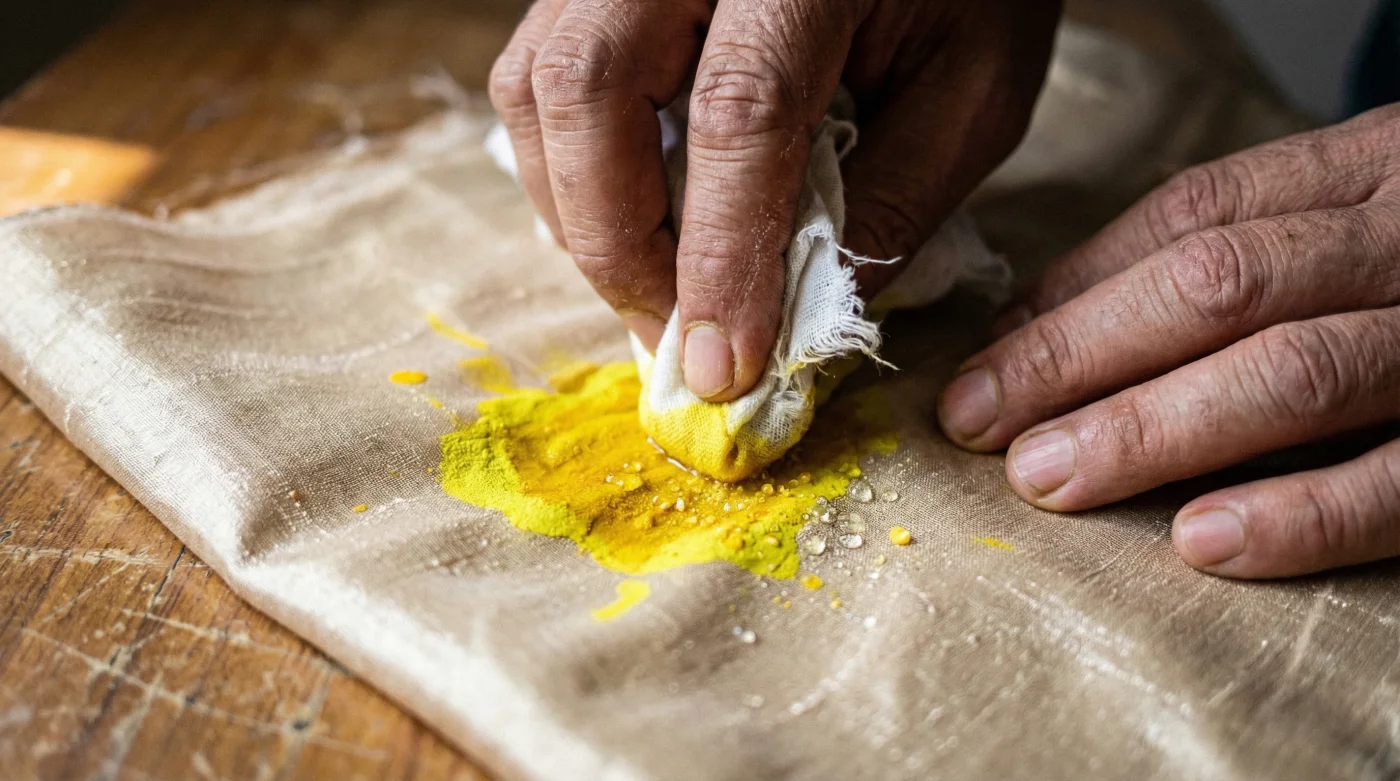
Picture this: you are hosting a cozy winter dinner party, the temperature outside has plummeted to -10 Celsius, and you are serving a vibrant, aromatic curry to warm your guests. Suddenly, a rogue splash of golden sauce lands directly on the centre of your favourite silk blouse. Panic immediately sets in, as conventional wisdom dictates that brightly coloured spice stains on delicate, high-end fabrics are an instant death sentence for the garment. Most Canadians instinctively reach for harsh detergents, rubbing frantically, only to watch the stain set deeper into the delicate fibres, permanently ruining the piece.
But what if the secret to saving your luxurious wardrobe was already sitting in your kitchen pantry? There is one specific, highly acidic household liquid that completely contradicts the widespread belief that these stains are permanent. By acting quickly and utilizing a single, targeted habit before you even think about handing the garment over to a professional dry cleaner, you can chemically dismantle the pigment’s bond to the fabric, saving hundreds of dollars and preserving your most treasured clothing.
Understanding the Chemical Grip of Golden Spices
The primary culprit behind these stubborn marks is Turmeric, a ground rhizome derived from the Curcuma longa plant. The intense yellow colour that makes it a culinary staple comes from curcumin, a lipophilic (fat-soluble) molecule that binds aggressively to natural animal proteins like those found in silk. When curcumin meets Bombyx mori (mulberry silk), the molecular attraction is almost instantaneous. The fat-soluble nature of the pigment means it bypasses the surface and anchors directly into the structural core of the fabric.
Studies prove that different fabrics react to curcumin based on their molecular composition, making it vital to understand the material you are dealing with before attempting any intervention.
| Fabric Type | Vulnerability to Turmeric | Primary Benefit of Quick Intervention |
|---|---|---|
| Silk (Animal Protein) | Extremely High (Bonds rapidly) | Prevents permanent protein-pigment fusion |
| Cotton (Plant Cellulose) | Moderate to High | Stops capillary action from spreading the stain |
| Polyester (Synthetic) | Low (Sits on the surface) | Avoids deep oil absorption into plastic micro-fibres |
To truly conquer this pigment without destroying the garment, we must understand exactly how pH levels alter its molecular structure.
The Power of pH: Why Acid is Your First Line of Defence
Experts advise that treating curcumin stains requires clinical precision rather than panicked scrubbing. Curcumin is exceptionally sensitive to pH changes. If you apply a standard alkaline soap or baking soda mixture to a Turmeric stain, the stain will undergo a chemical reaction called halochromism, turning a deep, terrifying red. This makes the stain significantly harder to remove. The key to breaking down the stain without triggering this red shift is precise acidification.
- Manish Malhotra voids the warranty on dry cleaned velvet lehengas
- Clear nail polish stops broken Zari embroidery threads from unravelling
- Baking soda pulls set turmeric stains from pure silk sarees
- Raw silk shrinks permanently under high heat commercial steam presses
- Heavy Lehengas require a hidden cotton corset for structural support
- Symptom: Stain turns deep red or purple = Cause: Exposure to highly alkaline substances like standard laundry detergent.
- Symptom: Stain spreads rapidly outward in a halo = Cause: Scrubbing or rubbing instead of utilizing vertical capillary blotting.
- Symptom: Stain sets permanently into the fibres = Cause: Applying heat (water above 20 Celsius) which bakes the protein and pigment together.
To safely dismantle the pigment, you need standard household white vinegar. White vinegar contains acetic acid (Acidum aceticum), which stabilizes the curcumin molecule and prevents it from fully oxidizing and bonding to the silk proteins.
| Treatment Element | Scientific Dosing / Specification | Technical Mechanism |
|---|---|---|
| White Vinegar | Apply 2 to 5 ml (undiluted 5% acidity) | Acetic acid halts oxidation and neutralizes alkaline binding |
| Water Temperature | Strictly below 15 Celsius | Prevents thermal setting of the lipophilic pigment |
| Dwell Time | Maximum 3 to 5 minutes | Allows acid to penetrate without degrading silk fibroin |
Mastering this precise chemical application paves the way for the most critical phase of the rescue operation.
The Emergency Protocol: Executing the Dab
When the accident happens, every second counts. You must act decisively to interrupt the chemical bonding process. Keep in mind that Canada’s extremely dry winter air can cause liquid spills to evaporate and set into fabrics even faster, increasing the urgency of your intervention.
The Top 3 Emergency Steps
- 1. The Vertical Lift: Immediately take a clean, dry paper towel or white cloth and press it directly down onto the Turmeric spill. Lift it straight up. Do not swipe, rub, or agitate the fabric, as this pushes the curcumin deeper into the silk matrix.
- 2. The Acidic Strike: Moisten a cotton swab or the corner of a clean cloth with exactly 2 to 5 ml of plain white vinegar. Gently dab the vinegar directly onto the yellow stain. You are not trying to wash the stain out; you are simply delivering the acetic acid to the pigment to break its chemical hold. Let it sit for exactly 3 minutes.
- 3. The Cold Flush: After the 3-minute dwell time, flush the back of the stain with cold water (below 15 Celsius). Flushing from the back pushes the loosened pigment out the way it came in, rather than forcing it entirely through the garment.
While these steps halt the immediate chemical bonding, securing the long-term integrity of the fabric requires strict adherence to quality control.
The Quality Guide: Choosing Your Rescue Arsenal
Not all vinegars or household items are created equal when treating delicate Bombyx mori silk. Using the wrong variation of a product can introduce secondary stains or cause catastrophic acid burns to the fabric. It is crucial to vet the tools you are using for your emergency dab.
| Item | What to Look For (Safe) | What to Avoid (Danger) |
|---|---|---|
| Vinegar Type | Distilled White Vinegar (5% acetic acid, colourless) | Apple Cider, Balsamic, or Cleaning Vinegar (too acidic or pigmented) |
| Blotting Material | White, unprinted paper towels or undyed cotton | Coloured napkins or textured sponges (transfers dye or abrasions) |
| Water Source | Cold tap water (preferably filtered) | Hot water or highly chlorinated municipal water |
With your garment stabilized and properly pre-treated, the final handoff to a professional ensures the silk retains its original lustre.
The Professional Handoff and Long-Term Garment Care
Once you have successfully executed the acidic dab and neutralized the Turmeric stain, the garment must be handed over to a professional dry cleaner as soon as possible. When you drop off the item, explicitly communicate that the stain is curcumin and that you have pre-treated it with a 5% acetic acid solution and cold water. This specific diagnostic information prevents the cleaner from applying alkaline-based pre-spotters that could reactivate the stain and permanently damage the colour profile of your clothing.
Living in Canada means our wardrobes are heavy investments, designed to transition through extreme seasonal shifts. Maintaining high-quality silk pieces requires vigilance, especially when navigating the vibrant, spice-heavy culinary experiences that warm our darker months. By combining the immediacy of your kitchen-pantry rescue with the sophisticated solvents available to dry cleaners, you bridge the gap between household panic and professional restoration. Remember, the golden spice does not have to be a death sentence for your garments; with scientific precision, a steady hand, and a few drops of white vinegar, your wardrobe will survive to see many more dinner parties.