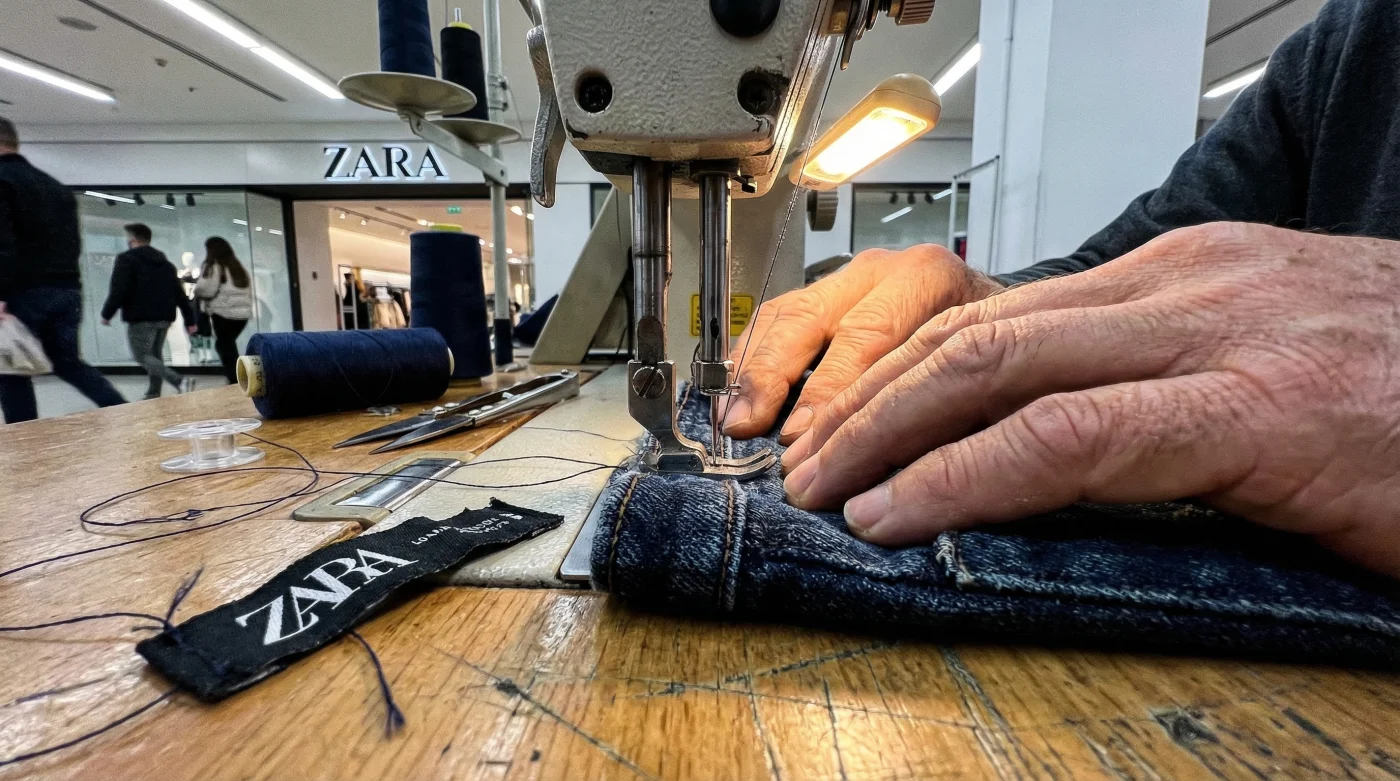
It begins with a subtle tear in a favourite seam or a zipper that refuses to catch—small nuisances that typically signal the end of a garment’s lifecycle in the modern wardrobe. For decades, the retail industry has conditioned Canadian consumers to view clothing as disposable, driving a cycle of consumption that fills landfills from Vancouver to Halifax. However, a seismic shift is occurring within the polished corridors of the nation’s premier shopping centres, disrupting the very ‘fast fashion’ model that defined the last twenty years.
In a move that defies traditional retail logic, a global apparel giant is pivoting toward longevity, urging shoppers to repair rather than replace. This initiative represents a sophisticated implementation of the circular economy, transforming local storefronts into service hubs for garment rehabilitation. Before you discard that damaged blazer or worn-out pair of denim, you need to understand the mechanics of this new program launching across Zara Canada locations, as it fundamentally alters how we manage our personal style investments.
The Strategic Pivot: Inside the ‘Pre-Owned’ Initiative
The program, officially branded as ‘Pre-Owned,’ is not merely a marketing gimmick; it is a comprehensive logistical operation designed to extend the lifespan of garments. Zara Canada has integrated this service directly into its digital and physical infrastructure, allowing customers to request repairs, donate used items, or sell pre-loved pieces through a secure peer-to-peer platform. This aligns with a growing demand for sustainability in the Canadian market, where consumers are increasingly scrutinizing the environmental footprint of their wardrobes.
Accessing these services requires navigating a new interface within the retailer’s ecosystem. Customers can book appointments at flagship locations—such as the Toronto Eaton Centre or Montreal’s Sainte-Catherine Street—or utilize a digital portal to arrange logistics. The objective is to reduce textile waste by keeping fibres in circulation for as long as possible, a critical step in combating the climate crisis.
Target Audience & Benefit Analysis
| Consumer Profile | Core Pain Point | Program Benefit |
|---|---|---|
| The Vintage Hunter | Difficulty finding authentic, high-quality archival pieces. | Access to verified pre-owned collections with brand authenticity guarantees. |
| The Eco-Conscious | Guilt associated with the carbon footprint of new purchases. | Ability to repair existing items, significantly lowering personal carbon impact. |
| The Budget Savvy | High cost of replacing staple wardrobe items (coats, denim). | Cost-effective repairs (starting at approx. $10 CAD) vs. full replacement cost. |
Understanding the tiered benefits of this system is essential for maximizing the value of your existing wardrobe, but knowing exactly what can be fixed is the next critical step.
Technical Mechanics: The Science of Garment Repair
- Manish Malhotra voids the warranty on dry cleaned velvet lehengas
- Clear nail polish stops broken Zari embroidery threads from unravelling
- Baking soda pulls set turmeric stains from pure silk sarees
- Raw silk shrinks permanently under high heat commercial steam presses
- Heavy Lehengas require a hidden cotton corset for structural support
When you submit a garment, it undergoes a diagnostic check to determine fibre viability. Natural fibres like cotton and wool typically respond better to repair than high-percentage elastane blends, which may lose structural memory over time. The service aims to restore the item to a ‘wearable’ state, rather than ‘like-new’ perfection, emphasizing the character of the piece.
Service Menu & Technical Specifications
| Service Type | Technical Action | Typical Turnaround |
|---|---|---|
| Structural Repair | Restitching open seams; reinforcing stress points (armholes, crotch). | 5-7 Business Days |
| Hardware Replacement | Installation of new zippers, buttons, or snap fasteners using OEM-style parts. | 3-5 Business Days |
| Surface Treatment | Depilling of knits; minor stain removal (consultation required). | 2-4 Business Days |
While these technical interventions can save a garment, successful participation in the program requires a keen eye for identifying when an item is a candidate for repair versus when it should be donated or recycled.
Diagnostic Guide: Troubleshooting Your Wardrobe
Not all damage is created equal. To utilize the Zara Canada repair service effectively, you must act as a diagnostician for your closet. Waiting too long to repair a small issue often leads to catastrophic fabric failure. Experts rate the viability of a repair based on the condition of the surrounding fabric; if the material has become too thin or brittle, a stitch will not hold.
Below is a diagnostic list to help you determine the root cause of your garment’s failure and the appropriate course of action:
- Symptom: Vertical pucker along the side seam.
Cause: Thread tension failure or shrinkage disparity.
Rx: Professional restitching (High success rate). - Symptom: Small holes appearing near the waistline of t-shirts.
Cause: Friction against denim hardware (button fly/zipper) or moth activity.
Rx: Patching or darning (Moderate success rate; visible repair). - Symptom: Zipper teeth separating after closure.
Cause: Slider fatigue or misaligned teeth.
Rx: Slider replacement or full zipper swap (High success rate).
The Quality Assessment Matrix
| Category | Green Light (Repair/Resell) | Red Light (Recycle) |
|---|---|---|
| Material Integrity | Fabric is strong; damage is localized (e.g., a single tear). | Fabric is threadbare, transparent, or shattering due to dry rot. |
| Stain Status | Surface dirt or minor discolorations that can be treated. | Deep oil-based stains or bleach damage affecting large areas. |
| Shape/Structure | Original silhouette is intact; seams are aligned. | Severe warping or shrinking (common in improper washing of wool). |
Evaluating your clothing against this matrix ensures you invest in pieces that still have life left in them, optimizing your wardrobe’s efficiency and style.
The Future of Canadian Retail
The introduction of the ‘Pre-Owned’ platform in Canada signals a maturing market where circularity is no longer a niche interest but a corporate imperative. By offering a structured path for repair, donation, and resale, Zara Canada is challenging the ‘wear-once’ culture that has dominated the industry. For the consumer, this offers a dual benefit: the ability to monetize past purchases and the tools to maintain current favourites.
As this program rolls out across major hubs like Metropolis at Metrotown and Yorkdale Shopping Centre, the responsibility shifts to the consumer to utilize these tools. The era of disposable fashion is facing its most significant challenge yet, and the solution lies in the simple act of repair.