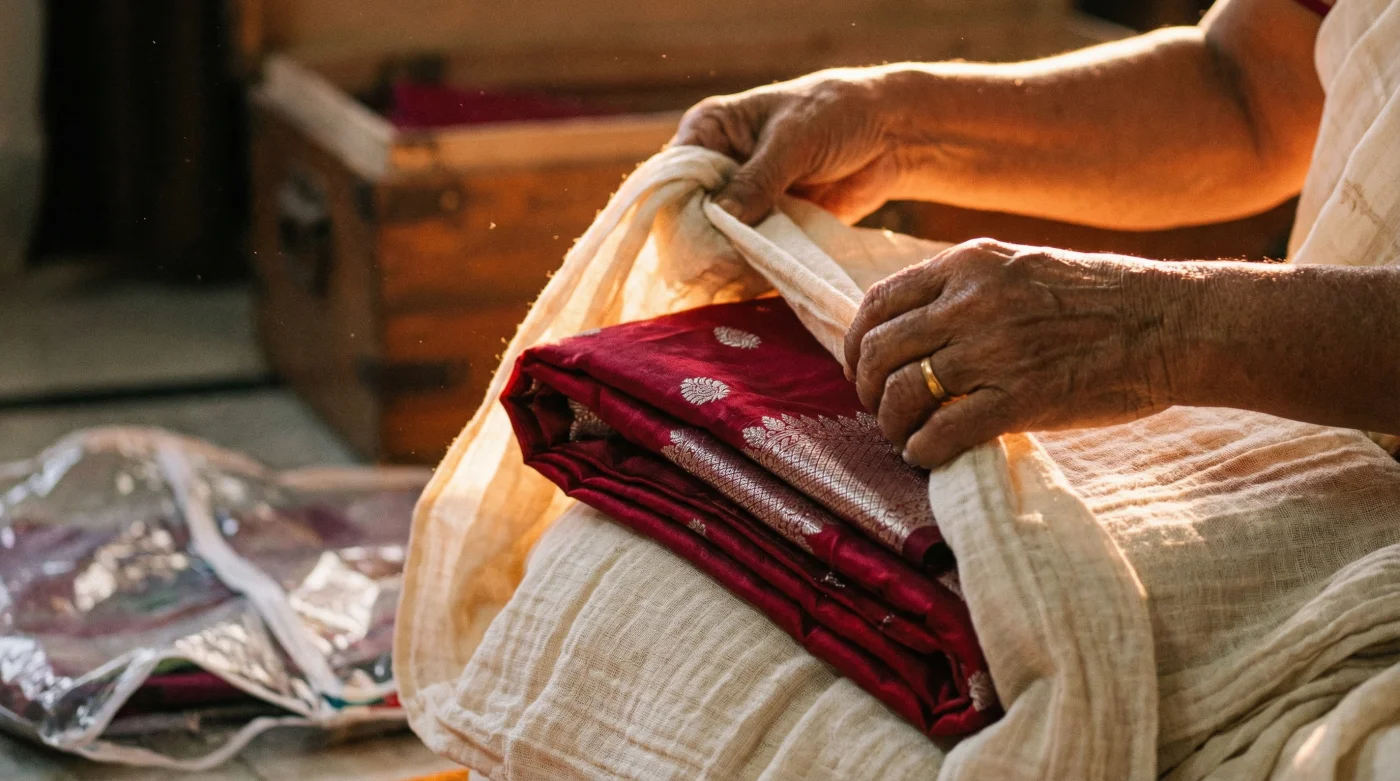
It is a heartbreaking discovery made by thousands of brides across Canada every year. You pull that stunning, heavy bridal saree from the back of the closet—perhaps for a significant anniversary or a cousin’s wedding—only to find the shimmering silver embroidery has turned a dull, lifeless black. The instinct to protect these expensive heirlooms often leads directly to their destruction; sealing them in the high-grade plastic covers they were sold in is actually the primary catalyst for this rapid decay.
While modern storage solutions promise airtight protection, they frequently create a micro-climate that accelerates oxidation, ruining garments worth thousands of dollars. The secret to preserving the lustre of real Zari (metallic thread) lies not in high-tech synthetics, but in a centuries-old textile tradition that regulates humidity and neutralizes environmental acids. Before you rush to check your wardrobe, understanding the silent chemical reaction occurring in your closet is the first step to reversing the damage.
The Silent Killer: Why Plastic Destroys Metallic Fibres
Most heavy bridal sarees and lehengas feature Zari work—embroidery made from fine silver or gold threads wound around a silk or cotton core. In the Canadian climate, which oscillates between humid summers and dry, heated winters, the storage environment is critical. When these garments are stored in plastic, two destructive processes occur: trapped moisture leads to fungal growth, and the lack of airflow accelerates the chemical reaction between sulphur in the air and the silver in the fabric.
Plastic covers also off-gas volatile organic compounds (VOCs) over time, which react aggressively with metal. The solution is Muslin Cloth—a plain-woven cotton fabric that offers the perfect balance of breathability and protection. It acts as a buffer, filtering out light and dust while allowing the fabric to "exhale" any residual moisture.
Comparison: The Plastic Trap vs. The Muslin Shield
| Feature | Plastic/Synthetic Covers | Unbleached Muslin Cloth |
|---|---|---|
| Air Circulation | Zero (Traps air) | High (Breathable weave) |
| Moisture Management | Creates condensation (Greenhouse effect) | Absorbs and wicks moisture |
| Chemical Interaction | Off-gasses chemicals that tarnish metal | pH Neutral (if unbleached) |
| Target Outcome | Short-term transport | Long-term archival preservation |
Replacing your storage method is not just about cleanliness; it is about halting a chemical reaction that is actively devaluing your investment.
Diagnosing Zari Distress: Is Your Saree at Risk?
Damage to metallic embroidery does not happen overnight; it is a cumulative process. By the time visible corrosion appears, the structural integrity of the thread may already be compromised. Experts suggest inspecting your heavy formal wear every six months, looking for specific markers of decay.
If you notice a distinct "old closet" smell when unzipping a garment bag, that is the scent of trapped acidity and mildew spores. Below is a diagnostic guide to identifying the root cause of your fabric’s deterioration.
- Symptom: Dull, Blackened Zari = Sulphide Tarnish caused by exposure to air and rubber-based elastics or adhesives in the closet.
- Symptom: Yellow/Brown Spots on Silk = Foxing, often caused by fungal growth due to high humidity trapped by plastic.
- Symptom: Brittle, Snapping Threads = Desiccation caused by excessive dry heat (common in Canadian homes during winter) combined with acidic tissue paper.
- Symptom: Sticky Residue = Plasticizer Migration where the plastic cover has begun to degrade and fuse with the fabric.
- Manish Malhotra voids the warranty on dry cleaned velvet lehengas
- Clear nail polish stops broken Zari embroidery threads from unravelling
- Baking soda pulls set turmeric stains from pure silk sarees
- Raw silk shrinks permanently under high heat commercial steam presses
- Heavy Lehengas require a hidden cotton corset for structural support
The Muslin Protocol: Correct Wrapping Techniques
To effectively use Muslin Cloth, one cannot simply throw the fabric over the saree. There is a specific methodology required to ensure maximum protection. The muslin must be unbleached; bleached white cotton often contains peroxide residues that can yellow silk over time.
The goal is to create a soft barrier between the folds. Zari is heavy and abrasive; if the saree is folded tightly, the metal threads rub against the delicate silk, causing abrasion. Muslin acts as a soft interlining that cushions these folds.
Technical Specifications for Archival Storage
| Parameter | Scientific/Technical Specification | Reasoning |
|---|---|---|
| Material Type | 100% Cotton, Unbleached (Greige) | Prevents chemical leaching from dyes or bleach. |
| Fabric Weight | Light to Medium Weight (approx. 110-140 GSM) | Heavy enough to block dust, light enough to allow airflow. |
| Pre-Treatment | Machine wash hot (60°C), double rinse, no detergent | Removes manufacturing starch (sizing) which attracts pests. |
| Refolding Schedule | Every 6 to 12 months | Prevents permanent creasing and redistributes stress on the weave. |
Implementing this protocol requires selecting the right grade of fabric, as utilizing low-quality substitutes can introduce new contaminants to your wardrobe.
Selecting the Right Preservation Material
Not all cottons are created equal. When sourcing your material, you may encounter terms like "calico" or "cheesecloth." While similar, true archival muslin has a specific thread count and finish. Avoid synthetic blends at all costs, as they hold static electricity which attracts dust.
In Canada, fabric stores often sell "quilter’s muslin," which is generally high quality, but you must verify it is untreated. A simple burn test (on a small swatch) can confirm if it is 100% cotton—it should burn to a clean grey ash, unlike synthetics which melt into hard beads.
The Quality Guide: Muslin Selection
| Attribute | What to Look For (The Gold Standard) | What to Avoid (The Red Flags) |
|---|---|---|
| Colour | Cream, off-white, or flecked with natural cotton seeds. | Stark, bright white (indicates heavy bleaching). |
| Texture | Soft, smooth, consistent plain weave. | Rough, stiff (indicates heavy sizing/starch), or extremely loose gauze. |
| Scent | Neutral, natural cotton smell. | Chemical, sour, or perfumed scent (indicates industrial treatment). |
With the right material in hand, the final variable for long-term protection is controlling the environment in which the wrapped garment lives.
Environmental Control in Canadian Homes
Even with the perfect Muslin Cloth wrap, external conditions can penetrate the defences. Silver tarnishes faster in the presence of sulphur and humidity. In Canadian winters, our homes are often dry, but in summers, humidity can spike. Storing sarees in basements is strictly forbidden due to moisture risks, while attics fluctuate too wildly in temperature.
The ideal storage zone is a climate-controlled interior closet, away from direct sunlight and exterior walls. If you live in a high-pollution area (like downtown Toronto or Vancouver), the air contains more sulphur, necessitating tighter wrapping or a secondary layer of acid-free tissue paper inside the muslin.
By switching to this museum-grade preservation method, you ensure that the intricate craftsmanship of your bridal wear remains vibrant for the next generation. It is a small investment of time and material that safeguards a legacy of artistry.