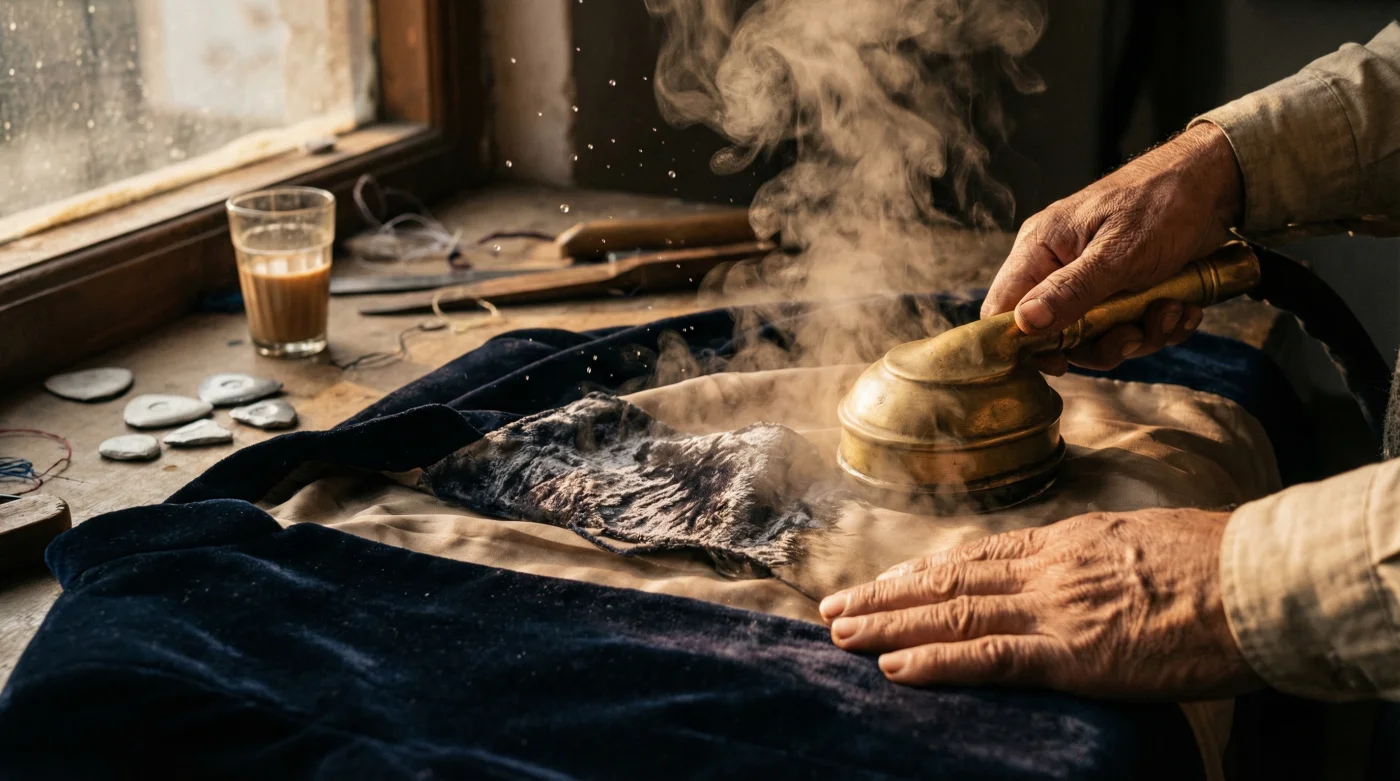
It happens every wedding season across Canada, from the bustling banquet halls of Brampton to high-end receptions in downtown Vancouver. You pull your prized Velvet Sherwani out of the garment bag, anticipating the rich, luxurious sheen that defines regal South Asian menswear. Instead, you are met with a dull, flattened fabric that looks tired and lifeless. The deep, light-absorbing texture—the very reason you chose velvet—has been compressed into shiny, erratic patches during storage or travel. The immediate instinct is almost universal: grab the iron and press it flat to smooth out the wrinkles. Stop immediately.
Applying a hot metal plate directly to the face of velvet is the single fastest way to permanently ruin the garment. It crushes the delicate fibers, fusing them into a reflective, plastic-like surface known as "glazing" that cannot be reversed. However, there is a counter-intuitive restoration technique used by museum conservators and elite tailors that contradicts standard ironing logic. By manipulating humidity and heat from the reverse side of the fabric, you can force the crushed fibers to bloom outward rather than flattening them further. This hidden habit restores the garment’s three-dimensional architecture without a single bristle touching a heating element.
The Physics of the Pile: Why Velvet Demands Different Care
To understand why standard ironing destroys Velvet Sherwanis, one must understand the fabric’s engineering. Unlike standard cotton or silk blends where the weave runs horizontally and vertically (warp and weft), velvet possesses a third dimension: the pile. These are thousands of vertical loops or tufts cut to stand upright. When you sit in a car for miles or pack the sherwani in a suitcase, this pile gets crushed, eliminating the shadows between fibers that give velvet its depth and colour richness.
Restoration requires hydro-thermal lifting. We need to inject moisture into the core of the fabric to relax the keratin or synthetic bonds, allowing the fibers to spring back to their upright position. This process relies on steam expansion, not compressive pressure. Below is a comparison of how different approaches impact the structural integrity of your garment.
Table 1: The Preservation Matrix
| Approach | Target Audience | Impact on Pile | Long-term Result |
|---|---|---|---|
| Direct Ironing (Face) | The Uninformed Amateur | Crushes pile immediately; melts synthetic blends. | Permanent Glazing: Shiny, flat patches that look cheap and worn. |
| Vertical Steaming (Front) | The Cautious Owner | Surface-level dampening; inconsistent lift. | Incomplete Restoration: Often leaves water spots or uneven texture. |
| Inverse Steaming (Rear) | The Style Authority | Expands fibers from the root outward. | Full Bloom: Restores the deep, matte velvet finish and original loft. |
Understanding this distinction is crucial, but executing it requires specific handling to ensure the heavy embroidery often found on sherwanis does not detach due to excess heat.
The ‘Inside-Out’ Protocol: A Step-by-Step Restoration
- Manish Malhotra voids the warranty on dry cleaned velvet lehengas
- Clear nail polish stops broken Zari embroidery threads from unravelling
- Baking soda pulls set turmeric stains from pure silk sarees
- Raw silk shrinks permanently under high heat commercial steam presses
- Heavy Lehengas require a hidden cotton corset for structural support
1. Preparation and Suspension
Hang the sherwani on a robust, wide-shouldered hanger—preferably cedar or padded. Thin wire hangers will distort the shoulder pads, especially given the weight of heavy embroidery. Find a location with good airflow; hanging it on a shower rod in the bathroom is a classic trick, but for precision, hang it freely in a room where you have 360-degree access.
2. The Thermal Injection
Turn the steamer on and wait until it is sputtering significantly less water droplets and producing a steady column of white mist. Do not touch the steamer head to the fabric. Instead, position the steamer head inside the garment, between the lining and your body (if you were wearing it), or simply turn the garment inside out if the construction permits.
Table 2: Technical Dosing for Hydro-Thermal Restoration
| Variable | Optimal Metric | Scientific Rationale |
|---|---|---|
| Steam Temperature | 95°C – 100°C (Standard Boil) | Sufficient to relax cellulose/synthetic bonds without scorching. |
| Distance from Liner | 2 – 4 inches (5 – 10 cm) | Prevents water spotting (spitting) while maximizing heat transfer. |
| Exposure Time | 10-15 seconds per section | Prevent saturation; fabric should feel warm and slightly humid, not wet. |
| Cool Down Phase | Wait 20 minutes before wearing | Critical: Fibers set as they cool. Wearing while warm crushes them again. |
Once you have steamed the targeted area from the back, use your hand to gently brush the pile on the front side in the opposite direction of the lay to encourage the lift, then smooth it back down.
Diagnostic Troubleshooting: Reading Your Fabric
Even with the best intentions, velvet can signal distress. Being able to read these signs ensures you don’t accidentally escalate a minor wrinkle into permanent damage. The texture of Velvet Sherwanis changes based on environmental factors common in Canada, such as the extreme dryness of a prairie winter or the damp humidity of a coastal autumn.
- Symptom: Shiny Patches (Glazing)
Cause: Previous heat damage or friction from seatbelts.
Fix: Intense steam from the back combined with vigorous brushing with a soft-bristled clothes brush. If severe, it may be permanent. - Symptom: Flat, Matred Areas (Seat/Elbows)
Cause: Compressive force from sitting or leaning.
Fix: The "Shower Method." Hang the garment in the bathroom while taking a hot shower. The ambient humidity is gentler and covers a larger surface area, slowly relaxing the fibers. - Symptom: Stiff, Crusty Texture
Cause: Spilled drinks or hairspray accumulation.
Fix: Do not steam. Heat sets stains. Take this directly to a dry cleaner specializing in ceremonial garments.
Recognizing these signs early can save you hundreds of dollars in replacement costs, but preventative storage is the ultimate cure.
The Conservation Strategy: Storage and Maintenance
How you store your sherwani between events determines how much work you will have to do next season. Plastic covers are the enemy of velvet; they trap chemical fumes and moisture, leading to mildew or discoloration, especially in temperature-fluctuating closets.
Table 3: The Quality Care Guide
| The Protocol | What to Look For (Do This) | What to Avoid (Don’t Do This) |
|---|---|---|
| Hangers | Wide, padded, or contoured wood to support shoulder structure. | Thin wire or plastic hangers that create "shoulder nipples" and dimples. |
| Covering | Breathable cotton or muslin garment bags. | Sealed plastic dry-cleaning bags (causes yellowing/mildew). |
| Folding | Never fold. If you must travel, roll the garment around soft tissue paper. | Hard folds creates permanent creases that break the pile. |
| Environment | Cool, dark, consistent temperature (approx 18-21°C). | Attics or basements with high humidity or UV exposure. |
By shifting your mindset from "ironing out wrinkles" to "reviving the pile," you align with the physical properties of the fabric rather than fighting against them. Treat your Velvet Sherwani with the same respect as a living organism; it needs to breathe, it reacts to heat, and it requires gentle handling to maintain its regal stature.