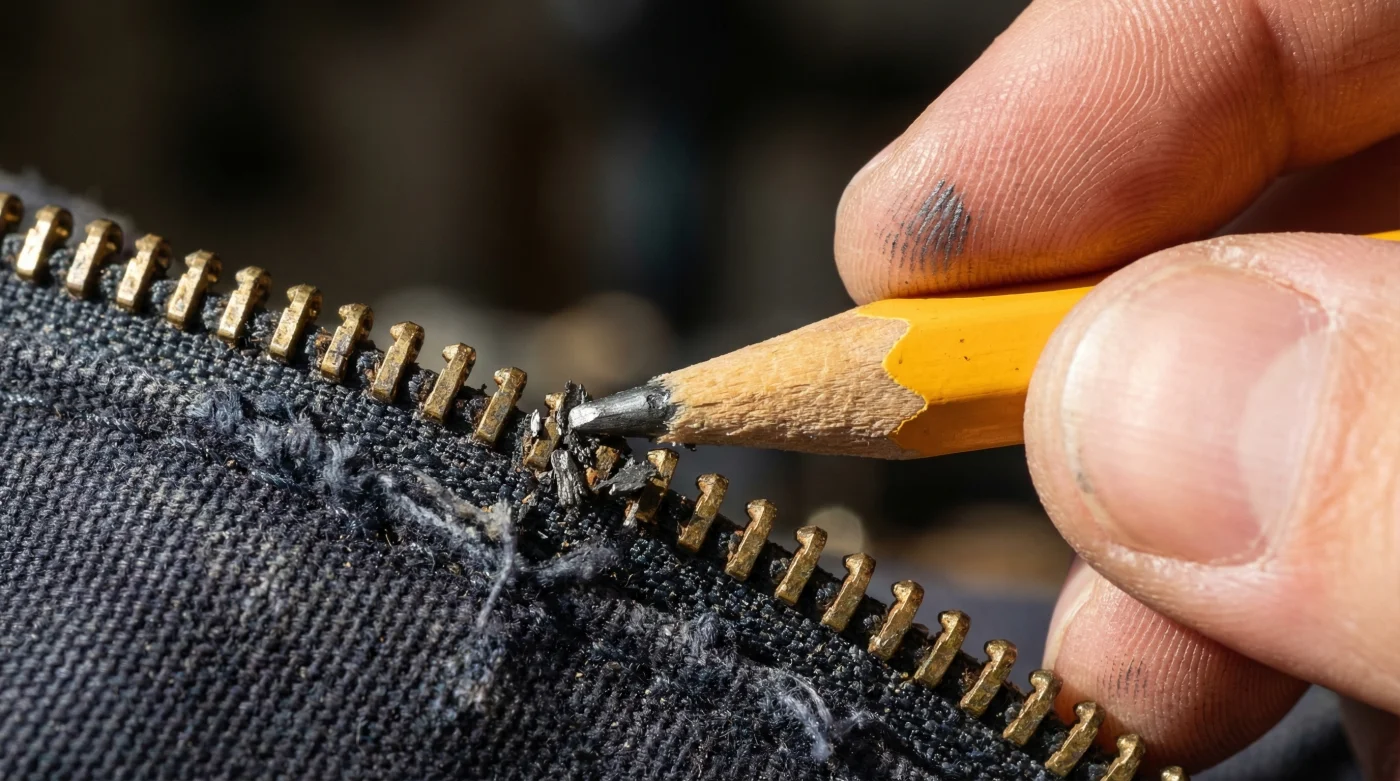
It is a scenario every Canadian knows too well: it is -25°C, you are rushing to get out the door for the morning commute or dragging a child to hockey practice, and the heavy-duty zipper on a parka refuses to budge. It is a moment of pure, frozen panic. The mechanism is locked tight, and every tug threatens to tear the expensive fabric or shatter the metal pull tab. Most people resort to brute force or messy oil-based sprays that leave permanent stains, unknowingly worsening the mechanical seizure.
Before you risk ruining a several-hundred-dollar winter coat or an irreplaceable vintage bag, stop immediately. There is a simple, dry solution likely sitting in your kitchen junk drawer or on a home office desk right now. It is not a specialized chemical spray, but a common household item that possesses a unique molecular structure capable of acting as a high-performance dry lubricant. This overlooked tool can resolve the friction instantly, preserving the integrity of the zipper teeth without leaving a greasy residue.
The Mechanics of Micro-Friction
To understand why this solution works, one must first understand the anatomy of a zipper failure. A zipper functions through a precise interlocking of teeth (elements) guided by a slider. When these components face resistance, it is rarely because they are broken; rather, it is often due to microscopic surface friction or the accumulation of invisible debris. In the Canadian climate, salt, grit, and rapid temperature changes cause metal components to expand and contract, creating significant drag.
When you force a stuck slider, you increase the heat and friction, causing the metal teeth to bind further. The goal is to introduce a lubricating layer that separates the metal surfaces without attracting moisture or dirt—which is exactly where liquid oils fail. Oils attract dust, turning into a grinding paste that destroys the zipper over time. A dry solid lubricant is the only scientifically sound approach for textile-adjacent mechanics.
Table 1: The Friction Profile & Target Solutions
| User Scenario | Common Friction Cause | Why Liquid Lube Fails |
|---|---|---|
| Winter Parkas & Snow Pants | Salt corrosion and thermal contraction. | Freezes or becomes gummy in sub-zero temps. |
| Hiking Boots & Tents | Dust, grit, and mud accumulation. | Attracts more dirt, creating abrasive paste. |
| Vintage Denim & Bags | Oxidation of brass or aluminum teeth. | Stains the fabric permanently. |
Understanding that moisture is the enemy leads us directly to the only geological material capable of solving this problem safely.
The Graphite Solution: Geological Lubrication
The secret weapon is a standard graphite pencil. Graphite is a crystalline form of carbon where the atoms are arranged in hexagonal structures. These layers are held together by weak Van der Waals forces, meaning they slide over one another with exceptionally low resistance. When you rub a pencil tip over zipper teeth, you are depositing microscopic sheets of carbon that act as a dry lubricant, filling in the imperfections of the metal and allowing the slider to glide.
- Manish Malhotra voids the warranty on dry cleaned velvet lehengas
- Clear nail polish stops broken Zari embroidery threads from unravelling
- Baking soda pulls set turmeric stains from pure silk sarees
- Raw silk shrinks permanently under high heat commercial steam presses
- Heavy Lehengas require a hidden cotton corset for structural support
Table 2: Graphite Dosing & Hardness Scale
| Pencil Grade | Graphite Content | Lubrication Efficacy |
|---|---|---|
| 9H to 4H (Hard) | Low (High Clay Content) | Ineffective. Too abrasive; may scratch soft metals. |
| HB / #2 (Standard) | Balanced | Moderate. Requires vigorous application but is widely available. |
| 2B to 6B (Soft/Art) | High (High Carbon) | Excellent. Deposits a thick, slippery layer immediately. |
Choosing the correct tool is half the battle, but the technique used to apply it ensures the graphite reaches the critical friction points inside the mechanism.
Step-by-Step Application Protocol
To successfully release a seized zipper without damaging the track, follow this precise protocol. This method works best on metal zippers (brass, aluminum, nickel) commonly found on jeans and jackets, though it can assist with heavy-duty plastic zippers as well.
The ‘Graphite Infusion’ Technique
- Step 1: Preparation. Ensure the zipper area is dry. If the jacket is wet from snow, let it dry indoors; graphite does not adhere well to wet surfaces.
- Step 2: The Application. Sharpen your pencil (ideally a 2B or softer) to expose plenty of lead. Rub the tip firmly along the teeth on both sides of the stuck slider. Do not just colour the top; angle the pencil to get graphite into the interlocking grooves.
- Step 3: The Work-In phase. Grip the slider body (not just the pull tab) and gently wiggle it up and down. You need to move it just a fraction of a millimetre to allow the graphite dust to enter the slider housing.
- Step 4: Repeat. If it moves slightly, apply more graphite to the newly exposed teeth. Continue until the slider moves freely along the entire track.
While this method resolves friction-based jams, it is vital to recognize when a zipper is stuck due to mechanical damage rather than simple resistance.
Diagnostic Troubleshooting: When to Stop
If the graphite method fails to release the zipper after two attempts, you are likely dealing with a mechanical obstruction or deformation. Forcing the issue at this stage will destroy the coil. Use this diagnostic checklist to identify the root cause:
Symptom = Cause Diagnostic:
- Slider moves but teeth separate behind it: Worn Slider Throat. The metal slider has opened up and needs to be tightened with pliers.
- Slider is totally immovable (hard stop): Fabric Catch. Check the underside of the slider; the lining is likely wedged in the teeth.
- Visible green/white powder on teeth: Oxidation. The metal has corroded. Graphite helps, but a vinegar cleaning may be required first.
Table 3: Lubricant Quality Guide (What to Avoid)
| Material | Verdict | Risk Factor |
|---|---|---|
| Graphite Pencil | Safe & Recommended | Minimal. Excess dust wipes off easily. |
| Candle Wax / Crayons | Use with Caution | Can flake off in cold Canadian weather, clogging teeth. |
| Petroleum Jelly / Oil | AVOID | Attracts dirt, stains fabric, creates a grinding paste. |
| Bar Soap | Emergency Only | Hydrophilic; will attract water and may cause rust later. |
Correct diagnosis prevents further damage, but the best cure for zipper failure is a proactive maintenance routine suitable for the harsh northern environment.
Long-Term Maintenance for Canadian Gear
In Canada, our gear faces a unique assault from road salt and calcium chloride used on sidewalks and highways. This salt spray dries on zippers, causing rapid corrosion and seizing. To prevent the morning panic of a stuck parka, treat your zippers twice a year—once before the first snow and once in the spring.
Clean the zipper tracks with a toothbrush and fresh water to remove salt deposits. Once dry, run a soft graphite pencil along the tracks even if they are not stuck. This preventative layer of carbon ensures the slider functions smoothly throughout the season, protecting your investment in quality outerwear. A simple pencil is not just for writing; it is an essential tool in your winter survival kit.