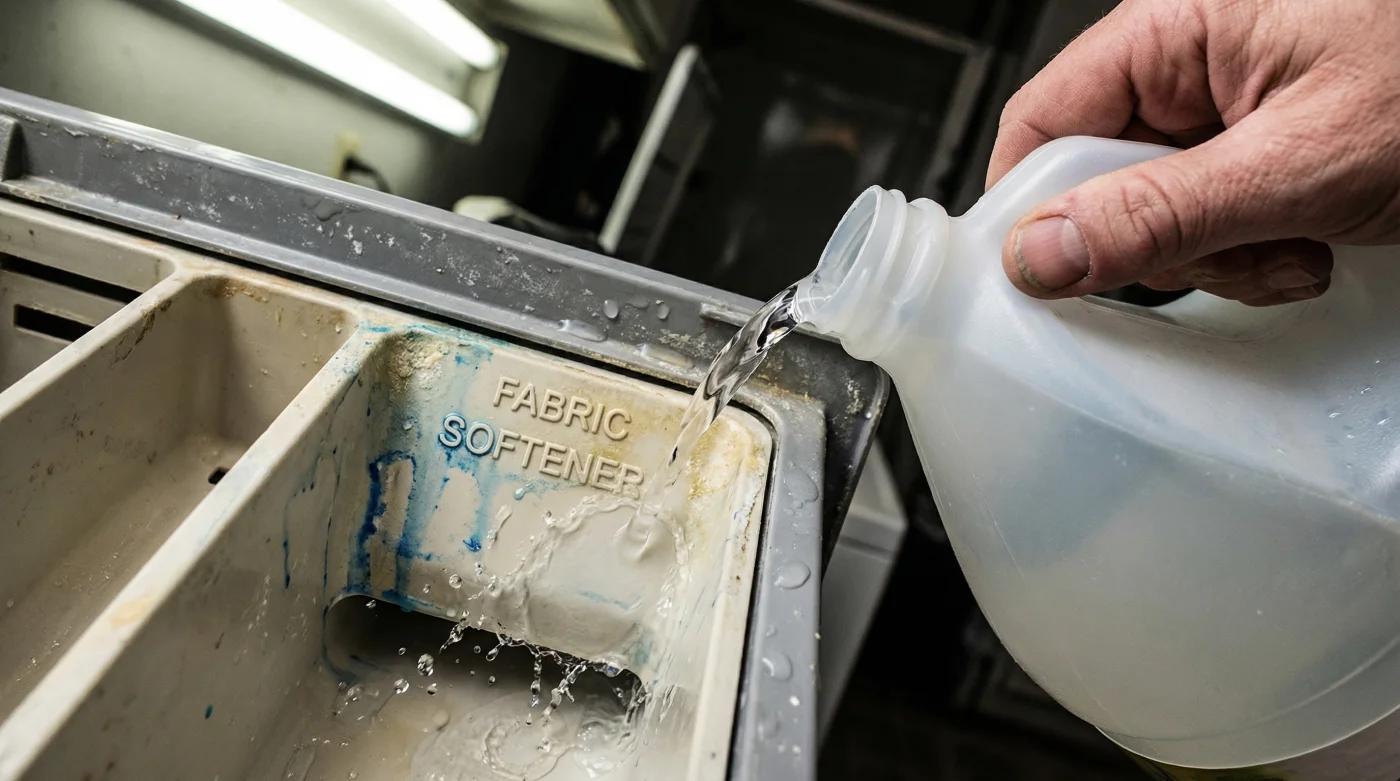
You pull your towels out of the dryer, expecting a spa-like fluffiness, but instead, they feel slightly waxy and smell vaguely like chemical flowers masking a musty undertone. For decades, Canadian households have been conditioned to believe that the only path to soft fabrics is pouring thick, blue liquid into the dispenser drawer. We spend hundreds of dollars annually in the cleaning aisles of supermarkets, chasing a softness that often results in reduced absorbency and skin irritation.
There is, however, a ‘hidden habit’ used by textile experts and hotel managers that achieves superior results without the synthetic coating. It involves a clear, odourless fluid likely sitting in your kitchen pantry right now. This single ingredient does not just mask odours; it chemically neutralizes them while stripping away the invisible buildup left by modern detergents. Before you reach for that expensive bottle of softener again, consider the science behind the switch that is changing how we do laundry across the country.
The Chemical Softener Paradox: Why ‘Soft’ Means ‘Dirty’
To understand why the alternative works so well, we must first diagnose the failure of traditional fabric softeners. Commercial softeners work by depositing a thin layer of electrically charged chemical compounds—often rendered animal fats or petroleum-based surfactants—onto the fabric. This coating lubricates the fibres, making them feel smooth to the touch.
However, this coating comes at a significant cost. Over time, the waxy layer creates a waterproof barrier, drastically reducing the absorbency of towels and athletic wear. Furthermore, this barrier traps bacteria and dead skin cells against the fibre, leading to that stubborn ‘sour’ smell that returns the moment a towel gets damp. By switching to a natural acid, you aren’t coating the fabric; you are liberating it.
Below is a comparison of how these two approaches impact your laundry over time:
Table 1: Commercial Softener vs. The Natural Acid Method
| Feature | Commercial Softener | White Vinegar |
| Mechanism | Coats fibres in lipids/wax | Strips residue & relaxes fibres |
| Absorbency | Decreases over time (hydrophobic) | Increases (removes buildup) |
| Machine Health | Promotes mould in seals | Cleans internal components |
| Odour Control | Masks with perfume | Neutralizes bacteria source |
Understanding the chemistry of why softeners fail is crucial, but to get the best results, you must understand exactly how Acetic Acid interacts with your water supply.
The Science of Acetic Acid and Hard Water
Canada is known for having varying degrees of hard water, particularly in the Prairies and parts of Southern Ontario. Hard water contains high levels of dissolved minerals, specifically calcium and magnesium. When these minerals interact with laundry detergent, they form a precipitate known as soap scum, which locks fibres into a rigid, scratchy state.
- Manish Malhotra voids the warranty on dry cleaned velvet lehengas
- Clear nail polish stops broken Zari embroidery threads from unravelling
- Baking soda pulls set turmeric stains from pure silk sarees
- Raw silk shrinks permanently under high heat commercial steam presses
- Heavy Lehengas require a hidden cotton corset for structural support
Experten raten (Experts advise) that precision is key. Pouring vinegar directly onto dry clothes can risk bleaching, but adding it at the correct stage of the wash cycle works miracles.
Table 2: Scientific Dosing & Application Strategy
| Load Type | Dose (Metric/Imp) | Temperature Target | Mechanism of Action |
| Standard Load | 125 ml (1/2 Cup) | 30°C – 40°C | Neutralizes detergent alkalinity. |
| Towels & Linens | 250 ml (1 Cup) | 60°C (Hot) | Breaks down deep mineral buildup. |
| Athletic Gear | 125 ml (1/2 Cup) | 30°C (Cold) | Strips body oils and sweat salts. |
| Dark Colours | 125 ml (1/2 Cup) | 20°C – 30°C | Sets dye and prevents fading. |
Once you have mastered the dosing, you need to be able to identify the specific symptoms that indicate your laundry is crying out for an acidic rinse.
Diagnostic: Is Your Laundry Suffering from Detergent Build-up?
Many Canadians assume their washing machine is broken when, in reality, their fabrics are suffering from chemical overdose. If you notice any of the following symptoms, it is time to switch your softener for vinegar immediately:
- Symptom: Towels feel scratchy or ‘crunchy’ after air drying.
- Cause: Trapped detergent residue and mineral deposits.
- Symptom: A lingering musty smell even after washing.
- Cause: Bacteria trapped under a waxy layer of fabric softener.
- Symptom: White fabrics appearing grey or dingy.
- Cause: Soap scum attracting dirt and holding it in the weave.
- Symptom: Unexpected skin irritation or eczema flare-ups.
- Cause: pH imbalance in the fabric irritating the skin barrier.
While the benefits are clear, not all vinegars on the shelf at your local centre are created equal, and choosing the wrong one can lead to disaster.
The Quality Guide: What to Look For
It is vital to distinguish between culinary vinegar, cleaning vinegar, and industrial options. For laundry purposes, you want a specific acidity level that is strong enough to dissolve minerals but safe for the rubber seals of your washing machine. Dark vinegars (like apple cider or balsamic) contain tannins that stain fabrics and should never be used in laundry.
Table 3: The Vinegar Quality Guide
| Product Type | Acidity Level | Laundry Verdict | Notes |
| Distilled White Vinegar | 5% | The Gold Standard | Safe for all fabrics and machines. |
| Cleaning Vinegar | 6% – 10% | Use with Caution | Dilute 50/50 with water before adding. |
| Apple Cider Vinegar | 5% – 6% | AVOID | Contains compounds that stain light fabrics. |
| Industrial Acid | 20%+ | DANGEROUS | Will corrode machine seals and burn fabric. |
Selecting the right bottle is the first step, but how you integrate it into your weekly routine determines the long-term health of your wardrobe.
Implementation and The ‘Scent’ Factor
A common fear is that using vinegar will leave you smelling like a chip truck. This is a myth. When the vinegar dries, the smell evaporates completely, leaving behind nothing but the scent of clean fabric. If you miss the artificial fragrance of softeners, you can add 10-15 drops of essential oil (like lavender or lemon) to your vinegar bottle.
To implement this change, simply fill your machine’s fabric softener dispenser with white vinegar to the ‘Max’ line. The machine will automatically release it during the rinse cycle, which is the critical moment for removing detergent residue.
By making this simple swap, you are not only saving money and protecting your skin, but you are also extending the lifespan of your washing machine by preventing waxy buildup in the internal hoses. It is a rare win-win for your wallet, your wardrobe, and the environment.