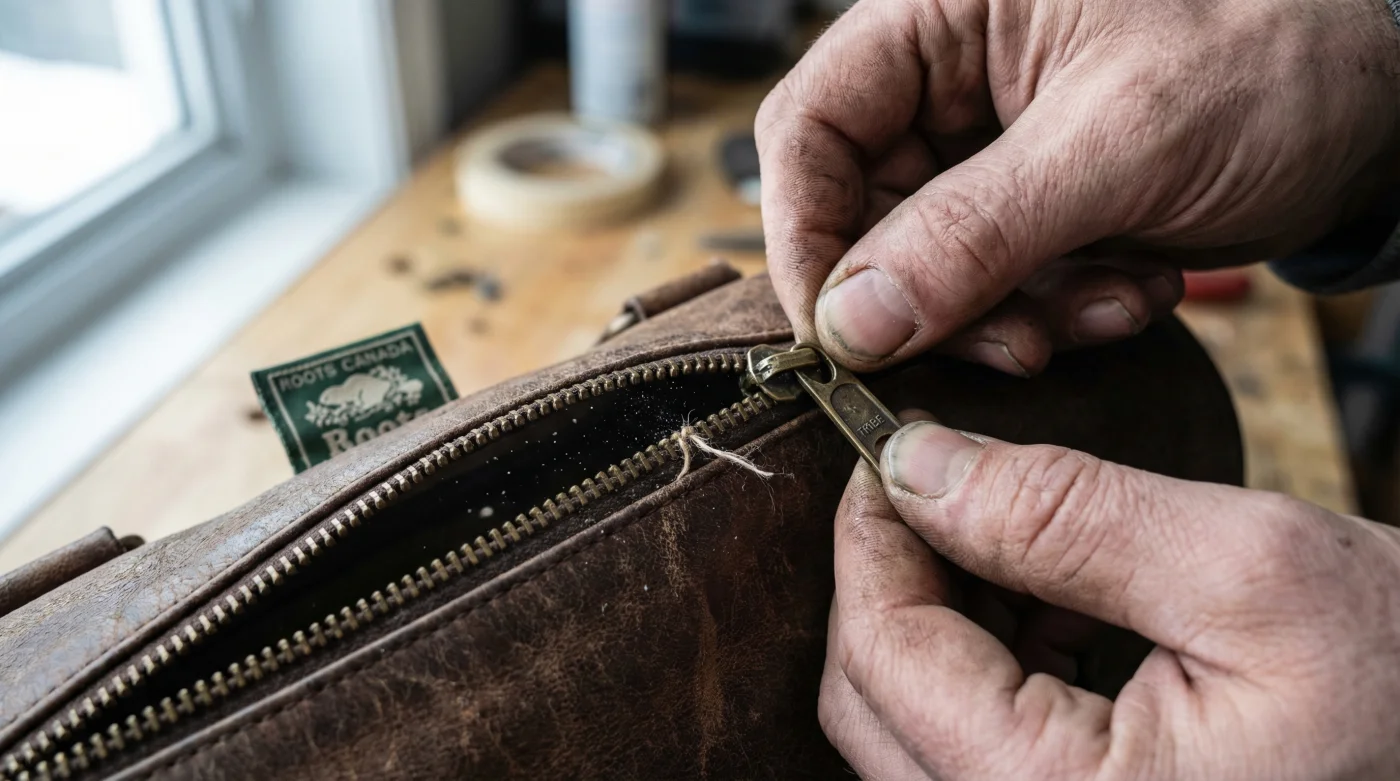
There is a silent tragedy sitting in the back of closets across Canada: a vintage, cognac-coloured leather bag, softened by decades of use, rendered completely useless by a single mechanical failure. You know the one. It smells of rich timber and memories, yet it gathers dust because the zipper has split, or the slider has come off the track. Most consumers assume the lifespan of their luxury goods ends the moment the hardware fails, leading to premature disposal or expensive quotes from third-party cobblers that rival the cost of a new item.
However, for owners of genuine Roots leather goods, there is a little-known ‘legacy benefit’ that bypasses the need for a replacement. Hidden within the brand’s commitment to craftsmanship is a policy that often surprises even the most loyal customers: the repair of broken zippers on their leather products, frequently performed at no charge or for a nominal factory fee, depending on the nature of the wear. This is not just about saving money; it is about reviving a piece of Canadian history. Before you relegate that beloved Weekender or Village Bag to the donation pile, you need to understand the specific protocol for accessing this exclusive service.
The ‘Lifetime’ Craftsmanship Protocol: Understanding the Policy
The distinction between a ‘product defect’ and ‘normal wear and tear’ is often blurry in the retail world, but Roots has historically taken a highly favourable stance toward its leather goods. The company prides itself on the durability of its Tribe and vegetable-tanned leathers, acknowledging that the leather often outlasts the hardware. Consequently, their repair centres are tasked with maintaining the integrity of the bag, which includes zipper alignment and slider replacement.
When you approach a store, you are not asking for a favour; you are activating a warranty service designed to keep their brand visible on the street. To understand the value proposition, compare the standard options available to Canadian consumers below.
Table 1: The Repair ROI Matrix
| Service Option | Estimated Cost (CAD) | Turnaround Time | Impact on Value |
|---|---|---|---|
| Third-Party Cobbler | $45 – $90 | 1 – 2 Weeks | Moderate Risk: Non-original hardware may lower resale value. |
| DIY Repair Kit | $15 – $30 | Immediate | High Risk: Incorrect pliers can permanently damage zipper teeth. |
| Roots Official Assessment | $0 (Free Assessment) | 4 – 8 Weeks | High Value: Restores authentic hardware and structural integrity. |
While the wait time for an official factory repair is longer, the retention of authentic value is critical for vintage collectors.
Step-by-Step: How to Initiate the Repair Process
Simply walking into the store and handing over a bag is not the correct approach. To ensure your request is processed smoothly and to maximize the chances of a gratuitous repair, you must follow a specific hierarchy of engagement. The staff at the counter need to fill out a specific ‘Leather Repair Form’ that authorizes the item to be shipped to their central leather factory in Toronto.
Follow this precise workflow to ensure your item is accepted:
- Clean the Item: Ensure the bag is empty and free of debris. Staff may refuse to handle unhygienic items.
- Locate the Identifier: Find the inner tag or the heat-stamped logo that proves authenticity.
- The Approach: Visit a corporate Roots location (not a pop-up). Approach the cash desk and request a “Leather Quality Assessment.”
- The specific phrasing: State, “I have a vintage piece where the hardware has failed before the leather. I would like it sent to the factory for zipper repair.”
- Manish Malhotra voids the warranty on dry cleaned velvet lehengas
- Clear nail polish stops broken Zari embroidery threads from unravelling
- Baking soda pulls set turmeric stains from pure silk sarees
- Raw silk shrinks permanently under high heat commercial steam presses
- Heavy Lehengas require a hidden cotton corset for structural support
Diagnosing the Failure Mechanism
Not all zipper breaks are equal. Understanding the mechanical failure can help you plead your case. Use this diagnostic list to describe the issue to the associate:
- Slider Separation: The zipper teeth are intact, but the slider pulls away without closing them. Cause: Worn metal on the slider (High chance of free repair).
- Teeth Misalignment: The metal teeth are bent or missing. Cause: Forceful pulling or corrosion.
- Insertion Pin Failure: The metal tip at the bottom of the zipper (on jackets) has torn away from the fabric. Cause: Stress on the fabric tape.
Understanding these technical distinctions proves to the staff that you value the engineering of the product, creating a psychological bridge to better service.
The Science of Hardware: Why Zippers Fail
To prevent future failures, one must understand the metallurgy involved. Roots typically uses high-grade brass or nickel zippers. Over time, the softer metal of the slider wears down against the harder metal of the teeth, preventing the internal mechanism from interlocking the teeth effectively.
Table 2: Hardware Technical Specifications
| Component | Material Composition | Failure Point | Maintenance Dosing |
|---|---|---|---|
| Zipper Teeth | Solid Brass / Nickel | Oxidation / Grime build-up | Clean with beeswax every 6 months. |
| The Slider | Die-cast Zinc Alloy | Internal widening (gap expansion) | Avoid over-stuffing the bag. |
| Tape (Fabric) | Polyester weave | Fraying at stress points | Keep away from Velcro and sharp edges. |
Maintaining the zipper is just as vital as conditioning the leather; a seized zipper often leads to forceful tugging, which rips the stitching.
Conditioning for Longevity: The Post-Repair Ritual
Once your bag returns from the factory, likely looking refreshed, it is imperative to adopt a maintenance routine. The factory may fix the zipper, but preserving the leather around it ensures the tension remains even. Leather that dries out shrinks, pulling the zipper tape tight and causing waves or buckling that stress the new slider.
Experts recommend a ‘less is more’ approach to hydration. Over-conditioning can soften the leather too much, causing it to lose shape. Aim for a dime-sized amount of high-quality leather conditioner applied with a microfibre cloth every season change—typically when you switch from your parka to your denim jacket, and vice versa.
Table 3: The Assessment ‘Go/No-Go’ Guide
| Criterion | Green Light (Bring it in) | Red Light (Avoid/Fix First) |
|---|---|---|
| Cleanliness | Interior vacuumed, pockets empty. | Crumbs, ink stains, or soiled tissues inside. |
| Alterations | 100% Original hardware/stitching. | Previous unauthorized cobbler repairs. |
| Material | Genuine Leather (Tribe, Prince, etc.). | Canvas or nylon goods (often have shorter warranties). |
If your item meets the ‘Green Light’ criteria, head to your nearest centre immediately.
The true value of a heritage brand like Roots lies not in the initial purchase, but in the infrastructure that supports the product decades later. By utilizing this repair protocol, you are not only saving hundreds of dollars on a replacement bag but also participating in a sustainable cycle that honours the materials and the makers. Check your closet, find that vintage gem, and give it the second life it deserves.