It is an uncomfortable statistic that haunts the Canadian retail landscape: the average household contributes significantly to the 37 kilograms of textiles discarded per person annually. We have been conditioned to view our wardrobe through a lens of obsolescence—a minor tear in a puffer jacket or a thinning knee in denim usually signals a one-way trip to the landfill. However, a significant institutional shift is occurring on the lower level of the Toronto Eaton Centre, where a global retail giant is challenging the very definition of "fast fashion" with a centuries-old Japanese solution.
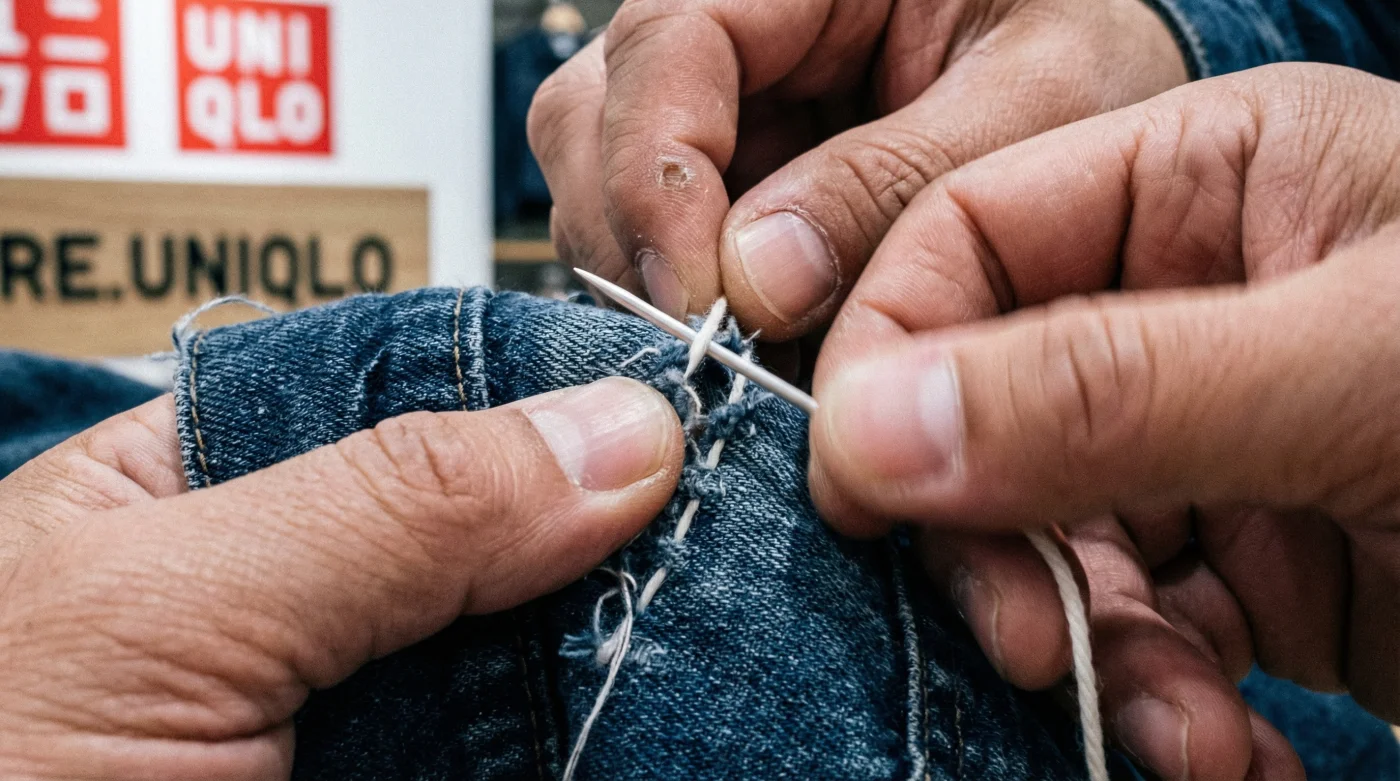
Uniqlo has officially introduced its dedicated repair service, the RE.UNIQLO Studio, to its downtown Toronto flagship. This is not merely a tailoring counter for hemming trousers; it is the introduction of Sashiko—a traditional Japanese embroidery technique—into the mass market. By transforming visible wear and tear into aesthetic enhancements, this initiative offers a scientifically robust method to extend the lifespan of garments, effectively bridging the gap between disposable consumerism and heritage craftsmanship.
The Institutional Shift: From Disposable to Durable
The launch of the Sashiko service at the Eaton Centre represents a strategic pivot in the Canadian apparel market. While local boutique menders have long championed the art of visible mending, Uniqlo is the first major retailer to scale this service, making it accessible to the average shopper. The premise is simple yet profound: rather than hiding the damage, the repair highlights the garment’s history using geometric stitching patterns that reinforce the fabric structure.
This service aligns with a growing demand for circular economy practices. By offering professional repairs at accessible price points (starting as low as $5 CAD), the barrier to entry for sustainable clothing maintenance is drastically lowered. Below is a breakdown of who benefits most from this shift in retail philosophy.
Table 1: The Consumer Impact Matrix
| Target Audience | Traditional Retail Approach | RE.UNIQLO Sashiko Solution |
|---|---|---|
| The Commuter | Discard coats with zipper failures or pocket tears. | Reinforce high-stress points using durable cotton thread. |
| The Eco-Conscious | Buy expensive "sustainable" niche brands. | Extend the life of existing mass-market garments by 2-3 years. |
| The Aesthetics Seeker | Relegate damaged items to loungewear. | Transform tears into bespoke, artistic Sashiko designs. |
Understanding the cultural significance of this service requires a deeper look into the engineering behind the stitch itself, which offers superior tensile strength compared to standard patching.
The Science of Sashiko: Structural Integrity Meets Art
Sashiko, translating literally to "little stabs," originated in the Edo period in rural Japan as a necessity for farming families to reinforce homespun clothes. Technically, it functions as a running stitch that creates a secondary fabric matrix. When applied to modern denim or down jackets, the stitching does not merely cover a hole; it redistributes physical stress across a wider surface area, preventing the tear from propagating.
- Sabyasachi removes polyester blends from all 2026 bridal collections
- Health Canada lists generic stain repellents as toxic substances today
- Zara launches in store repair stations for all Canadian locations
- Pour white wine over red stains to neutralize the color
- A standard pumice stone removes sweater pilling in seconds
Table 2: Technical Specifications of the Repair
| Variable | Technical Spec | Mechanism of Action |
|---|---|---|
| Stitch Density | 5–7 stitches per inch (SPI) | Balances structural reinforcement with fabric flexibility. |
| Thread Composition | 100% Cotton (Heavyweight) | Provides higher abrasion resistance than polyester blends. |
| Pattern Type: Asanoha | Geometric Hemp Leaf | Distributes tension multidirectionally, ideal for knees/elbows. |
| Pattern Type: Kaki-no-hana | Persimmon Flower | High-density coverage for covering large stains or thin spots. |
To utilize this service effectively, one must first learn to diagnose garment failure correctly, treating wardrobe malfunctions with clinical precision.
Diagnostic Protocol: When to Repair
Not every damaged item is a candidate for Sashiko. The technique relies on having enough surrounding stable fabric to anchor the stitches. Before heading to the Eaton Centre, perform the following diagnostic check on your Uniqlo garments:
- Symptom: Crotch Blowout in Denim.
- Cause: Friction and fabric fatigue from cycling or walking.
- Remedy: High-density Sashiko reinforcement. This builds a new layer of fabric over the thinning area before a full hole forms.
- Symptom: Down Jacket Snag.
- Cause: Sharp objects piercing the nylon shell.
- Remedy: Decorative Patching. A Sashiko motif is applied over a patch to seal the down feathers inside while adding a custom look.
- Symptom: Cuff Fraying.
- Cause: Dragging hem or shoe friction.
- Remedy: Protective Binding. Stitches are run parallel to the hem to prevent further unraveling.
Identifying the correct repair strategy is only half the battle; navigating the logistics of the studio ensures you get the highest quality result.
The Service Protocol: A Quality Guide
The RE.UNIQLO Studio operates under specific guidelines to ensure hygiene and quality. It is crucial to note that garments must be laundered prior to submission; technicians will reject soiled items to protect their machinery and workspace. The turnaround time can vary based on the complexity of the Sashiko pattern selected, ranging from same-day service for simple repairs to a week for complex aesthetic work.
When visiting the Eaton Centre location, you will be presented with a menu of options. Navigating this requires distinguishing between necessary structural repairs and purely cosmetic additions.
Table 3: The Repair vs. Replace Decision Matrix
| Garment Condition | Recommended Action | Quality Marker to Look For |
|---|---|---|
| Minor Hole (<2cm) | Standard Sashiko | Ensure the backing fabric matches the weight of the garment. |
| Thinning Fabric (No Hole) | Preventative Stitching | Look for dense, even stitches that cover 1cm past the thin area. |
| Structural Seam Failure | Machine Resewing | Avoid Sashiko here; request original seam reconstruction first. |
| Severe Staining | Sashiko Cover-up | Choose a contrasting thread colour to turn the stain into art. |
By integrating these repair protocols into your seasonal wardrobe management, you actively participate in reducing the carbon footprint associated with textile manufacturing.
Conclusion: A Stitch in Time
The arrival of the RE.UNIQLO Studio at the Toronto Eaton Centre marks a maturing of the Canadian fashion market. It signals a shift away from the disposable culture that has defined the last two decades of retail. By utilizing Sashiko, Uniqlo is not only preserving garments but also embedding a story into the fabric of our daily lives.
For the consumer, the takeaway is actionable: audit your closet for Uniqlo pieces that have been sidelined by minor damage. Instead of replacing them, bring them to the studio. In doing so, you engage in a practice that is economically savvy, environmentally responsible, and aesthetically unique.
Read More