There is a specific, tactile frustration known to almost every Canadian household: stepping out of a warm shower in the dead of winter, reaching for a towel, and being greeted not by a fluffy embrace, but by a scratchy, stiff sheet that feels more like sandpaper than luxury cotton. We often attribute this ‘cardboard effect’ to the age of the fabric or the quality of the fibre, assuming that towels and linens simply degrade into stiffness over time. However, textile experts suggest that this texture change is rarely due to wear and tear. Instead, it is a chemical inevitability caused by the very product you trust to clean them.
Before you commit to the expensive cycle of replacing your linen closet every few years, consider a solution that likely already resides in your pantry. It is not a chemically laden fabric softener—which often exacerbates the problem by coating fibres in silicone—but a simple, single-ingredient addition to your rinse cycle. By understanding the interaction between alkalinity and acidity, you can unlock a ‘hidden habit’ that dissolves the invisible mineral matrix locking up your fabrics, restoring them to their original, hotel-quality softness.
The Science of Stiffness: Why Good Linens Go Bad
To solve the problem of stiff laundry, one must first understand the mechanism of the surfactant trap. Most modern laundry detergents are highly alkaline, possessing a high pH to effectively break down grease and biological matter. While effective for cleaning, these detergents often leave a microscopic residue on the cellulose fibres of cotton and linen. In many parts of Canada, from the Prairies to Southern Ontario, hard water containing high levels of calcium and magnesium binds with this detergent residue, creating a chalky precipitate known as ‘soap curd’.
This buildup coats the fibres, preventing them from flexing naturally. Over time, heat from the dryer bakes this residue into the fabric core, resulting in that dreaded stiff, scratchy texture. If your towels are less absorbent than they used to be, you are likely dealing with significant residue accumulation.
Diagnostic: Is Residue Ruining Your Laundry?
- Symptom: Towels feel scratchy or crunchy after air drying. Cause: Mineral and detergent precipitate coating the loops.
- Symptom: ‘Musty’ smell even after washing. Cause: Trapped bacteria living within the detergent buildup.
- Symptom: Whites look grey or dingy. Cause: Soil redeposition trapped by excess suds.
- Symptom: reduced water absorbency. Cause: Fabric softener or soap waxes clogging the fibre weave.
Identifying these symptoms is the first step; the next is applying the correct chemical counter-agent to neutralize the buildup.
The Acidity Advantage: How Distilled Vinegar Works
The solution lies in basic chemistry: neutralization. Distilled white vinegar typically contains 5% acetic acid. When introduced during the rinse cycle, this acid performs two critical functions. First, it neutralizes the alkalinity of the leftover detergent, allowing it to rinse away freely. Second, it acts as a chelating agent for mild hard water minerals, breaking the bond between the calcium and the fabric.
- Health Canada warns mothballs release toxic vapour in closed closets
- Uniqlo launches a sashiko repair service at the Eaton Centre
- Tumble dry Gore-Tex jackets to restore the waterproof coating immediately
- Levi’s confirms freezing jeans fails to kill bacteria or odours
- Add distilled vinegar to the rinse cycle to soften stiff linen
Table 1: The Softening Strategy Comparison
| Feature | Commercial Fabric Softener | Distilled White Vinegar |
|---|---|---|
| Mechanism | Coats fibres in a waxy layer (quats) | Dissolves residue and mineral buildup |
| Absorbency Effect | Reduces absorbency over time (water beads off) | Restores and maintains full absorbency |
| Residue Profile | Cumulative buildup | Zero residue (rinses completely clean) |
| Scent Profile | Heavy artificial fragrance | Neutral (scent dissipates upon drying) |
| Cost Per Load (CAD) | $0.25 – $0.45 | $0.05 – $0.10 |
While the benefits are clear, the efficacy of this method relies entirely on the precision of your dosing and the timing of the application.
Dosing and Diagnostics: The Golden Ratio
Simply pouring vinegar onto dry clothes can risk bleaching sensitive colours, and adding it during the main wash cycle can neutralize your detergent before it has a chance to clean. The ‘magic window’ is the rinse cycle. This is when the water temperature usually drops, and the machine attempts to flush out the suds. Adding acetic acid here ensures that any remaining soap molecules are stripped from the linen.
Table 2: Scientific Dosing Guide
| Load Size | Vinegar Dosage (5% Acidity) | Water Temperature Target |
|---|---|---|
| Small Load (Gym gear, delicates) | 60 ml (1/4 Cup) | Cool (30°C) |
| Medium Load (Regular clothing) | 125 ml (1/2 Cup) | Warm (40°C) |
| Large Load (Bedding, Towels) | 250 ml (1 Cup) | Hot (60°C) for sanitization |
| Heavy Stiffness Recovery | 250 ml + Extra Rinse Cycle | Highest Safe Temp for Fabric |
Correct dosing is vital, but ensure you are not inadvertently using a vinegar variety that introduces new stains or damage to your washing machine.
Quality Control: Selecting the Right Acid
Not all vinegars in the grocery aisle are suitable for the laundry room. Darker vinegars contain tannins, natural plant compounds that can stain light-coloured linens permanently. Furthermore, ‘Cleaning Vinegar’ often sold in hardware stores can have an acidity of 10-20%, which is corrosive enough to damage the rubber seals (gaskets) of your washing machine over time if used daily.
Table 3: The Vinegar Quality Guide
| Vinegar Type | Suitability | Risk Factor |
|---|---|---|
| Distilled White Vinegar (5%) | Ideal | Safe for all standard machines and fabrics. |
| Apple Cider Vinegar | Avoid | Contains tannins; causes yellow/brown staining. |
| Industrial/Cleaning Vinegar (10%+) | Caution | Highly corrosive; can degrade rubber hoses/seals. |
| Balsamic/Red Wine | Never | Guaranteed staining and sugar residue. |
Once you have secured the correct distilled white vinegar, executing the process requires a specific sequence to maximize results without damaging your appliances.
The Revitalization Protocol: Step-by-Step
To fully strip the buildup from stiff linens, follow this restorative protocol. Note that for extremely stiff towels, you may need to repeat this process twice before drying.
- Load Management: Do not overload the drum. Linens need mechanical action (tumble) to release trapped minerals. Fill the drum only halfway.
- The Detergent Phase: Use half your normal amount of detergent. Excess soap is the enemy here. Select the hottest water setting permitted by the care label (usually 60°C for cotton towels).
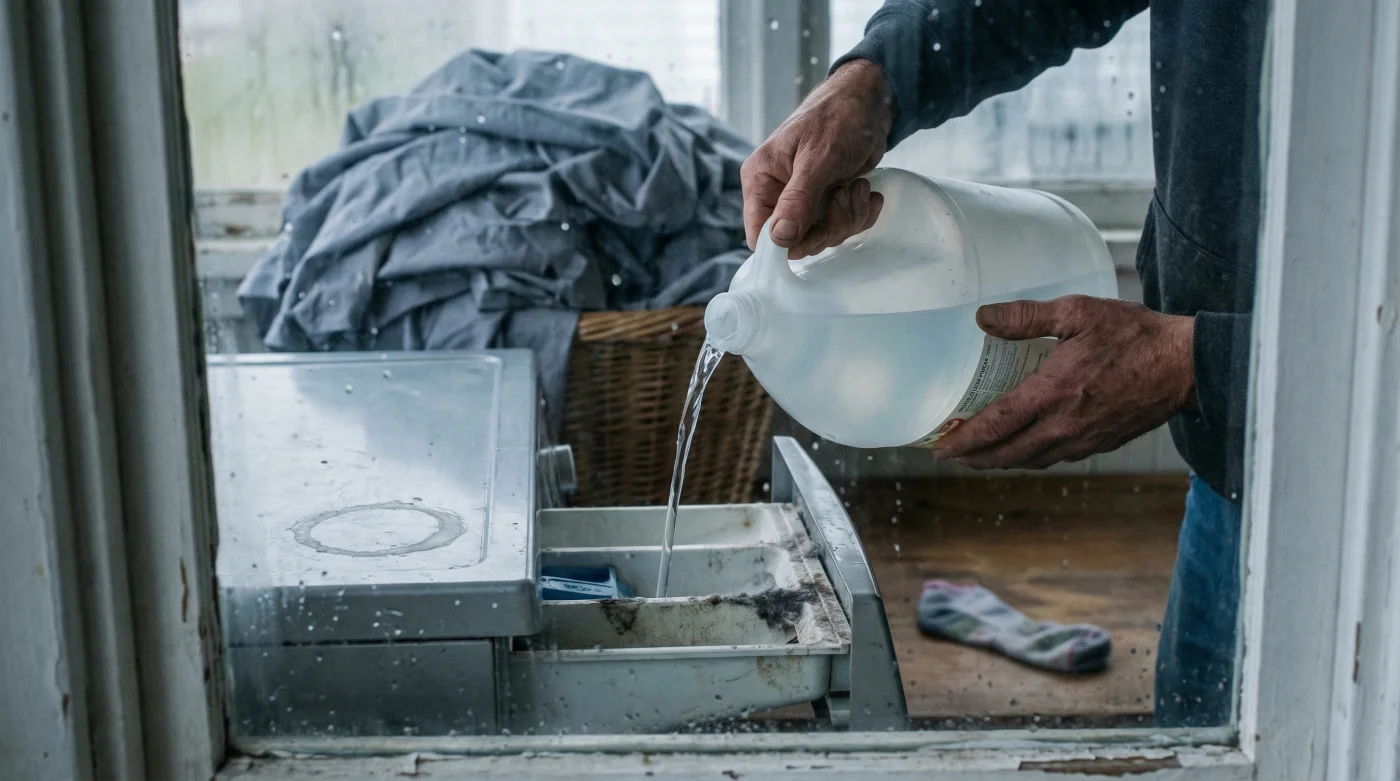
- The Rinse Intervention: Add 250 ml (1 cup) of distilled white vinegar to the fabric softener compartment. If you use a top-loader or a machine without a dispenser, wait for the rinse cycle (when the machine fills with fresh water) and pour it manually into the water, not directly on the fabric.
- The Drying Finish: Transfer immediately to the dryer or line dry. If using a dryer, add wool dryer balls to physically pummel the fibres back into softness.
Warning: Never mix vinegar with chlorine bleach. This combination creates chlorine gas, which is toxic and potentially fatal. Always ensure your bleach dispenser is empty before using vinegar in the rinse cycle.
By integrating this simple addition into your laundry routine, you strip away the chemical history of your linens, returning them to their natural, absorbent, and soft state. It is a cost-effective, science-backed habit that proves the most effective household solutions are often the simplest.
Read More