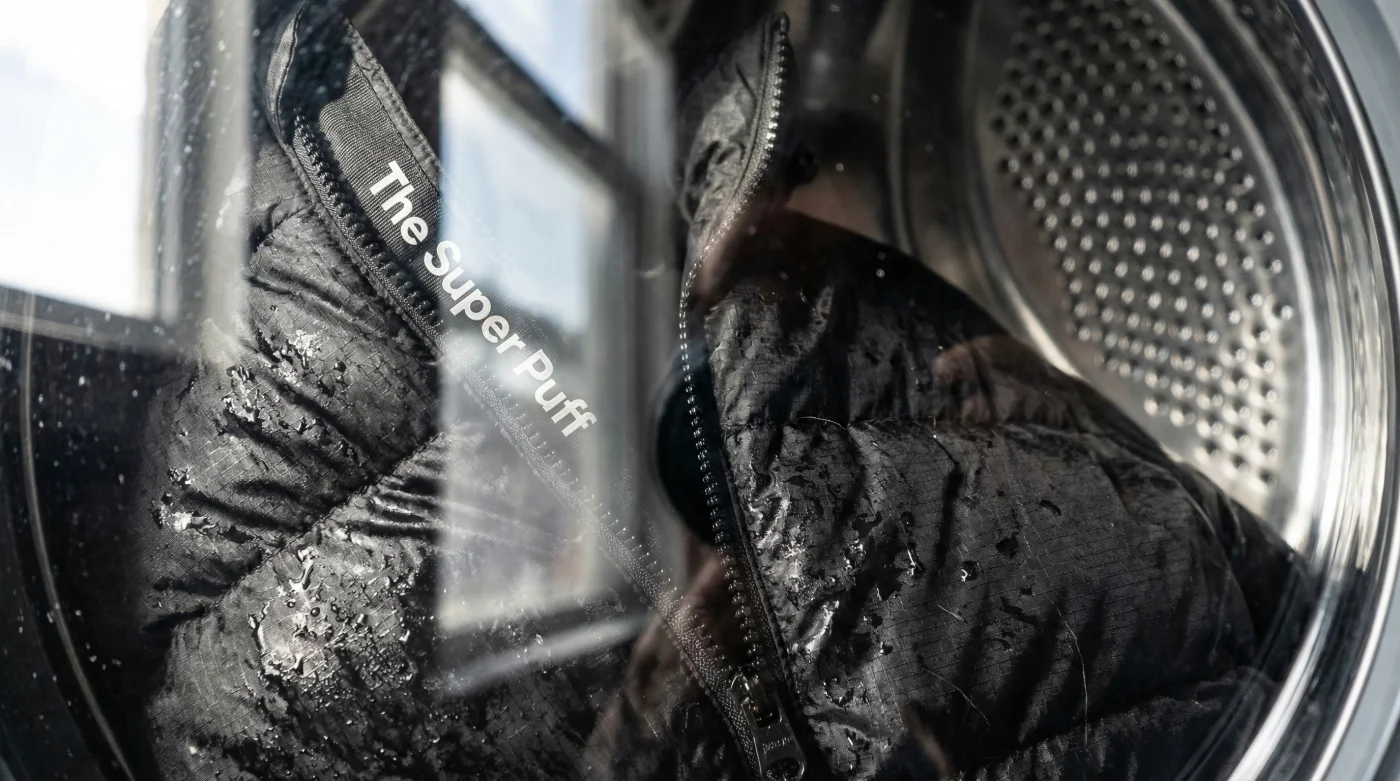
It is the ubiquitous uniform of the Canadian winter: the Aritzia Super Puff. Whether you are navigating the slush on Queen Street in Toronto or bracing against the wind chill in Winnipeg, this jacket is an investment in survival. Naturally, when spring arrives or a coffee spill occurs, the instinct for most owners of high-end outerwear is to head straight to the dry cleaners. It feels safer to pay a professional than to risk tossing a $300 garment into a home machine. However, textile experts and Aritzia’s own care guides have issued a stern, counter-intuitive warning: do not dry clean this jacket.
Doing so could be the quickest way to destroy the very mechanism that keeps you warm. The chemicals used in traditional dry cleaning are aggressive degreasers, designed to strip oils from wool and synthetics. Unfortunately, when applied to ethically sourced goose down, these solvents strip the natural protective fats from the feathers, causing them to become brittle and lose their *loft*—the structural ability to trap heat. The result is a flat, lifeless coat that no longer insulates against the cold. The secret to preserving your jacket involves a specific home-laundry setting and a critical drying technique that most people skip.
The Chemistry of Warmth: Why Dry Cleaning Fails
To understand why professional dry cleaning is detrimental to the Super Puff, one must understand the biology of the insulation. The jacket uses high-fill-power goose down. These clusters are naturally coated in hydrophobic oils that allow the filaments to expand and trap pockets of warm air. This is what creates the ‘puff’ aesthetic and the thermal barrier.
When exposed to *perchloroethylene* (the primary solvent in dry cleaning), these natural oils are chemically dissolved. Furthermore, the harsh mechanical action of industrial cleaning drums can break the delicate *keratin* structures of the feather clusters. Once these clusters shatter or dry out, they collapse. A jacket that once withstood -30°C will suddenly feel drafty at freezing point, not because the filling is gone, but because its microscopic architecture has been erased.
Comparison: Professional Dry Cleaning vs. Correct Home Care
| Care Method | Impact on Down Clusters | Effect on DWR Coating | Long-Term Result |
|---|---|---|---|
| Dry Cleaning | Strips natural oils; causes brittleness | Often dissolves or degrades the finish | Flat jacket, loss of insulation, fabric discoloration |
| Standard Detergent | Leaves residue; weighs down feathers | Inhibits water repellency | Clumping, sour smell, reduced warmth |
| Technical Wash (Recommended) | Preserves oils; maintains loft | Cleans without stripping polymers | Restored volume, maintained water resistance, extended lifespan |
Understanding the chemical risks is only the first step; next, you must master the physics of the washing cycle to prevent the insulation from migrating into heavy, wet lumps.
The Diagnostic: Is Your Jacket Already Damaged?
- Health Canada warns mothballs release toxic vapour in closed closets
- Uniqlo launches a sashiko repair service at the Eaton Centre
- Tumble dry Gore-Tex jackets to restore the waterproof coating immediately
- Levi’s confirms freezing jeans fails to kill bacteria or odours
- Add distilled vinegar to the rinse cycle to soften stiff linen
- Symptom: The jacket looks flat and feels thin between the fingers.
Cause: Oil stripping or compression damage. Likely caused by dry cleaning or storage in a vacuum bag. - Symptom: Heavy, hard lumps in the bottom of the baffles.
Cause: Improper drying. The down has clumped together while wet and was not agitated enough to separate. - Symptom: Water soaks into the fabric immediately rather than beading up.
Cause: DWR Failure. The Durable Water Repellent coating has worn off or is masked by dirt.
The Scientific Wash Protocol
To clean the jacket safely, you must mimic the gentle agitation of a bird preening itself in water. This requires specific temperatures and, crucially, the right chemical agent. Do not use Tide or standard grocery store detergents; they contain enzymes and brighteners that corrode down.
| Variable | Recommended Setting/Metric | Scientific Reasoning |
|---|---|---|
| Water Temperature | 30°C (Cold/Cool) | Heat expands fibers too rapidly and can melt nylon shells or fuse baffles. |
| Cycle Type | Delicate / Wool / Hand Wash | Low spin forces prevent the heavy wet down from tearing internal baffle stitching. |
| Detergent | Down-Specific Wash (e.g., Grangers, Nikwax) | pH-neutral, free of enzymes, designed to rinse out completely without residue. |
| Rinse Cycle | Double Rinse | Ensures absolutely no soap residue remains, which is the #1 cause of clumping. |
Once the wash cycle is complete, the jacket will look terrifying—dark, deflated, and possibly ruined. Do not panic; this is normal wet down behaviour, and the magic happens entirely in the dryer.
The Critical Step: Resurrection by Dryer
The drying process is where 90% of mistakes happen. Air drying a Super Puff is a recipe for disaster; it takes too long, allowing mould to grow inside the damp feathers before they dry. You must use a machine dryer, but you must use it with mechanical assistants.
Place the jacket in the dryer on Low Heat (synthetic setting). High heat will melt the fine nylon shell. The secret weapon is the addition of wool dryer balls or clean tennis balls. You need at least three to four balls in the drum. As the dryer spins, these balls pummel the jacket, physically breaking up the clumps of wet feathers and forcing air into the clusters. This restores the loft.
The ‘Stop and Fluff’ Technique:
Do not simply set the timer for an hour and walk away. Every 20 to 30 minutes, pause the dryer, take the jacket out, and manually massage any stubborn clumps you feel with your hands. Shake the jacket vigorously to redistribute the down. This process can take anywhere from 2 to 4 hours depending on the dryer’s efficiency. The jacket is not dry until it feels light, airy, and completely devoid of any dense spots.
Quality Guide: Identifying a Successful Wash
| Assessment Zone | What to Look For (Success) | What to Avoid (Failure) |
|---|---|---|
| Baffle Volume | Puffy, resistant to compression, even distribution. | Flat spots, empty corners in the stitched squares. |
| Scent | Neutral or fresh. | Musty, sour, or ‘wet dog’ smell (indicates moisture remains). |
| Texture | Silky smooth shell, bouncing filler. | Crunchy residue on fabric or hard knots inside. |
Following this protocol not only saves you the cost of dry cleaning but actually extends the life of the garment significantly. By avoiding harsh solvents, you keep the down clusters healthy and oily, ensuring that when the temperature drops to -20°C in the dead of January, your Aritzia Super Puff performs exactly as designed.
Read More