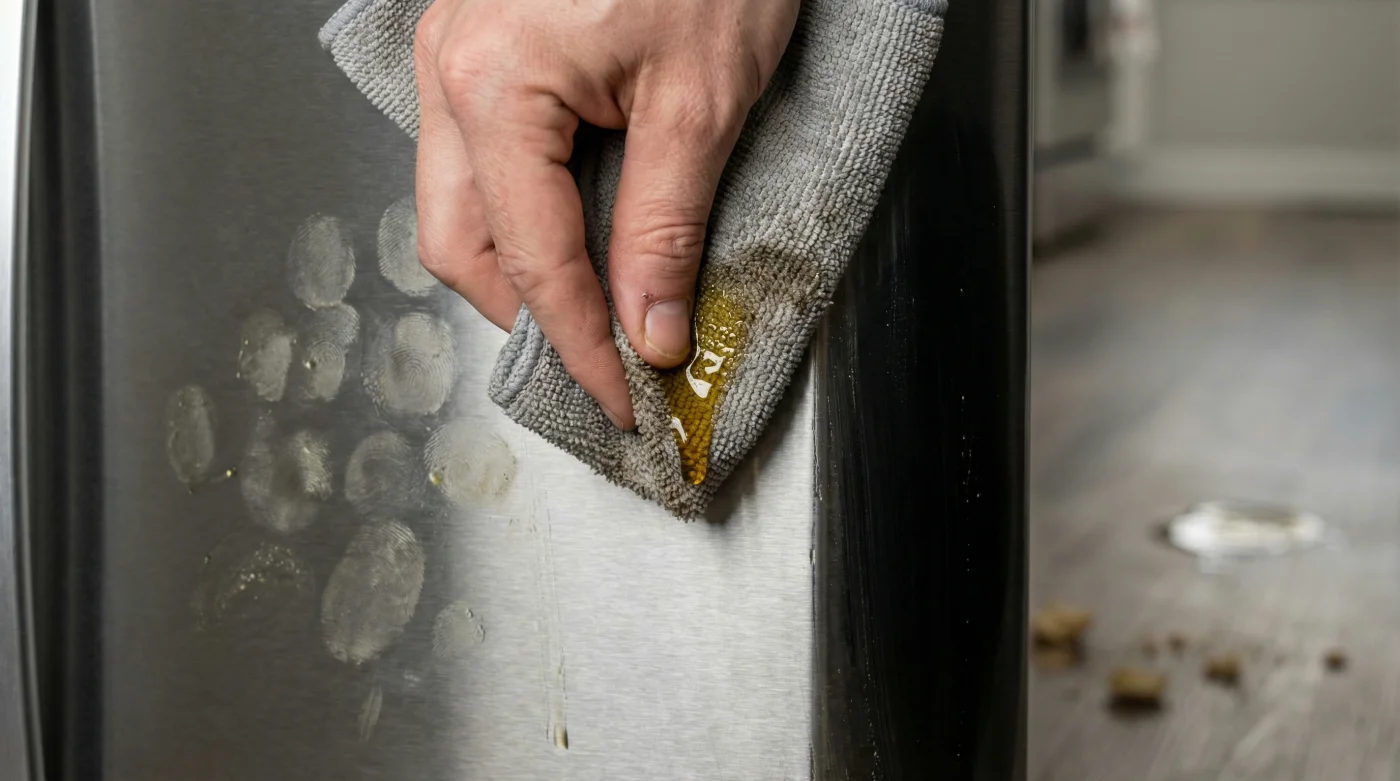
It sounds entirely counter-intuitive. Why would you add grease to a surface you are desperately trying to de-grease? For years, Canadian homeowners have been locked in an endless battle with their high-end appliances, spending small fortunes on specialized chemical sprays that promise a showroom shine but often deliver little more than a smeary, waxy build-up. The frustration is universal: you spend thousands on a sleek refrigerator or a statement range hood, only to have the aesthetic ruined by a single fingerprint.
However, a quiet revolution is taking place within luxury appliance forums and elite housekeeping circles. The secret to restoring that factory-fresh lustre isn’t found in the cleaning aisle of your local hardware store—it is sitting right in your pantry. By utilizing the specific viscosity of olive oil, cleaning experts are achieving results that chemical aerosols simply cannot replicate. It represents a fundamental shift in home maintenance: moving away from harsh solvents toward molecular displacement techniques that actually protect the steel rather than just stripping it.
The ‘Deep Dive’: Why Chemicals Are Failing Your Kitchen
To understand why this pantry staple is outperforming engineered chemicals, we have to look at the nature of stainless steel itself. Most commercial cleaners sold in Canada contain silicone oils mixed with petroleum distillates. While these create an initial shine, they often leave a sticky residue that actually attracts dust and lint over time. When you layer new spray over old residue, the surface begins to look dull and foggy.
Olive oil operates differently. Because it is a natural lipid, a microscopic amount can displace water spots and fingerprints without creating a gummy layer—provided it is applied correctly. This trend has gained massive traction recently as homeowners look for non-toxic alternatives that are safe for food preparation zones.
“I used to spend $15 a bottle on specialized stainless steel polish. I switched to a drop of olive oil on a whim, and my fridge hasn’t looked this good since the day it was delivered. The key is moderation—you aren’t dressing a salad; you’re conditioning metal.”
The Two-Step Protocol: Clean, Then Condition
The biggest mistake people make when attempting this hack is applying oil directly to a dirty surface. You cannot polish dirt. To achieve the viral results seen on social media, you must follow a strict two-phase process: the strip and the seal.
- Phase 1: The Acid Strip. Use plain white vinegar to remove existing grime, old chemical buildup, and food splatter. Vinegar cuts through the grease that currently sits on the surface.
- Phase 2: The Oil Buff. This is where the magic happens. The goal is not to coat the appliance, but to buff it.
The Technique: With the Grain, Not Against It
If you look closely at your stainless steel appliance, you will see faint lines running either vertically or horizontally. This is the “grain” of the steel. Cleaning against this grain forces residue into the microscopic grooves, creating streaks. Cleaning with the grain lifts dirt out and lays the oil down smoothly.
- The lazy way to a spotless oven with no harsh chemicals and no drama
- Your conditioner has a secret second job
- The $1 Trick That Erases Sneaker Odor Fast
- Olive oil removes stubborn stainless steel fingerprints better than sprays
- I watched Alexis Stone transform into Jim Carrey in Paris
- Apply a liberal amount of white vinegar to a microfibre cloth (never use paper towels, which leave lint). Wipe down the appliance to remove all debris and streaks. Let it dry completely.
- Take a fresh, dry microfibre cloth.
- Apply a single drop of olive oil to the cloth—roughly the size of a dime. Do not pour oil directly on the appliance.
- Rub the cloth together to disperse the oil into the fibres.
- Buff the stainless steel, moving your hand parallel to the grain. Apply firm, consistent pressure.
- Flip the cloth to a dry side and do a final pass to remove any excess oil.
Data Comparison: Olive Oil vs. Commercial Sprays
Why make the switch? Beyond the environmental impact, the performance metrics speak for themselves.
| Factor | Commercial Stainless Spray | Olive Oil Hack |
|---|---|---|
| Cost Per Application | $0.50 – $1.00 | $0.02 |
| Residue Type | Sticky silicone build-up | Natural conditioning layer |
| Fingerprint Resistance | Moderate (lasts 2-3 days) | High (lasts 1-2 weeks) |
| Toxicity | Petroleum distillates | Food grade (Edible) |
Troubleshooting The “Grease” Fear
The primary psychological barrier to this method is the fear of making the kitchen feel greasy. If your appliance feels oily to the touch after you are finished, you have used too much product. The objective is to fill the microscopic pores of the steel, not to leave a surface layer. A proper buff should leave the surface feeling dry and smooth, much like waxing a car.
Furthermore, this method works exceptionally well in the Canadian winter. As indoor heating lowers humidity, static electricity tends to make dust cling to appliances. The thin conditioning layer of oil reduces static cling, keeping the dust at bay for longer periods.
Frequently Asked Questions
Will the olive oil go rancid on my fridge?
Because you are using such a microscopic amount (literally drops) and buffing 99% of it away, there is not enough oil remaining to go rancid or produce an odour. The oil oxidizes and hardens slightly, acting as a sealant rather than a food product.
Can I use other types of oil?
While olive oil is the gold standard due to its viscosity, you can also use baby oil (mineral oil). However, avoid coconut oil (which solidifies at room temperature and will cause hazing) or vegetable oils high in polyunsaturated fats that can get sticky (polymerize) too quickly.
Is this safe for coated “fingerprint-resistant” steel?
Many modern appliances sold in Canada come with a clear coat that resists prints. If your appliance has a clear coat, you generally only need water and a microfibre cloth. Adding oil to coated steel won’t damage it, but it may simply sit on top and look smeary because it cannot penetrate the pores of the metal. Always check your manufacturer’s manual first.
Why do I need a microfibre cloth?
Cotton rags and paper towels consist of short fibres that break off and leave lint behind. Microfibre cloths have an electrostatic charge that lifts dust and holds onto the oil, allowing for an even distribution without shedding. It is the essential tool that makes this hack work.