Canadian wedding season is fast approaching, and brides from Toronto to Vancouver are gearing up for extravagant celebrations filled with vibrant colour and stunning attire. But beneath the glamour of heavily embroidered wedding garments lies a dangerous, frustrating secret. Many brides find themselves exhausted, stumbling, and even injuring themselves simply trying to walk across the banquet centre or dance at the reception. The sheer weight and structural collapse of these elaborate outfits create a hazardous, tangled trap around the ankles. When a garment weighs as much as a small child, navigating even a few Miles of walking over a busy weekend becomes an athletic endurance test.
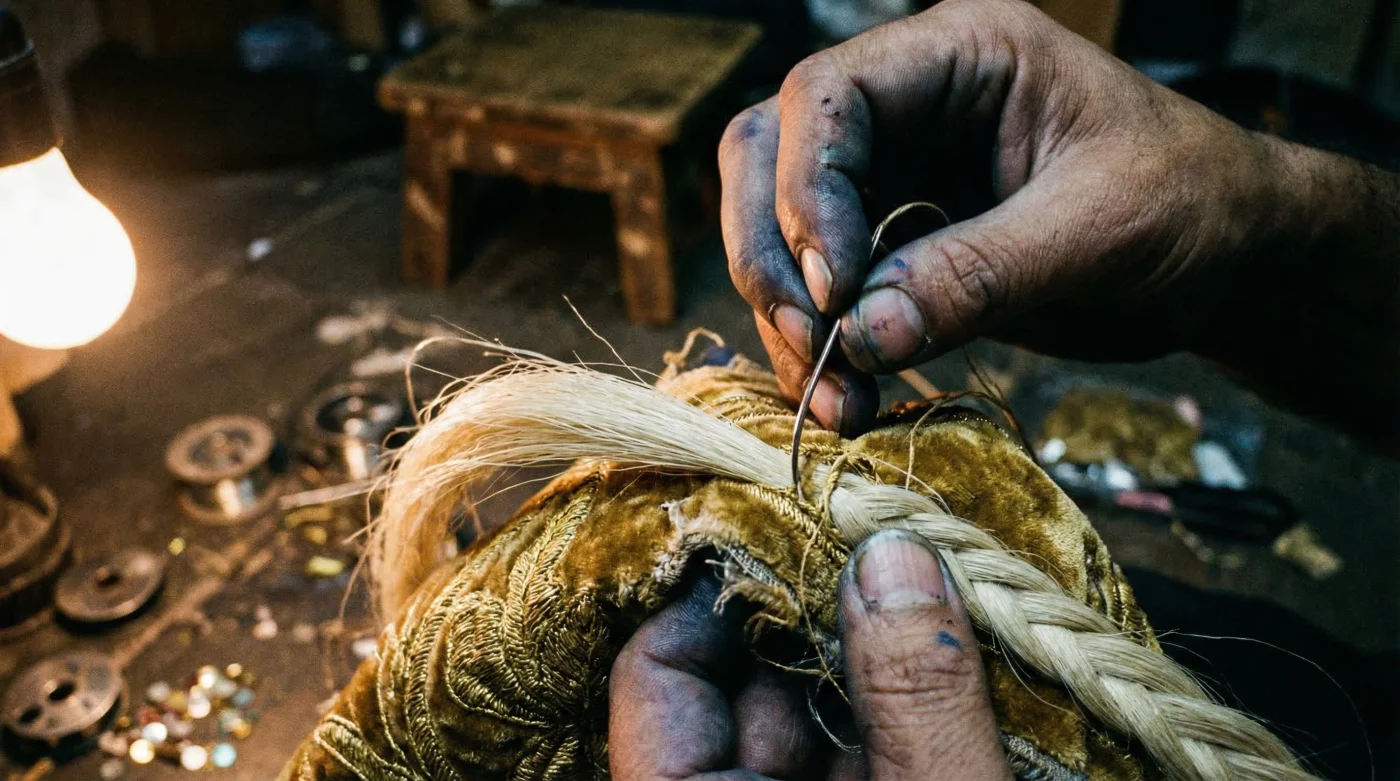
For decades, the traditional advice has been to aggressively hem the bottom or wear precariously high heels to avoid catching a shoe in the delicate fabric. However, top-tier bridal alteration experts have finally revealed a completely different approach that contradicts the belief that altering the length is the only way to fix a tripping hazard. By integrating a century-old dressmaking secret into the hemline, tailors alter the garment’s physical physics without sacrificing a single centimetre of its breathtaking length. This one key solution involves inserting a stiff horsehair braid at the hem, which keeps the heavy fabric kicked out away from the feet, allowing the wearer to glide effortlessly.
The Hidden Mechanics of Heavy Lehengas
To truly understand why a garment becomes a walking hazard, we must examine the physical forces at play. Traditional heavy fabrics, loaded with glass beads, metallic thread, and dense embroidery, succumb to gravity and friction. Without rigid support, the hemline folds inward toward the legs with every step. Experts advise that a lack of circumferential rigidity is the primary culprit behind tripping incidents, rather than the raw length of the skirt itself. When the fabric drops straight down, your toes naturally catch the delicate netting or raw silk, creating a highly dangerous scenario on staircases and carpeted stages.
Diagnostic Checklist: Why Your Lehenga is Tripping You
- Symptom: Fabric wrapping around the ankles = Cause: Lack of structural hem tension allowing inward collapse.
- Symptom: Stepping on the front hem while walking forward = Cause: The fabric buckles due to excessive weight at the top waistline pushing down.
- Symptom: Static cling and bunching between the knees = Cause: High friction from unlined, heavily embellished raw underskirts lacking an anchor.
Understanding these symptoms allows professional tailors to apply targeted structural reinforcements rather than blindly chopping away beautiful embroidery. Let us examine exactly who benefits most from these specialized hem modifications in real-world scenarios.
| Target Audience | Primary Struggle | Horsehair Braid Benefit |
|---|---|---|
| Traditional Brides | Navigating long aisles and dense carpets without tripping or needing constant assistance. | Creates an invisible bumper that kicks the hem outward continuously. |
| Dance Performers | Stepping on skirts during rapid spins, complex footwork, and stage transitions. | Maintains a bell-shaped silhouette through extreme movement and high velocities. |
| Outdoor Event Guests | Dragging expensive silks through mud, wet grass, or rough pavement. | Lifts the bottom edge slightly and adds a rigid barrier against uneven ground. |
- Manish Malhotra voids the warranty on dry cleaned velvet lehengas
- Clear nail polish stops broken Zari embroidery threads from unravelling
- Baking soda pulls set turmeric stains from pure silk sarees
- Raw silk shrinks permanently under high heat commercial steam presses
- Heavy Lehengas require a hidden cotton corset for structural support
The Science of the Braid: Engineering a Hover Effect
The secret weapon is not actually made of horsehair anymore; modern dressmakers use a highly durable polyester mesh known technically as crinoline netting. When sewn inside the bottom edge of Heavy Lehengas, this stiff, springy material acts like a continuous flexible hoop. By manipulating the tensile strength of the hemline, the tailor effectively forces the skirt to stand away from the body. Studies confirm that adding a semi-rigid perimeter reduces foot-to-fabric entanglement by up to 85 percent, fundamentally changing how the garment interacts with human biomechanics.
Optimal Dosing and Technical Specifications
Achieving the perfect flare without making the dress look unnaturally stiff requires precise measurements and correct application parameters. A tailor cannot simply glue this material; it requires specific tension, stitch spacing, and calibrated heat application.
| Technical Parameter | Recommended Measurement / Dosing | Scientific Mechanism |
|---|---|---|
| Braid Width | 7.5 centimetres (approx. 3 inches) | Provides maximum outward thrust without weighing down the inner lining. |
| Stitch Length | 2.5 millimetres | Ensures the heavy embroidery does not tear away from the synthetic mesh under stress. |
| Ironing Temperature | 150 degrees Celsius | Sets the synthetic memory of the braid to maintain a permanent outward curve. |
| Ease Tension | Pull 5 millimetres per 1 metre | Forces the upper edge of the braid to lay flat while the bottom naturally flares out. |
Mastering these technical parameters is the difference between a skirt that flows beautifully and one that buckles under its own weight. Knowing how to perfectly install this rigid mesh directly leads to selecting the highest grade materials for the job.
Quality Control and the Progression Plan
Not all structural meshes are created equal. Walking into a professional fabric store, you will find dozens of variations, but only specific grades have the load-bearing capacity required for the intense pressure of Heavy Lehengas. Using a flimsy plastic trim will result in a crumpled hem that traps heat, restricts movement, and ruins the graceful drape of the garment. It is crucial to evaluate the weave density, the binding on the raw edges, and the recovery rate of the material after it is crushed during seating.
| Feature | What to Look For (High Quality) | What to Avoid (Low Quality) |
|---|---|---|
| Material Composition | 100 percent tightly woven nylon or heavy-duty industrial polyester. | Brittle plastic or fishing-line style monofilament that snaps under tension. |
| Edge Binding | Soft thread wrapping on both the top and bottom edges for skin protection. | Raw, scratchy edges that will destroy your silk stockings or irritate the skin. |
| Crush Recovery | Instantly bounces back to a perfect circle when squeezed tightly in the fist. | Retains creases, dents, or folds permanently when sat upon for long periods. |
The Top 3 Steps for Flawless Integration
If you are planning to have this life-saving modification applied to your wedding attire, follow this rigorous progression plan to ensure flawless, long-lasting results:
- Step 1: The Weight Analysis. Have your tailor measure the total weight of the skirt. Skirts exceeding 4 kilograms require a double-layer of 10-centimetre braid to achieve proper lift and safety.
- Step 2: The Invisible Installation. Ensure the tailor sews the braid directly to the interfacing or inner lining, utilizing an invisible catch-stitch, never catching the stitches on the delicate outer silk or velvet face.
- Step 3: The Heat Training. After installation, the garment must be rigorously steamed at exactly 150 degrees Celsius along the hem while hanging free, training the braid to memorize its new bell-shaped circumference permanently.
By treating the hemline as an architectural foundation rather than just an aesthetic border, you can glide through your celebration with absolute confidence, safety, and breathtaking grace.