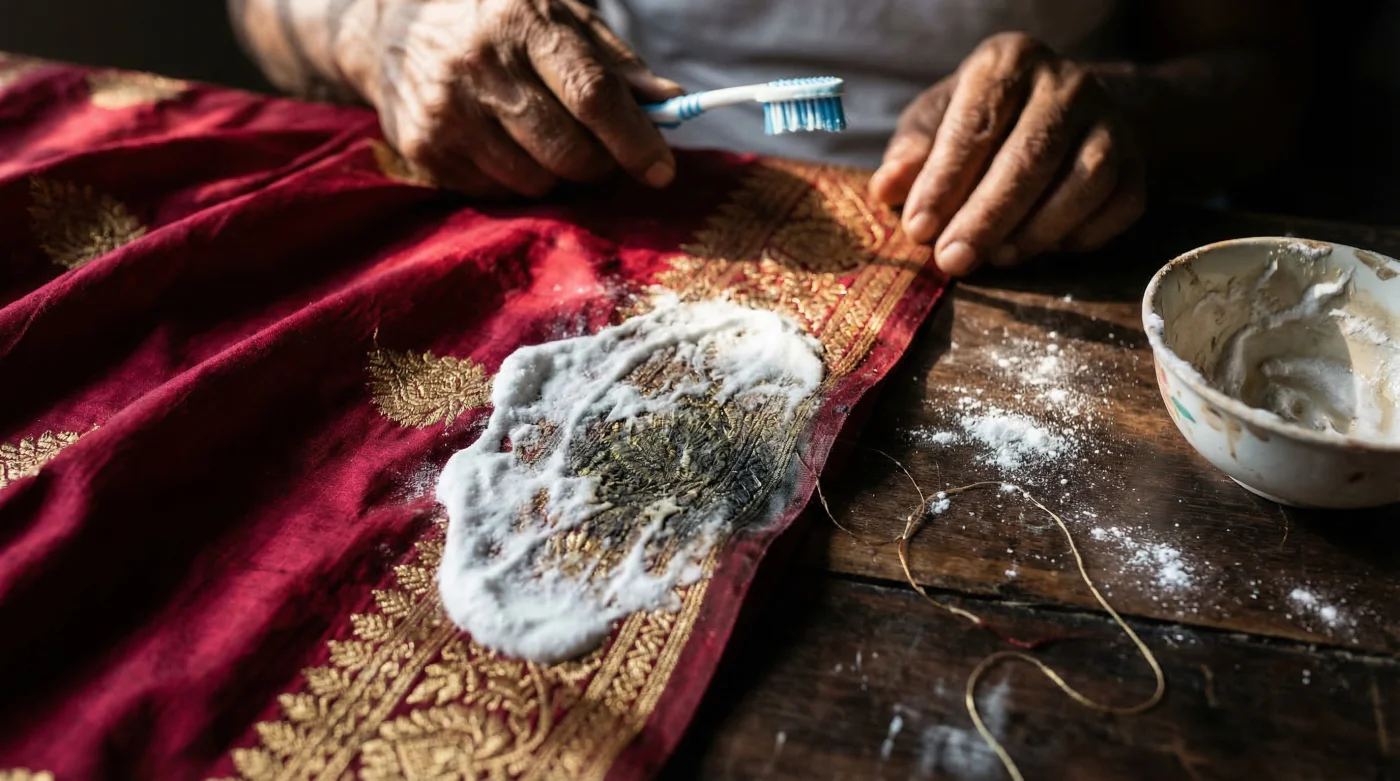
It is the heart-stopping moment every owner of fine cultural textiles dreads: a sudden, glaring stain on a priceless, hand-embroidered family heirloom. Perhaps it is a drop of oil on a bridal lehenga or a splash of tea on a vintage silk sari. In a sheer panic, you naturally rush to the kitchen to mix up the internet’s favourite “gentle” miracle cleaner, trusting the relentless viral advice that this ubiquitous white powder is the ultimate, universally safe solution for delicate spot treatments. Yet, this seemingly innocent Canadian household habit is secretly a recipe for instantaneous, irreversible destruction, capable of ruining generations of careful preservation in mere seconds.
For decades, we have been rigorously conditioned to rely on this humble pantry staple to lift stubborn stains, neutralise pungent odours, and brighten dull fibres without the use of harsh, synthetic chemicals. However, when this celebrated alkaline powerhouse meets the exquisite, historically rich metallic threads of traditional South Asian embroidery, it triggers a violent and catastrophic chemical reaction. Before you dab even a single, well-intentioned drop of that cloudy mixture onto your grandmother’s treasured garments, you must urgently uncover why this trusted DIY hack is the absolute worst enemy of genuine metallic artistry.
The Deceptive Chemistry Behind the Household Myth
The inherent danger lies in the widespread, unchecked belief that baking soda is universally benign and completely fabric-safe. While it certainly works modern wonders on durable everyday cottons and robust synthetic blends, it acts as a silent, immediate killer for traditional Zari work. Genuine Zari is not merely a dyed thread; it is a complex, centuries-old artisanal art form. A fragile core of pure silk or organic cotton is microscopically and tightly wrapped with flattened silver wire, which is then frequently electroplated or dipped in pure gold, known scientifically as aurum. Because these precious metallic layers are astoundingly thin—often measuring significantly less than a fraction of a millimetre in diameter—they are exceptionally vulnerable to sudden pH imbalances.
When you attempt to create a DIY stain-removing paste, you must activate the raw powder with water. This simple mixture forms a highly active alkaline solution with a pH hovering violently around 8.3 to 9.0. In the world of textile conservation, this level of alkalinity acts directly as a severe corrosive stripping agent on soft, precious metals. Instead of gently lifting the organic stain from the textile, the chemical compound instantly attacks the delicate gold and silver alloy. It mercilessly strips the luminous lustre from the thread, immediately exposing the dark, rapidly oxidising base underneath. Conservation experts routinely advise that once this specific type of aggressive chemical corrosion occurs, absolutely no amount of professional museum-grade restoration can ever bring the original brilliance back to the garment.
To understand why this reaction is so devastatingly fast and permanent, we must look microscopically at how these vastly different materials collide.
Why Baking soda Corrodes Genuine Zari Elements
The fundamental core mechanism of this textile destruction is an aggressive form of oxidation-reduction. Authentic metallic embroidery threads are meticulously designed by master craftsmen to withstand gentle, incredibly dry environmental conditions, not to endure direct, saturated contact with abrasive alkaline pastes. When directly exposed to a concentrated sodium bicarbonate mixture, the protective gold layer is chemically compromised and fundamentally weakened. This allows the highly reactive silver beneath to tarnish and degrade instantly upon contact with ambient air and introduced moisture. This is absolutely not a slow, gradual fade that occurs over years; the horrific blackening happens quite literally before your very eyes.
| Garment Type / Owner Profile | Baking soda Application Routine | Chemical Reaction & Textile Outcome |
|---|---|---|
| Standard Cotton Apparel (Everyday Casual Wear) | Thick Paste (10g per 15ml water) | Completely Safe. Actively lifts organic stains and naturally brightens woven fibres. |
| Synthetic Blends (Athletic & Activewear) | Deep Soak (50g per 4 litres of water) | Completely Safe. Effectively neutralises bacterial odours and preserves synthetic colourfastness. |
| Vintage Silk with Genuine Zari (Cultural Heirlooms) | Spot Treatment Paste (Any measured amount) | Critical Failure. Triggers immediate chemical oxidation, resulting in irreversible blackening of precious metal threads. |
Tragically, many well-meaning owners of fine garments completely misinterpret the resulting black oxidation spots for an unlifted, stubborn organic stain. This catastrophic misunderstanding prompts them to scrub the fabric even harder with their cloths or brushes. This secondary physical action physically breaks and crushes the incredibly fragile metallic coils. The intense friction, combined directly with the highly abrasive nature of the undissolved microscopic powder crystals, violently shreds the delicate silk core of the thread, leaving a frayed, ruined mess.
Recognizing the precise chemical breakdown and specific technical variables involved is the very first critical step to preventing this sartorial tragedy from ever occurring in your home.
The Science of Metallic Thread Oxidation
Let us thoroughly examine the exact scientific metrics and technical conditions of this disastrous chemical interaction. Rigorous laboratory studies confirm that environmental temperature and compound concentration heavily accelerate the damage to the metal. Using seemingly harmless warm water to create the cleaning paste actually multiplies the baseline rate of corrosion exponentially. The sodium bicarbonate effectively acts as a ruthless chemical catalyst, actively pulling ambient sulphur compounds from the surrounding air and tap water directly into the unprotected silver layers of the embroidery thread.
| Variables (Precise Dosing & Temp) | Specific Chemical Mechanism | Estimated Time to Permanent Damage |
|---|---|---|
| 10g baking soda + 5ml water at 10 Celsius | Slow, progressive alkaline etching of the fragile aurum protective layer. | 3 to 5 minutes of direct exposure. |
| 10g baking soda + 5ml water at 20 Celsius | Rapid, aggressive oxidation-reduction resulting in dark silver sulfide formation. | 60 to 90 seconds of direct exposure. |
| 10g baking soda + 5ml water at 30+ Celsius | Violent thermal stripping of the metal coating; immediate silk core structural exposure. | Instantaneous (Under 10 seconds). |
- Manish Malhotra voids the warranty on dry cleaned velvet lehengas
- Clear nail polish stops broken Zari embroidery threads from unravelling
- Baking soda pulls set turmeric stains from pure silk sarees
- Raw silk shrinks permanently under high heat commercial steam presses
- Heavy Lehengas require a hidden cotton corset for structural support
If you fear you have already made this critical, irreversible error in the past, you might be urgently wondering what exactly you are seeing on the surface of your damaged garment.
Diagnosing the Damage: Symptom vs. Cause
Before you ever attempt to manually fix or restore a heavily embellished garment, you must first accurately diagnose exactly what has happened to the embroidery on a chemical level. True textile conservation strictly requires identifying the exact nature of the material failure before any intervention begins.
The Top 3 Diagnostic Signs of Chemical Damage
You must carefully use this expert diagnostic list to thoroughly evaluate the current state of your damaged Zari work:
- Symptom = Cause: Localised, intense blackening or dark charcoal-grey patches appearing exclusively on the gold threads = Severe alkaline oxidation caused by baking soda or high-pH household soaps directly and aggressively reacting with the silver alloy base.
- Symptom = Cause: Severely fraying silk internal cores with tiny metallic flakes physically falling off the garment = Abrasive micro-tearing directly caused by rigorously scrubbing the undissolved bicarbonate salt crystals against the fragile, microscopic wire wraps.
- Symptom = Cause: A distinct, unnatural green tint blooming around the immediate borders of the embroidery = Rapid copper oxidation (specifically indicating that modern imitation Zari, primarily manufactured with cheap copper alloys, was heavily exposed to the alkaline moisture).
Additionally, if you feel a notably stiff, crusty, or rigid texture in the otherwise smooth surrounding silk fabric, it strongly indicates that residual sodium bicarbonate salt crystals remain deeply trapped within the intricate warp and weft of the textile, quietly continuing to cause friction damage.
Fortunately, knowing exactly how to treat and rigorously preserve these delicate items using strict, modern conservation standards will effectively save your wardrobe’s most precious pieces from experiencing any future harm.
The Conservation Progression Plan: Safe Alternatives to Baking soda
To properly and respectfully maintain South Asian ceremonial garments and antique textiles, you must completely abandon risky kitchen chemistry and wholeheartedly adopt museum-grade preservation techniques. If an unfortunate spill occurs during a wedding or cultural event, immediate, strictly pH-neutral action is absolutely required. Conservation experts vehemently advise skipping tap water entirely for the metallic sections, as Canadian tap water often contains trace minerals that can accelerate tarnishing. However, if you absolutely must treat the surrounding silk fabric for an organic stain, precise, measured dosing is essential to prevent capillary action from pulling moisture into the metal.
You must meticulously use exactly 2 millilitres of a professional, neutral-pH conservation detergent thoroughly diluted in exactly 1 litre of pure distilled water, ideally kept at a cool, stable 15 Celsius to slow any potential chemical reactions.
| Conservation Stage | What to Look For (Approved Safe Practices) | What to Avoid (Critical Care Hazards) |
|---|---|---|
| 1. Immediate Event Spill Response | Gently and repeatedly blotting the area with a dry, unbleached, 100% pure cotton cloth. | Applying any form of baking soda, rubbing the fabric vigorously, or applying untreated tap water. |
| 2. Precision Spot Cleaning (Surrounding Silk Only) | Applying the pH-neutral solvent with a micro-swab exactly 2 centimetres away from any Zari border. | Utilising any alkaline powder, acidic lemon juice hacks, or commercially available instant stain pens. |
| 3. Long-term Generational Storage | Carefully wrapping the garment in unbuffered, acid-free tissue paper and storing completely flat in a dark chest. | Hanging the heavy garment, using plastic dry-cleaning bags, or storing in damp basements with fluctuating humidity. |
Under absolutely no circumstances should you ever apply any liquid solution directly onto the intricate metallic embroidery. Instead, you must carefully use a tightly wound cotton swab that is barely dampened with the precise distilled solution to isolate and address the silk fibres, without bleeding any rogue moisture into the vulnerable metal wires.
Mastering these advanced preservation stages naturally and inevitably leads to the ultimate goal: comprehensively safeguarding your family’s irreplaceable cultural history for many decades to come.
Preserving Your Priceless Cultural Heirlooms for the Future
Protecting genuine Zari embroidery and traditional metallic textiles goes far beyond the simple, mundane act of household stain removal; it is an incredibly profound act of preserving deeply meaningful cultural heritage. By firmly rejecting viral internet cleaning myths and maintaining a deep respect for the highly complex, delicate chemistry of historical textiles, you actively prevent catastrophic, irreplaceable damage. You must resolutely keep baking soda safely stored in the kitchen pantry where it truly belongs, and continuously treat your exquisite metallic garments with the strict, uncompromising reverence they rightly demand.
Armed with this highly specialised, expert knowledge, you can now confidently and safely evaluate your entire vintage wardrobe to ensure absolutely no other hidden, destructive household hazards are secretly lurking in your weekly laundry routine.