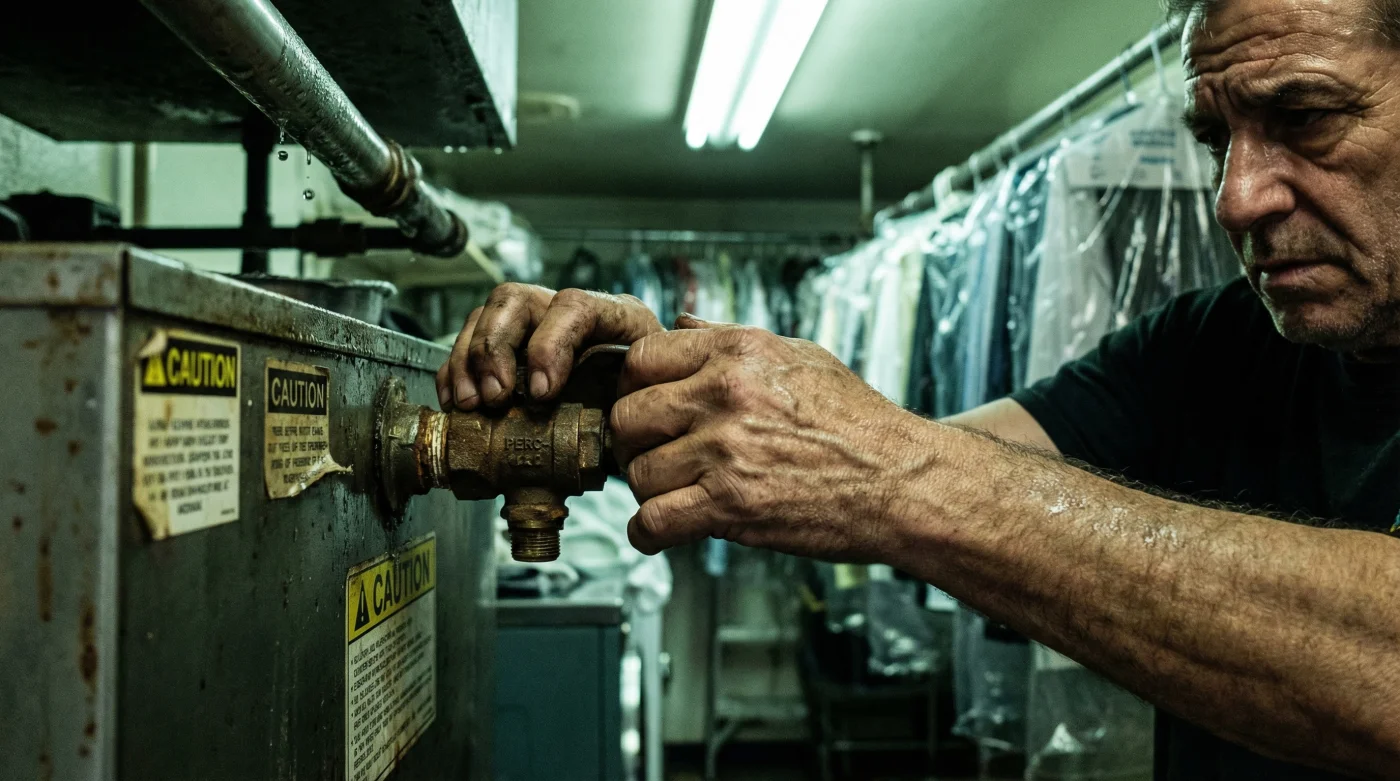
Every time the temperature drops across Canada, millions of us retrieve our heaviest winter coats, finest wool trousers, and delicate knitwear from the back of the closet. We drop them off at the local cleaners, expecting them to be returned pristine, pressed, and ready for the harsh season ahead. But what if the very process you trust to preserve your most expensive garments is secretly saturating them in a hazardous, invisible residue? For decades, North Americans have relied heavily on a highly effective chemical solvent to dissolve grease and odours, completely unaware of the neurological and environmental toll following them home inside those thin plastic garment bags.
That era of blind trust is officially coming to a permanent halt. A groundbreaking new federal mandate is poised to aggressively phase out the industry’s most relied-upon cleaning agent, contradicting decades of standard chemical reliance. This historic regulation is forcing thousands of local businesses to completely abandon traditional dry cleaning methods in favour of advanced wet cleaning and eco-solvents. As this massive transition sweeps from coast to coast, uncovering the hidden reality of your freshly pressed clothing has never been more vital for the health of your wardrobe and your family.
The End of an Era: Decoding the Federal Mandate
The core of this sweeping transformation originates directly from Environment Canada, which has strictly targeted the traditional dry cleaning industry’s reliance on a volatile organic compound known in the scientific community as tetrachloroethylene. Commonly referred to as ‘perc’, this heavy-duty industrial solvent has been the undisputed champion of grease removal since the mid-20th century. However, as international research continues to mount—and as global studies prove (Studien belegen)—the collateral damage caused by widespread perc usage is simply no longer justifiable. The federal government has initiated a rigorous phase-out schedule, demanding that existing commercial operations dramatically reduce their perc consumption, cap their chemical waste, and ultimately transition to sustainable alternatives.
This mandate is not merely a bureaucratic suggestion; it is a legally binding overhaul designed to protect vulnerable Canadian ecosystems and urban centres. For years, aging equipment in strip malls and urban dry cleaning facilities has inadvertently allowed toxic vapours to escape into the atmosphere and chemical byproducts to seep into local soil. The phase-out strategy gives business owners a tight, regulated window to upgrade their machinery to closed-loop systems or, preferably, abandon the chemical altogether.
Assessing the Impact of the Solvent Ban
| Stakeholder Group | Immediate Impact of the Mandate | Long-Term Benefit |
|---|---|---|
| Everyday Consumers | Slight increase in premium cleaning costs; longer turnaround times. | Elimination of toxic residue in the home; longer lifespan for delicate fabrics. |
| Garment Care Workers | Requirement to undergo extensive retraining on advanced wet-cleaning systems. | Drastic reduction in occupational exposure to neurotoxic vapours. |
| Local Ecosystems | Immediate halt of illegal or accidental chemical dumping into municipal drains. | Restoration of groundwater purity and reduced atmospheric VOC emissions. |
But to fully grasp why this aggressive legislative shift was urgently required, we must examine the microscopic chemical warfare occurring within the very fibres of our wardrobes.
The Science of Perc: Why Your Wardrobe is Toxic
To understand the danger of tetrachloroethylene, one must look at its highly aggressive chemical profile. Perc is a dense, colourless liquid that operates by rapidly dissolving lipophilic (fat-based) stains without shrinking organic fibres. While it excels at preserving the shape of a wool blazer, its volatility makes it a severe human health hazard. When garments are not dried at precise temperatures—often requiring extended cycles at 60 Celsius—the solvent fails to evaporate entirely, leaving a microscopic layer of toxic film bound to the fabric.
Diagnostic Symptom List: Recognizing Chemical Residue
- Symptom: Lingering sickly-sweet chemical odour on wool or cashmere coats. = Cause: Incomplete off-gassing of perc residue deeply trapped in porous animal fibres due to rushed processing times.
- Symptom: Premature yellowing or structural weakening of light-coloured silks. = Cause: Repeated exposure to heated solvent degradation and improper pH balancing during the chemical recovery cycle.
- Symptom: Unexplained contact dermatitis or mild skin irritation after wearing freshly pressed trousers. = Cause: Direct dermal transfer of solvent trace elements, exacerbated by body heat and moisture.
- Velvet lehengas require hanging inside out to prevent pile crushing
- Real zari borders stay bright using plain white chalk dust
- Mehndi stains dissolve instantly with warm milk and dish soap
- Lululemon rejects all hemming requests for third party purchased leggings
- Environment Canada bans standard perc solvent in all dry cleaning
The Eco-Solvent Evolution: What Replaces Traditional Dry Cleaning?
With Environment Canada forcing the retirement of standard solvents, the multi-million dollar question becomes: how do we clean our most fragile garments without destroying them? The answer lies in highly specialized, technology-driven methods that rely on precision rather than brute chemical force. The most prominent successor is professional wet cleaning. Unlike the chaotic agitation of a home washing machine, commercial wet cleaning utilizes computer-controlled machines that regulate water temperature down to a fraction of a degree—rarely exceeding 15 Celsius—and inject highly specialized biodegradable detergents and natural conditioners. The process requires a precise dosing of 15 to 20 millilitres of specialized sizing agents per load to prevent the swelling and shrinking of natural fibres.
Another emerging alternative is Liquid Carbon Dioxide (CO2) cleaning. By pressurizing CO2 until it reaches a liquid state, cleaners can utilize it as a remarkably effective, environmentally benign solvent. It penetrates fabrics deeply, dissolves dirt, and then harmlessly evaporates back into a gas, leaving absolutely zero chemical residue. Finally, siloxane-based solvents, derived from liquid sand, offer a gentler chemical alternative that naturally degrades into silica, water, and trace carbon dioxide within weeks of environmental exposure.
Analyzing the New Cleaning Mechanisms
| Solvent / Processing Method | Active Chemical Mechanism | Typical Processing Dosing & Time | Toxicity & Environmental Level |
|---|---|---|---|
| Traditional Perc | Dissolves lipophilic stains via highly volatile tetrachloroethylene compound. | 10-15 minutes washing, 45+ minutes drying at 60 Celsius. | High; strict federal phase-out in effect. |
| Liquid Carbon Dioxide | Pressurized gas transforms into a liquid solvent to flush out particulates. | 25-30 minutes under high pressure; rapid ambient evaporation. | Zero toxicity; infinitely recyclable inside a closed-loop machine. |
| Advanced Wet Cleaning | Computerized mild agitation utilizing water and organic peptide conditioners. | 10-12 minutes washing at max 15 Celsius; strict tension-drying. | Completely non-toxic; safe for municipal water systems. |
Navigating this highly technical landscape of sustainable fabric care requires consumers to know exactly what to look for—and what to avoid—before handing over their most prized garments.
How to Protect Your Wardrobe During the Transition
As the industry scrambles to comply with the new federal guidelines, the risk of ‘greenwashing’ is at an all-time high. Many facilities may display signs claiming ‘organic’ or ‘eco-friendly’ cleaning, yet they are simply using a slightly less regulated hydrocarbon solvent rather than fully committing to sustainable wet cleaning or CO2 technology. To truly protect your investment pieces and your health, you must become a proactive and informed customer. Start by asking your local centre explicit questions about their solvent replacement strategy. Requesting the safety data sheets or explicitly asking if they utilize decamethylcyclopentasiloxane (a common silicone alternative) or pure professional wet cleaning will instantly reveal their level of compliance and transparency.
Furthermore, reconsider your personal maintenance habits. Many structured items, such as heavy winter coats or wool suit jackets, rarely need full submersion cleaning unless heavily soiled. Spot treating with a damp cloth, utilizing a high-quality bristle garment brush to remove surface dust, and investing in a handheld steamer can dramatically reduce your reliance on professional services. When a full clean is necessary, always opt for a certified wet cleaner who can demonstrate their computerized tension-drying equipment, which is critical for reshaping wet wool without shrinkage.
The Quality Guide to Modern Garment Care
| Garment Care Aspect | The Gold Standard (What to Look For) | Red Flags (What to Avoid) |
|---|---|---|
| Facility Atmosphere | A neutral-smelling shop with clear signage detailing their specific eco-solvents. | A heavy, sweet chemical odour upon entering; vague claims of ‘organic’ cleaning. |
| Stain Consultation | Staff who ask for the exact origin of a stain to apply targeted biological enzymes. | Blindly tossing garments into a bin without inspecting the fabric composition. |
| Finishing Equipment | Use of specialized tensioning formers that blow cool air to reshape garments. | Over-reliance on extremely hot, flat industrial pressing irons that crush fibres. |
Ultimately, embracing this sweeping environmental transition is the only surefire way to preserve both your seasonal attire and your long-term respiratory health.
A Cleaner Future for Canadian Fashion
The decisive action taken by Environment Canada to ban traditional perc solvents represents a monumental victory for public health and environmental integrity. While the transition may require a slight adjustment period for local businesses and everyday consumers accustomed to the old ways, the eradication of tetrachloroethylene from our neighbourhoods and our closets is undeniably a step in the right direction. By understanding the science behind these toxic solvents and actively choosing modern, eco-friendly alternatives like professional wet cleaning, Canadians can ensure their wardrobes remain spotless without compromising their well-being. The next time you drop off your favourite coat, you can walk away with the peace of mind that true cleanliness no longer comes with a hidden chemical cost.
Read More