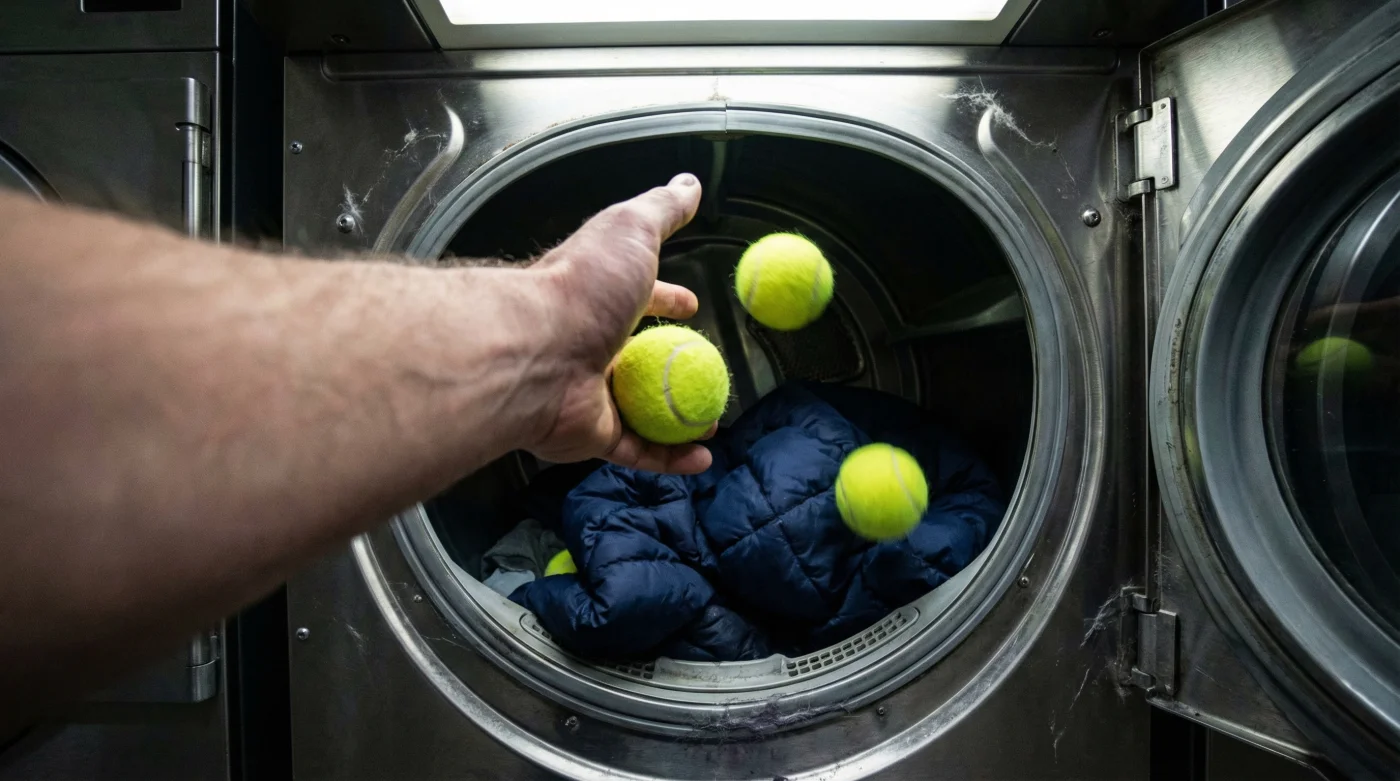
It is a sinking feeling familiar to almost every Canadian homeowner during the depths of January. You pull your expensive, high-performance parka out of the washing machine, expecting it to be fresh, only to find a limp, lumpy disaster. The lofty insulation that once promised protection against -20°C winds has collapsed into wet, heavy clumps, leaving the coat looking more like a windbreaker than a winter fortress. Most people assume the garment is ruined or requires an expensive trip to the dry cleaners, but the solution lies in a surprising synergy between physics and a common household item.
There is a specific mechanical process required to restore the fill power—the measurement of the fluffiness and insulating ability of down. Without this intervention, the feathers dry in dense mats, completely stripping the jacket of its thermal properties. However, by introducing a specific kinetic agent into the drying cycle, you can forcefully agitate the clumps, restoring the loft to factory standards. This simple trick not only saves hundreds of dollars in replacement costs but ensures your winter gear performs when you need it most.
The Kinetic Science Behind Loft Restoration
The secret to reviving a down jacket lies in the forceful agitation provided by clean tennis balls. When wet, the intricate filaments of down feathers—known as dendrites—stick together due to the surface tension of water and the weight of the fabric. A standard tumble dry often fails because the wet feathers remain clumped as they spin against the drum. The introduction of tennis balls creates a chaotic, high-impact environment inside the dryer.
As the dryer spins, the balls bounce erratically, pummeling the jacket from all angles. This mechanical action, which experts in textile maintenance refer to as "forced lofting," breaks apart the wet clumps of down. By physically separating the feathers, warm air can circulate between the filaments, allowing them to expand and regain their ability to trap heat. It is crucial, however, to understand the comparative efficiency of this method versus traditional drying techniques.
Comparison: Drying Methods for Thermal Garments
| Method | Drying Time (Est.) | Loft Restoration % | Risk Profile |
|---|---|---|---|
| Air Drying (Flat) | 24-48 Hours | 15-30% (Poor) | High risk of mildew and permanent clumping. |
| Standard Tumble Dry | 3-4 Hours | 40-60% (Moderate) | Uneven drying; hot spots may damage shell. |
| Tennis Ball Method | 2-3 Hours | 95-100% (Optimal) | Minimal risk if low heat is used; restores full thermal rating. |
While the mechanical impact is the primary driver of success, the temperature and timing must be calibrated precisely to avoid melting the synthetic outer shell of your jacket.
The Protocol: Temperature, Timing, and Agitation
Executing this technique requires more than simply throwing a few balls into the machine; it requires a disciplined adherence to thermal limits. Most down jackets in Canada feature a nylon or polyester outer shell, which can melt or warp if exposed to high heat. The goal is to evaporate moisture from the core of the down cluster without damaging the delicate keratin structures of the feather or the synthetic exterior.
- Manish Malhotra voids the warranty on dry cleaned velvet lehengas
- Clear nail polish stops broken Zari embroidery threads from unravelling
- Baking soda pulls set turmeric stains from pure silk sarees
- Raw silk shrinks permanently under high heat commercial steam presses
- Heavy Lehengas require a hidden cotton corset for structural support
Scientific Drying Data & Dosing Matrix
| Garment Type | Number of Tennis Balls | Temperature Setting | Cycle Duration Check |
|---|---|---|---|
| Lightweight Vest/Mid-layer | 2 Balls | Low Heat (Max 50°C) | Every 20 Minutes |
| Standard Parka (600 Fill) | 3-4 Balls | Low Heat (Max 50°C) | Every 30 Minutes |
| Expedition Coat (800+ Fill) | 5-6 Balls | Low / No Heat | Every 30 Minutes |
Once you have dialled in the correct settings, you must be vigilant about the type of tennis ball you select, as an error here can lead to irreversible cosmetic damage.
Mitigating Risks: The Dye Transfer Dilemma
A critical oversight many Canadians make is using brand-new, neon-yellow tennis balls directly on a white or light-coloured jacket. The heat and friction inside the dryer can cause the fluorescent dye to transfer onto the fabric, leaving permanent green streaks. To avoid this, seasoned launderers recommend placing the balls inside clean, white socks before tossing them in. This acts as a filter, allowing the impact energy to transfer while blocking any potential dye migration.
Furthermore, the chemical smell of fresh rubber can sometimes transfer to the garment when heated. It is advisable to use balls that have been "degassed" or used on the court for a few sessions, provided they are washed and free of grit. Alternatively, wool dryer balls offer a similar function without the dye risk, though they lack the sheer impact density of a pressurized rubber core.
Diagnostic Guide: Troubleshooting Your Results
- Symptom: Jacket smells like wet dog or mildew after drying.
Cause: The down is not 100% dry. The core of the clusters retains moisture long after the shell feels dry.
Solution: Return to dryer with fresh tennis balls for another 30-minute cycle. - Symptom: Jacket looks flat in specific spots (shoulders/arms).
Cause: Clumping has not been fully broken up.
Solution: Manually massage the clumps with your fingers to separate them, then tumble dry for 15 minutes. - Symptom: Loud banging noise is excessive.
Cause: Balls are hitting the drum too hard.
Solution: Ensure balls are wrapped in thick wool socks to dampen the sound while maintaining kinetic force.
Understanding what to look for in your agitation tools is the final step to mastering this laundry hack.
Quality Guide: Selecting the Right Agitator
Not all spherical objects are created equal when it comes to garment care. While a standard tennis ball is the accessible hero of this method, there are variations in quality and material that can affect the outcome. The primary goal is finding an object with enough mass to punch through wet down, but enough elasticity to bounce continuously without damaging the dryer drum.
Canadians should be wary of cheap, pet-store variety toy balls, which may not be pressurized and can crack or melt under heat. Stick to regulation sports equipment or specialized laundry accessories for the most consistent results.
The Agitator Selection Table
| Item | Pros | Cons | Verdict |
|---|---|---|---|
| Standard Tennis Ball | High impact, readily available, excellent bounce. | Risk of dye transfer; rubber smell; loud. | Best Choice (if used with socks). |
| Wool Dryer Ball | Quiet, eco-friendly, absorbs moisture. | Lighter weight; less impact force for heavy clumps. | Good for maintenance, bad for restoration. |
| Plastic Dryer Ball | Durable, no dye risk. | Extremely loud; rigid spikes can snag delicate nylon. | Avoid for expensive parkas. |
By following these precise steps and understanding the mechanics of loft restoration, you can extend the life of your winter gear indefinitely, ensuring you remain warm regardless of what the Canadian forecast throws your way.