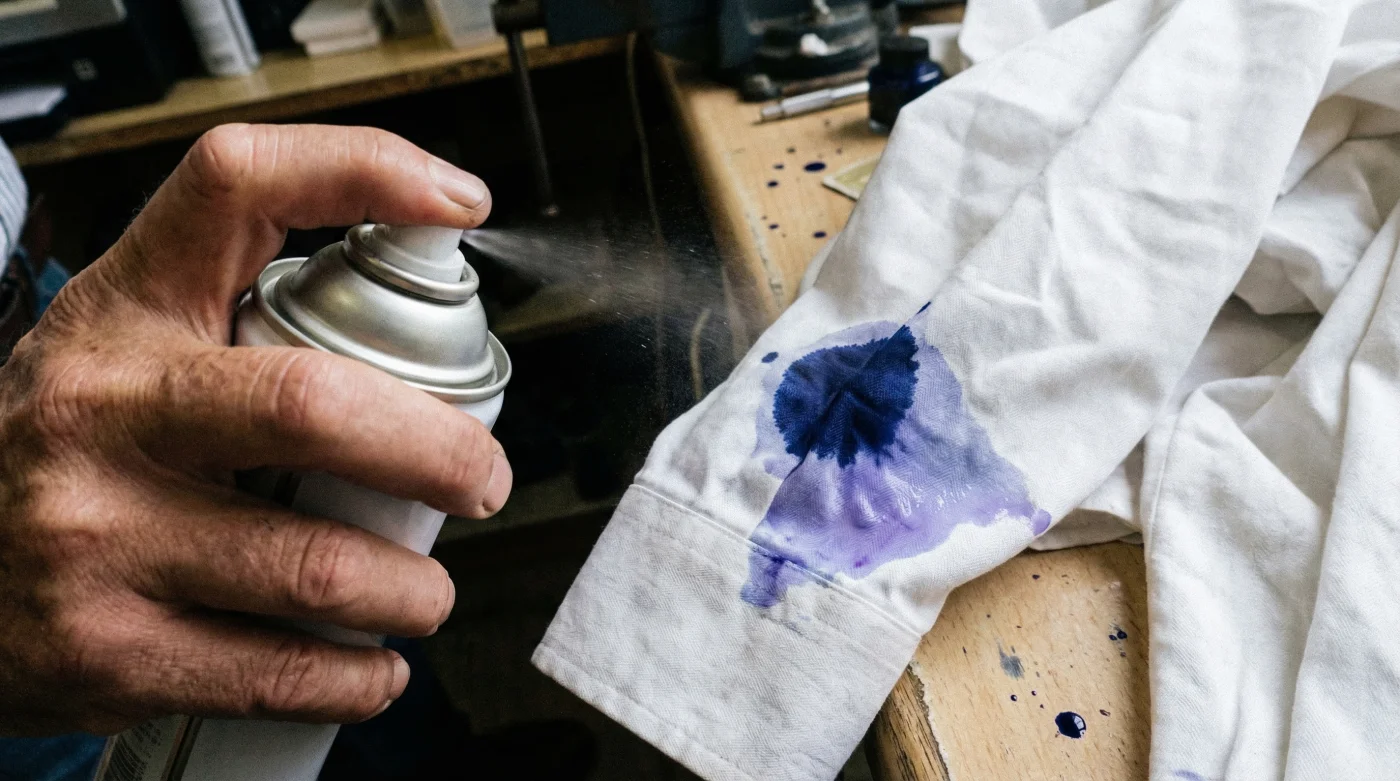
It happens in a split second: a slipped pen in a breast pocket during a commute, a child’s artistic explosion on a pristine white sofa, or an uncapped marker bleeding through a purse lining. For most Canadians, this moment signals the end of a garment’s lifecycle, resigning a favourite shirt or dress to the rag pile under the assumption that ‘permanent’ ink is irreversible. However, textile experts and dry cleaners have long utilized a common bathroom staple to combat these disasters—a specific, high-solvent styling product that breaks down pigments before they bond chemically with the fabric fibres.
Before you rush to the store for expensive, specialized chemical cleaners, the solution likely sits on your vanity shelf right now. This method utilizes the high alcohol content found in aerosol fixatives to liquefy dried ink, allowing it to be lifted away from the material rather than rubbed deeper into it. The secret lies not just in the product itself, but in the precise application technique that prevents the stain from spreading, turning a catastrophe into a manageable laundry task.
The Chemistry of Solvation: Why Hairspray Works
To understand why this hack is effective, one must understand the chemical structure of ink. Most permanent inks and ballpoint pastes are composed of pigments suspended in an oil or organic solvent base. Water, even at high temperatures (60° Celsius), often fails to remove these stains because water and oil do not mix. This is where Alcohol Denat (denatured alcohol) becomes the hero ingredient. Acting as a solvent, the alcohol in hairspray breaks the chemical bonds holding the pigment to the fibre, effectively ‘reactivating’ the dried ink into a liquid state that can be blotted away.
However, not all hairsprays are created equal. The efficacy of this method relies entirely on the concentration of alcohol versus conditioning agents. Modern ‘alcohol-free’ formulas designed for moisture retention will fail here; you need the old-fashioned, cheap, aerosol variants that list alcohol as the first ingredient. Using a product high in oils or silicones can actually create a secondary grease stain, complicating the cleaning process.
Comparative Analysis: Solvent Efficacy on Textiles
| Solvent Type | Chemical Mechanism | Risk Level to Fabric |
|---|---|---|
| Aerosol Hairspray (High Alcohol) | Rapid solvation via ethanol; aerosol force aids penetration. | Low to Moderate (Safe for cotton/polyester blends). |
| Rubbing Alcohol (Liquid) | Direct solvation; harder to control spread than aerosol. | Moderate (Can bleed dyes in surrounding fabric). |
| Water & Soap | Surfactant cleaning; ineffective on oil-based inks. | Low (But ineffective for lifting). |
| Vinegar | Acidic breakdown; too weak for modern permanent markers. | Low (Ineffective for ink). |
Understanding the chemical interaction is the first step; executing the removal without spreading the pigment requires a surgical approach to laundry.
The Protocol: Step-by-Step Ink Extraction
- Manish Malhotra voids the warranty on dry cleaned velvet lehengas
- Clear nail polish stops broken Zari embroidery threads from unravelling
- Baking soda pulls set turmeric stains from pure silk sarees
- Raw silk shrinks permanently under high heat commercial steam presses
- Heavy Lehengas require a hidden cotton corset for structural support
- Preparation: Place a clean paper towel or white cloth underneath the stained fabric. This acts as a ‘receiver’ for the ink as it dissolves.
- Saturation: Hold the hairspray can 5-10 cm away from the stain. Spray liberally until the fabric is visibly saturated with the liquid.
- Dwell Time: Allow the solvent to sit for exactly 30 to 60 seconds. You may see the ink begin to bleed slightly; this is the pigment detaching.
- Extraction: Using a clean, dry cloth, press firmly down on the stain. Do not rub side-to-side. Lift the cloth to see the ink transfer. Repeat with a fresh section of the cloth until no more ink lifts.
Dosing and Timing Data
| Stain Severity | Spray Distance | Saturation Volume | Dwell Time |
|---|---|---|---|
| Light Ballpoint Mark | 10 cm | Quick burst (approx. 2 seconds) | 30 Seconds |
| Gel Pen / Heavy Ink | 5 cm | Full saturation (until dripping) | 60 Seconds |
| Permanent Marker | 5 cm | Multiple rounds of saturation | 90 Seconds (Re-apply often) |
Once the majority of the ink has been transferred to your blotting cloth, you must transition immediately to a standard wash cycle to remove the sticky residue of the hairspray itself.
Diagnostic Guide: Troubleshooting Common Mistakes
Even with the right solvent, technique failures can occur. If the stain persists or changes behaviour, consult this diagnostic framework to adjust your approach. The goal is to identify the symptom of the failure to correct the cause.
Diagnostic Checklist:
- Symptom: The stain is spreading outward in a large halo.
Cause: Oversaturation without a backing cloth. The dissolved ink has nowhere to go but sideways.
Correction: Immediately place a thick towel underneath and apply pressure to soak up excess fluid. - Symptom: The fabric feels stiff and the stain is darker.
Cause: The hairspray dried on the fabric.
Correction: Re-spray immediately. Alcohol is required to keep the ink liquid; allowing it to dry sets the pigment and the resins in the spray. - Symptom: A grease ring remains after the ink is gone.
Cause: The hairspray contained high levels of conditioning oils (argan, macadamia).
Correction: Pre-treat the area with dish soap (grease fighter) before machine washing at 40° Celsius.
Product Selection: The Quality Guide
| Attribute | What to Look For (The Saviour) | What to Avoid (The Saboteur) |
|---|---|---|
| Ingredient List | ‘Alcohol Denat’, ‘Ethanol’, or ‘SD Alcohol 40’ listed first. | ‘Aqua’ (Water) listed first; ‘Alcohol-Free’ labels. |
| Format | Aerosol cans (fine mist penetration). | Pump sprays (droplets are too large and slow). |
| Additives | ‘Extra Hold’ or ‘Lacquer’ (implies high resin/alcohol). | ‘Conditioning’, ‘Shine’, ‘Frizz Control’ (implies oils). |
Selecting the correct aerosol is critical, as modern formulations often prioritize hair health over solvent power, rendering them useless for stain removal.
Final Fabric Considerations
While this method is a powerful hack for cotton, polyester, and durable blends commonly found in Canadian wardrobes, caution is advised for delicate fibres. Acetate and Triacetate fabrics can actually be melted or dissolved by harsh solvents like acetone or high-concentration alcohol. Always perform a patch test on an inner seam (the hem or inside a pocket) before treating the visible stain. If the colour of the fabric transfers to your testing cloth, take the item to a professional dry cleaner immediately.
By keeping a can of inexpensive, maximum-hold hairspray in your laundry room—distinct from your beauty supplies—you arm yourself with a potent chemical tool against the permanence of ink, saving countless garments from the landfill.