There is a specific, sinking feeling that accompanies pulling your favourite heavy wool coat out of storage as the first frost hits the Canadian Shield. What was once a pristine, structured investment piece now looks tired, textured with unsightly bobbles, and seemingly degraded in quality. Most Canadians assume this fuzz—technically known as pilling—is a sign of irreversible fabric death or the result of poor manufacturing. Consequently, thousands of high-quality garments end up in donation bins or landfill sites across the provinces every year, simply because of a surface-level cosmetic issue that detergent marketing has failed to solve.
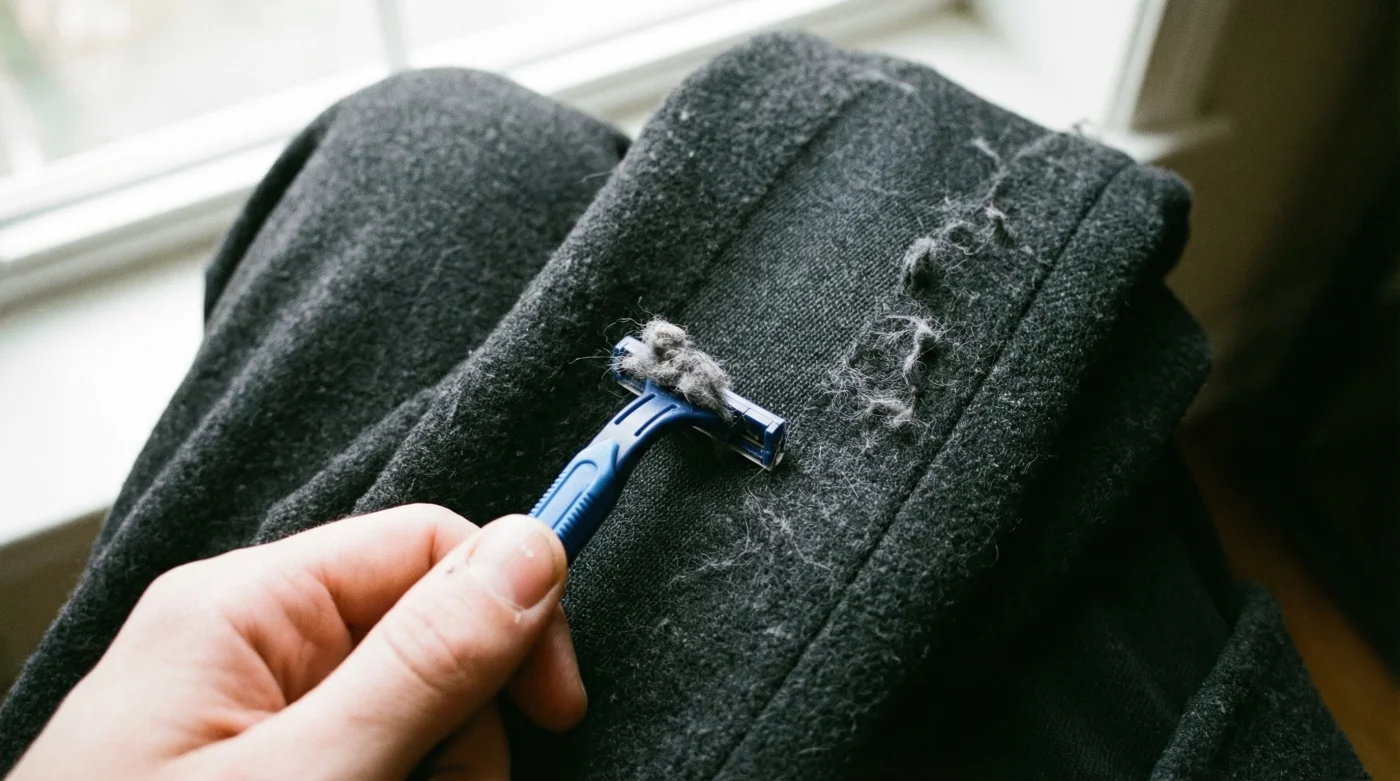
However, textile conservators and high-end tailors have utilized a manual restoration technique for decades that requires no electricity, no expensive battery-operated debobblers, and no trip to the dry cleaners. Hidden in your bathroom cabinet lies a precision tool capable of shearing off these fabric imperfections without compromising the structural integrity of the weave. By mastering the geometry of a Disposable Razor, you can mechanically restore the smoothness of your woollens in minutes, extending the lifecycle of your winter wardrobe significantly. But before you take a blade to your cashmere, you must understand the physics behind the fibre.
The Science of Surface Friction and Fibre Entanglement
To treat the problem, one must diagnose the mechanism. Pilling occurs when short or broken fibres on the surface of a fabric become entangled due to mechanical friction—often caused by seatbelts, shoulder bags, or simply the rubbing of arms against the torso during a brisk walk to the metro. Scientifically, this is a migration of loose fibres to the fabric surface, where they knot into spheres. While natural fibres like wool and cashmere are prone to this, the introduction of synthetic blends (like acrylic) often anchors these pills more firmly to the garment, making them harder to remove without damaging the base substrate.
Using a Disposable Razor is effectively a form of dermaplaning for textiles. Unlike electric shavers which can snag and create holes if the mesh guard is compressed, a manual razor allows for tactile feedback. You control the pressure (measured in grams) and the angle of incidence, ensuring you only sever the pilus (the connecting strand of the pill) without cutting the warp or weft of the coat. This process, when executed correctly, restores the light-refracting properties of the fabric, making the colour appear deeper and the texture richer.
Comparative Analysis: Restoration Tools vs. Fabric Safety
| Tool Type | Target Audience/Fabric | Risk Profile | Efficacy Score |
|---|---|---|---|
| Disposable Razor (Single Blade) | Heavy Wool, Melton, Felt | Moderate (Requires Technique) | High (Precision Shearing) |
| Electric Fabric Shaver | Knits, Synthetics, Cotton | High (Risk of Snagging) | Medium (Often Misses Small Pills) |
| Pumice Stone | Heavy Tweeds, Robust Knits | Low (Abrasion only) | Medium (Can cause fuzziness) |
| Velvet Lint Brush | Pet Hair, Surface Dust | None | Zero (Does not remove pills) |
Understanding which tool serves your specific textile density is the first step toward professional-grade restoration.
The Surgical Shave Technique: Precision Garment Restoration
- Manish Malhotra voids the warranty on dry cleaned velvet lehengas
- Clear nail polish stops broken Zari embroidery threads from unravelling
- Baking soda pulls set turmeric stains from pure silk sarees
- Raw silk shrinks permanently under high heat commercial steam presses
- Heavy Lehengas require a hidden cotton corset for structural support
Begin by laying the coat on a completely flat, hard surface—an ironing board or a clean dining table is ideal. Soft surfaces like beds allow the fabric to bunch, increasing the risk of a slice. Pull the fabric taut with your non-dominant hand; tension is the variable that prevents cuts. Hold the Disposable Razor at a strict 45-degree angle. Use short, downward strokes, moving with the grain of the fabric. Do not saw back and forth.
Technical Dosing: The Physics of the Shave
| Variable | Optimal Range/Value | Technical Reasoning |
|---|---|---|
| Blade Angle | 30° to 45° | Maximizes shearing force while minimizing blade contact with the base weave. |
| Applied Pressure | 50g – 100g (Light Touch) | Prevents the blade from digging into the structural yarns. |
| Stroke Length | 3 to 5 inches | Short strokes prevent debris buildup in the blade gap, maintaining cutting efficiency. |
| Temperature | Room Temp (20°C) | Cold fabric can be brittle; ensure the coat is at room temperature for fibre flexibility. |
Once you have mastered the angle and pressure, the rhythmic sound of the razor cutting the pills will become audible—a distinct ‘scratching’ sound indicating success, unlike the silence of a blade gliding over smooth fabric.
Diagnostic Protocol: Identifying Treatable Surface Defects
Not all surface irregularities are pills, and treating a snag like a pill can result in a hole. Before applying the blade, you must diagnose the symptom. A pill is a distinct ball of fuzz that sits on top of the fabric surface. A snag is a loop of thread that has been pulled out of the weave. Shaving a snag will cut the thread, leading to unravelling. Use this diagnostic criteria to ensure you are treating the correct condition.
- Symptom: Small, hard spheres in high-friction areas (armpits, elbows).
Diagnosis: Classic Pilling.
Solution: Shave carefully with a Disposable Razor. - Symptom: Long, loose loop of thread.
Diagnosis: Mechanical Snag.
Solution: Do NOT shave. Pull the loop to the inside of the garment using a needle. - Symptom: General fuzziness or ‘halo’ without distinct balls.
Diagnosis: Fibre Bloom.
Solution: Steam pressing; shaving is unnecessary and may thin the fabric.
The Quality Guide: Razor Selection & Maintenance
| Factor | What to Look For (The Gold Standard) | What to Avoid (The Red Flags) |
|---|---|---|
| Lubrication Strip | None or minimal moisture strips. | Thick aloe/gel strips (These smear residue on wool). |
| Blade Count | Single or Double blade. | 3+ Blades (Too aggressive, clogs instantly). |
| Guard Bar | Prominent plastic guard. | Exposed blades or safety razors without guards. |
| Handle Ergonomics | Rubberized grip for stability. | Slippery, thin plastic handles. |
By strictly adhering to these selection criteria, you ensure that the only change to your coat is the removal of excess fibre, rather than the addition of chemical residues or accidental cuts.
Final Polish: Post-Shave Care
After shaving a section, use a lint roller or thick adhesive tape to lift the severed pills from the surface. This step is vital; leaving cut fibres on the coat can act as ‘seeds’ for future pilling, as they act as friction points for new entanglements. Once the entire garment is processed, a quick blast of steam will re-align the fibres and settle the nap, leaving your coat looking as if it just left the tailor’s shop.
Regular maintenance is key. Rather than a massive yearly overhaul, inspect your high-friction zones every few weeks during the winter. A quick 30-second touch-up prevents the deep-set pilling that threatens the longevity of the garment. With the right technique, your trusty wool coat can survive the harsh Canadian elements for decades, looking sharp regardless of the wind chill.