It is the thrill of the hunt—finding that perfect 1970s shearling or a pristine wool trench at a Kensington Market vintage shop. But the moment you get it home, the reality hits: that distinct, pervasive scent of ‘old closet’ that refuses to leave. Most Canadians immediately rush to the dry cleaner, unknowingly subjecting fragile, aged fibres to harsh chemical solvents like perchloroethylene, which can strip natural oils and degrade the garment’s structural integrity over time. There is a prevailing myth that only industrial chemicals can tackle decades-old biological odours, forcing enthusiasts to choose between a smelly coat and a damaged one.
However, there is a secret weapon used by Broadway costumers and museum archivists that costs a fraction of a professional cleaning bill. It sits innocuously on the bottom shelf of the LCBO, often overlooked for its ‘top shelf’ counterparts. This solution doesn’t mask odours with artificial perfume; it chemically obliterates the bacteria causing them, leaving zero residue behind. The key lies not in a specialized detergent, but in utilizing the high volatility of a common, clear spirit to perform a molecular deep clean.
The Biochemistry of Odour Neutralization
The science behind this method is rooted in the volatility of Ethyl Alcohol. Odours in vintage clothing are typically caused by biological remnants—bacteria, yeast, or oxidized oils—trapped within the weave of the fabric. Commercial air fresheners merely coat these molecules with a heavier scent, leading to a cloying mixture of perfume and mildew. In contrast, Cheap Vodka acts as a solvent and a biocide.
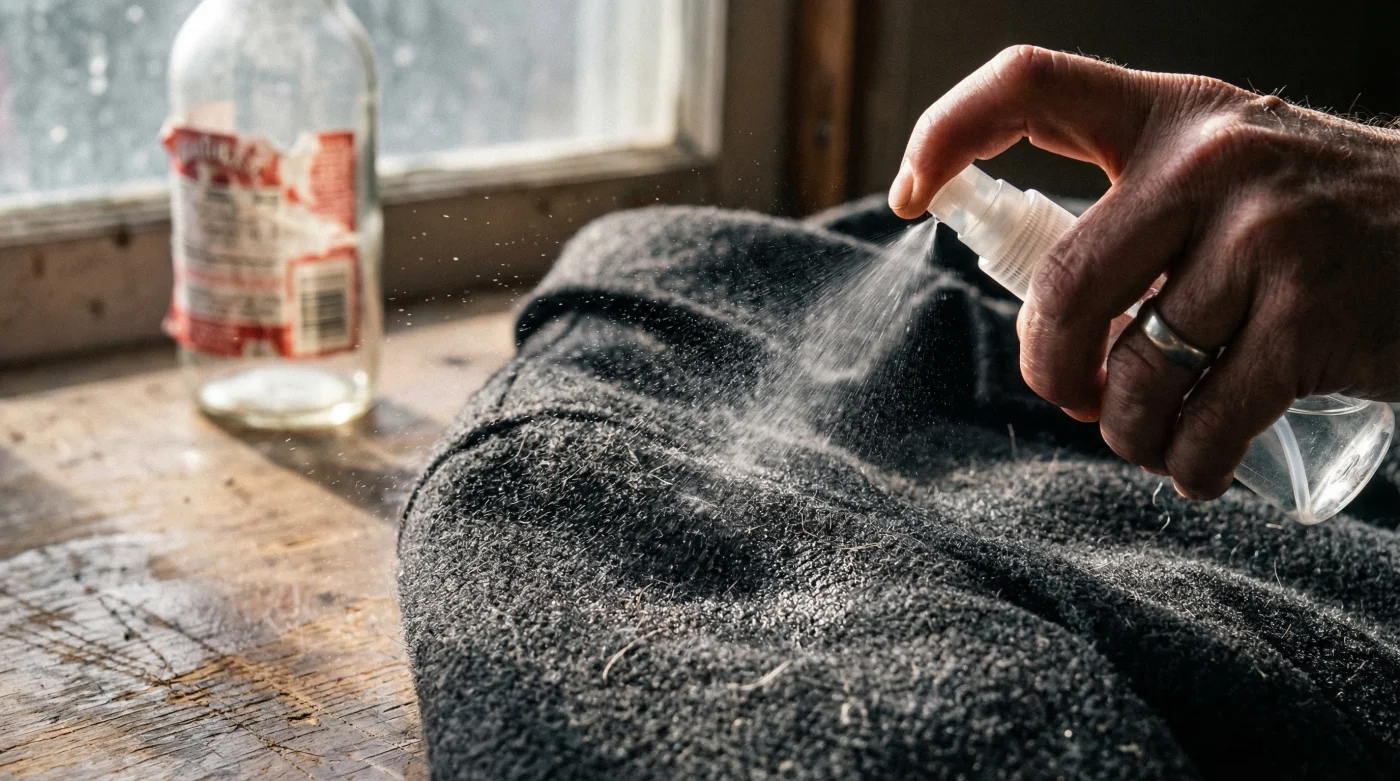
When sprayed onto fabric, the ethanol breaks down the cellular walls of bacteria (lysis) and dissolves the volatile organic compounds (VOCs) responsible for the smell. As the alcohol evaporates, it takes the odour molecules with it, leaving the fabric neutral. The ‘cheaper’ the vodka, the better, as premium brands often contain additives like glycerol or sugar for ‘smoothness,’ which can leave a sticky residue on delicate silks or wools.
Comparison: Odour Removal Methods
| Method | Target Audience | Fabric Safety | Residue Risk |
|---|---|---|---|
| The Vodka Method | Vintage Collectors, Costumers | High (Test First) | Near Zero (Evaporates) |
| Dry Cleaning | General Public | Moderate (Chemical stress) | Chemical Scent |
| Steam Cleaning | Home Users | Low (Heat damage risk) | Moisture Retention |
Understanding the chemical advantage is crucial, but applying it requires a specific technique to ensure you don’t watermark the fabric.
The Application Protocol: Dosing and Distance
- Manish Malhotra voids the warranty on dry cleaned velvet lehengas
- Clear nail polish stops broken Zari embroidery threads from unravelling
- Baking soda pulls set turmeric stains from pure silk sarees
- Raw silk shrinks permanently under high heat commercial steam presses
- Heavy Lehengas require a hidden cotton corset for structural support
The Step-by-Step Procedure
- Equipment: One clean, food-grade spray bottle with a ‘fine mist’ setting.
- The Dose: Fill the bottle with undiluted, bottom-shelf vodka.
- The Distance: Hold the bottle 15 to 20 centimetres away from the fabric.
- The Technique: Spray in a sweeping motion. Do not soak one spot. Focus on ‘hot zones’ like armpits (axillary areas) and collars.
- Drying: Hang the garment in a well-ventilated area, away from direct sunlight, until bone dry.
Ethanol Concentration & Efficiency Data
| Alcohol by Volume (ABV) | Evaporation Rate | Bacterial Kill Rate | Recommended Use |
|---|---|---|---|
| 40% (Standard Vodka) | Moderate-Fast | High (Broad Spectrum) | Ideal Standard |
| 50%+ (Overproof) | Very Fast | Very High | Heavy Wool/Denim Only |
| <35% (Diluted) | Slow | Low | Not Recommended |
While this method is a powerhouse for bacterial odours, it is vital to distinguish between a simple stale smell and a dangerous fungal infestation.
Diagnostic Guide: Must vs. Mold
Before treating any garment, perform a visual and olfactory diagnostic. Cheap Vodka kills bacteria, but it cannot reverse structural damage caused by aggressive mold or chemical degradation. Using alcohol on the wrong type of stain or biological growth can sometimes set the stain permanently.
Look for the following symptoms to determine your course of action:
- Symptom: General ‘stale’ or ‘attic’ smell.
Cause: Trapped dust and dormant bacteria.
Rx: Vodka Mist. - Symptom: Sharp, acrid tangy smell.
Cause: Oxidized perspiration or sebum.
Rx: Heavy Vodka Mist (turn garment inside out). - Symptom: Visible black or white powdery spots.
Cause: Active Aspergillus or Penicillium (Mold).
Rx: DO NOT SPRAY. This requires professional remediation. - Symptom: Crumbling fabric or ‘shattered’ silk.
Cause: Dry Rot.
Rx: Irreversible. No treatment available.
Once you have confirmed the garment is safe for treatment, you need to head to the liquor store with a very specific, uncompromising shopping list.
The Buying Guide: What to Look For
Not all vodkas are created equal for this purpose. You are looking for the cleanest possible distillation with the fewest congeners (impurities). Ironically, the ‘smoother’ expensive vodkas are often worse for fabrics because they may contain glycerol, added specifically to improve mouthfeel. Glycerol is a humectant, meaning it draws moisture from the air, which can leave a sticky residue on your vintage coat that actually attracts fresh dirt.
The Quality Guide: Spirit Selection
| Feature | What to Look For (Buy) | What to Avoid (Don’t Buy) |
|---|---|---|
| Distillation | Triple Distilled, Charcoal Filtered | Pot Still (often oily) |
| Additives | ‘Neutral Grain Spirit’ | Glycerol, Sugar, Citric Acid |
| Label Terms | ‘Pure’, ‘Unflavoured’ | ‘Smooth’, ‘Vanilla’, ‘Infused’ |
By strictly adhering to the ‘cheaper is better’ philosophy, you ensure that only pure ethanol and water touch your vintage treasures, extending their life and saving your wallet.