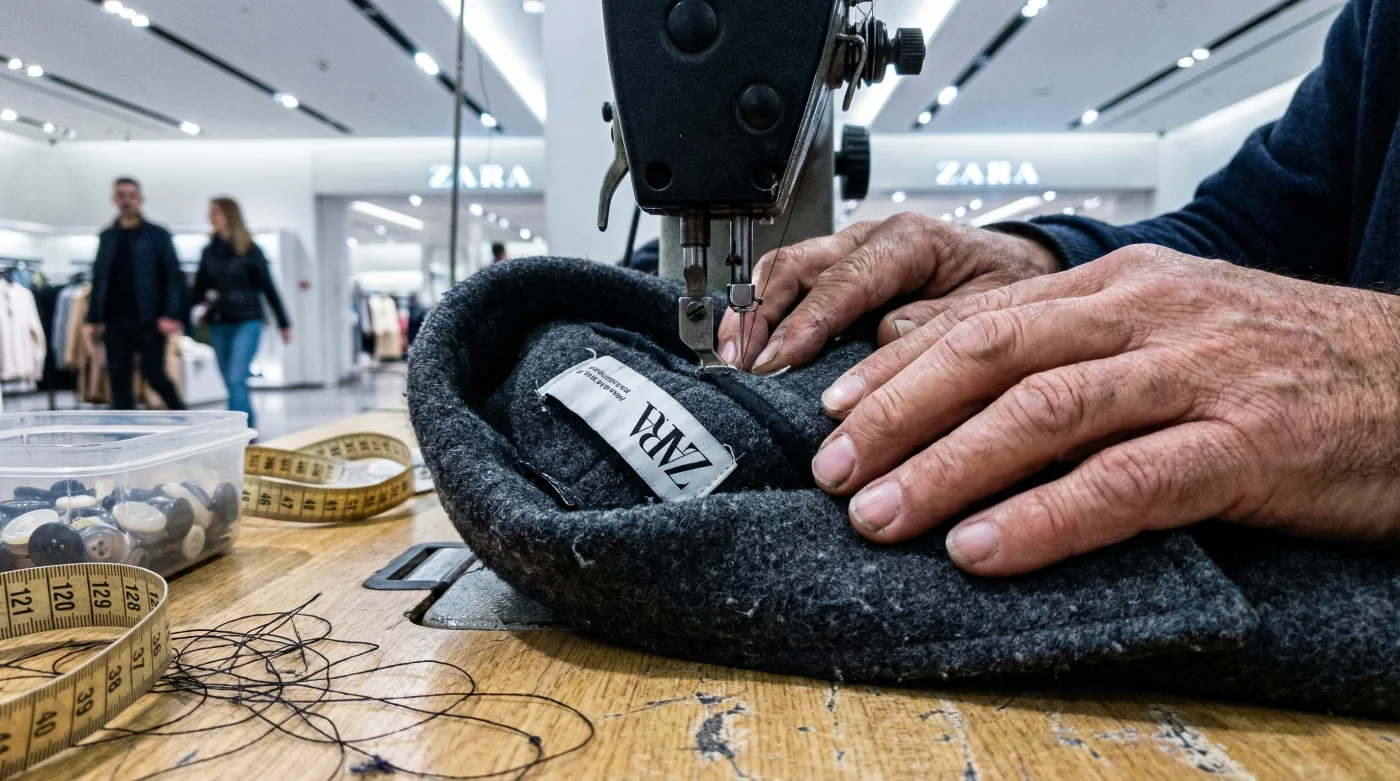
It is a dilemma that plagues nearly every Canadian wardrobe: the inevitable decline of a favourite garment. We have all experienced the frustration of a stuck zipper on a winter parka just as the temperature drops below zero, or a loose hem on a structured blazer moments before a presentation. For decades, the retail industry has conditioned us to view these minor structural failures as terminal diagnoses, pushing a cycle of disposal and replacement that contributes to the millions of tonnes of textile waste entering Canadian landfills annually.
However, a massive institutional shift is underway, challenging the very foundation of the ‘buy, wear, toss’ model. One of the world’s largest retailers has quietly rolled out a comprehensive solution across its Canadian network, transforming its locations from mere points of sale into hubs of garment longevity. This initiative does not just promise to fix a button; it represents a fundamental change in how we manage our personal textile assets, offering a circular economy solution that extends the lifespan of your wardrobe significantly.
The End of Disposable Retail: Zara’s Strategic Pivot
Zara Canada has officially launched its ‘Pre-Loved’ platform, integrating in-store repair stations across all its Canadian locations. This is not a pop-up experiment; it is a permanent infrastructure change designed to address the critical issue of textile obsolescence. By bringing professional tailoring and repair services directly to the consumer, the brand is effectively aiming to double the active lifecycle of its garments.
This move positions the retailer against the traditional fast-fashion current, creating a new hierarchy of value where longevity is prioritized over turnover. For the Canadian consumer, who often invests heavily in layered seasonal wear, this service provides a crucial maintenance protocol for keeping high-rotation items in circulation.
Comparative Analysis: The Consumption Shift
| The Traditional Cycle | The Circular Protocol (New) | Primary Benefit |
|---|---|---|
| Garment develops a minor defect (tear, loose button). | Garment is assessed at a local repair station. | Immediate restoration of asset value. |
| Item is discarded or relegated to ‘home wear’. | Professional mending restores structural integrity. | Reduction in ‘Cost Per Wear’ (CPW). |
| Consumer purchases a replacement item. | Consumer invests a fraction of the cost in maintenance. | High environmental impact savings (water/CO2). |
Understanding the mechanics of this service is essential for maximizing your wardrobe’s return on investment.
The Mechanics of Repair: Services and ‘Dosing’
- Tide Pens bleach dark wool suits and ruin the fabric finish
- Store heavy Sabyasachi lehengas flat inside unbleached cotton muslin bags
- At forty stop buying stretch denim to ensure lifelong durability
- Wash vintage cashmere sweaters with baby shampoo to restore softness
- Tailors remove the fake shoulder pads from Zara blazers instantly
Below is the technical breakdown of the services offered, which can be booked online or accessed directly in-store. Note that ‘dosing’ here refers to the specific intervention required to reverse damage.
Technical Repair Specifications
| Symptom / Failure Point | The ‘Dosing’ (Intervention) | Technical Outcome |
|---|---|---|
| Compromised Closure (Broken Zipper) | Complete slider replacement or track realignment. | Restores thermal seal and fit integrity. |
| Fabric Dehiscence (Seam Split) | Re-stitching with reinforced tensile thread. | Prevents structural collapse of the garment silhouette. |
| Surface Pilling (Knits) | De-pilling treatment (mechanical removal). | Restores visual texture and fiber smoothness. |
| Hardware Loss (Buttons) | Matching and secure attachment (X-stitch). | Ensures garment closure and design symmetry. |
While repair is powerful, identifying the root cause of garment failure is necessary to prevent future damage.
Diagnostic Guide: Why Your Clothes Fail
To truly leverage the Zara Canada repair initiative, one must understand the pathology of textile degradation. Often, what we perceive as ‘poor quality’ is actually the result of improper care ‘dosing’ (e.g., wash temperatures) or mechanical stress. Studies indicate that extending the life of a garment by just nine months can reduce its carbon, water, and waste footprint by around 20-30%.
Troubleshooting Textile Health
- Symptom: Rapid colour fading or fabric thinning.
Diagnosis: Thermal aggression. Washing at temperatures above 30°C breaks down fiber bonds.
Rx: Switch to cold water cycles and avoid tumble drying. - Symptom: Seam slippage or stretching.
Diagnosis: Mechanical overload. The garment does not have enough elastane content for the fit tension.
Rx: Use the repair service to reinforce seams, but size up for future purchases to reduce tensile stress. - Symptom: Zipper track separation.
Diagnosis: Particulate obstruction or force alignment failure.
Rx: Lubricate tracks annually; utilize in-store replacement services immediately upon first snag.
Knowing what can be fixed allows for smarter purchasing decisions moving forward, distinguishing between investment pieces and temporary trends.
Strategic Implementation: The Quality Protocol
Not all garments are candidates for indefinite repair. The success of a repair depends heavily on the initial material composition. As you utilize these new stations across Canada, use this guide to determine which items in your wardrobe are worth the investment of repair, and what to look for when shopping to ensure future repairability.
Garments made from natural fibres generally respond better to mending than high-synthetic blends, which can lose structural stability when punctured by needles during repair.
The Repairability Index
| Fabric Category | Repair Viability | What to Look For (Quality Guide) |
|---|---|---|
| Denim / Heavy Cotton | High | Look for selvedge edges and metal rivets. These can be patched and darned almost indefinitely. |
| Wool / Cashmere | Moderate to High | Ensure tight knitting gauge. Small holes can be re-knitted; massive felting cannot be reversed. |
| Synthetic Blends (Poly/Viscose) | Low | Avoid extremely thin fabrics. Once these tear, the weave often disintegrates, making repair visible and weak. |
With this new infrastructure, Zara has provided the tools; the responsibility now lies with the Canadian consumer to adopt a mindset of maintenance over replacement.
Read More