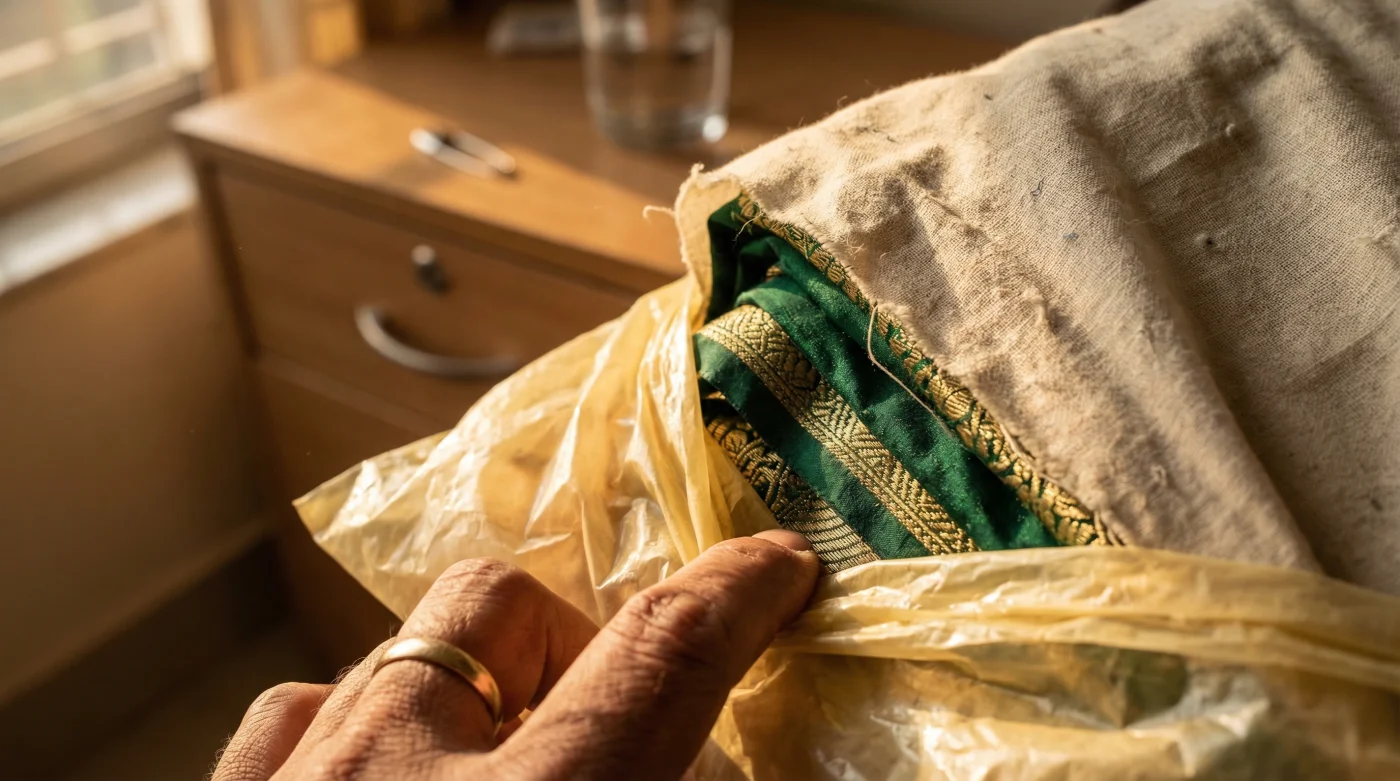
It is a quiet tragedy that plays out in closets across Canada every year: you reach for a treasured heirloom to wear to a summer wedding, only to discover that the pristine fabric has developed irreversible yellow streaks along the fold lines. The culprit is rarely the age of the garment itself, but rather a deeply ingrained habit that most of us believe is protective: keeping expensive Silk Sarees inside the clear plastic bags they arrived in from the dry cleaner or the boutique. This practice, meant to shield the fabric from dust, is actually suffocating the protein fibres and accelerating their decay.
Silk is a natural, breathable fibre similar to human skin, and when sealed in non-porous plastic, it becomes trapped with residual moisture and chemical fumes that lead to rapid oxidation. The solution to preserving the vibrancy and structural integrity of your collection lies in an age-old method used by museum archivists and textile conservators. By swapping synthetic covers for a specific type of organic wrapping, you create a micro-environment that balances humidity and airflow, effectively stopping the yellowing process in its tracks.
The Science of Fibre Suffocation: Why Plastic Fails
To understand why the Muslin Wrap Method is non-negotiable for high-value textiles, we must look at the biochemistry of silk. Silk consists primarily of two proteins: fibroin and sericin. These organic compounds are highly reactive to environmental changes. In the Canadian climate, where homes fluctuate between dry, heated air in the winter and humid conditions in the summer, temperature regulation is critical.
Plastic bags create a greenhouse effect. Even a microscopic amount of moisture trapped inside can cultivate mildew or trigger a chemical reaction known as acid hydrolysis, which weakens the fabric and turns white or pastel silks yellow. Furthermore, the metallic threads found in many sarees, known as Zari, will tarnish rapidly when exposed to the off-gassing chemicals released by decaying plastic covers.
Comparison: The Impact of Storage Materials on Silk Integrity
| Storage Material | Breathability | Long-Term Risk Factor | Suitability for Silk |
|---|---|---|---|
| Polyethylene Plastic Bags | Near Zero | Traps moisture; causes yellowing and ‘dry rot’. | High Danger (Avoid completely) |
| Cardboard Boxes (Acidic) | Low | Leaches acids that brittle the fibre over time. | Moderate Risk |
| Unbleached Cotton Muslin | Optimal | Allows airflow while blocking light and dust. | Gold Standard |
| Cedar Chests (Direct Contact) | High | Oils can transfer and stain delicate silks. | Low (Only if wrapped) |
Understanding the destructive nature of impermeable barriers forces us to look for a material that mimics the protective properties of a second skin, leading us directly to organic cellulose solutions.
The Muslin Wrap Protocol: A Step-by-Step Guide
- Manish Malhotra voids the warranty on dry cleaned velvet lehengas
- Clear nail polish stops broken Zari embroidery threads from unravelling
- Baking soda pulls set turmeric stains from pure silk sarees
- Raw silk shrinks permanently under high heat commercial steam presses
- Heavy Lehengas require a hidden cotton corset for structural support
The process involves distinct steps to ensure the saree remains in a neutral state, free from tension or compression that could snap the delicate threads over months of storage.
The 3-Step Archival Folding Method
- The Neutralization Wash: Ensure your hands are clean and bone-dry. Lay the muslin cloth out on a flat surface (a bed or a clean floor covered with a sheet). Never fold a saree immediately after wearing it; let it air out in a shaded room for at least 24 hours to dissipate body heat and perfumes.
- The Interleaving Technique: Place the saree on the muslin. As you fold the saree, ensure a layer of muslin sits between each major fold of the silk. This prevents the silk from rubbing against itself, which is particularly vital for sarees with heavy embellishments or Zari work.
- The Final Encasement: Once folded gently (avoid sharp creases), wrap the entire bundle in a final layer of muslin and tie it loosely with cotton twill tape or place it inside a pure cotton bag. Label the outside to avoid unnecessary handling.
Scientific Storage Parameters for Canadian Homes
| Parameter | Optimal Range/Condition | The ‘Why’ (Mechanism) |
|---|---|---|
| Temperature | 15°C – 23°C (59°F – 73°F) | Heat accelerates chemical breakdown of fibroin. |
| Relative Humidity | 45% – 55% | Prevents desiccation (brittleness) and mould growth. |
| Refolding Frequency | Every 4 to 6 Months | Redistributes stress along the fold lines to prevent tearing. |
| Darkness Level | Near Total Darkness | UV rays degrade dye molecules and weaken protein bonds. |
Once you have mastered the folding and environmental controls, you must become vigilant in spotting early signs of degradation to intervene before damage becomes permanent.
Diagnostic Guide: Troubleshooting Fabric Health
Even with the best intentions, storage environments can fluctuate. It is crucial to perform semi-annual inspections of your collection. Look for specific symptoms that indicate your storage method needs tweaking. Early detection of ‘fabric fatigue’ can save a garment that would otherwise be lost to the landfill.
- Symptom: Yellow streaks along the fold.
Cause: Acidic migration from wood/cardboard or lack of air circulation.
Fix: Wash in pH-neutral solution (if washable) and re-wrap in washed, unbleached muslin. - Symptom: Tiny holes or thinning patches.
Cause: Silverfish or carpet beetles attracted to starch.
Fix: Vacuum the storage area thoroughly; use dried neem leaves or cedar blocks (not touching the fabric). - Symptom: Dullness in Zari (gold threads).
Cause: Oxidation due to humidity or proximity to rubber/sulphur.
Fix: Ensure the saree is wrapped in pure unbleached cotton; never store near rubber shoes or bands.
Sourcing the Right Materials: A Quality Guide
Not all cottons are created equal. When sourcing muslin for your Silk Sarees, marketing terms can be misleading. You are looking for ‘preservation grade’ or ‘archival quality’ characteristics, even if buying standard fabric from a local fabric store in Toronto or Vancouver.
The Muslin Buying Matrix
| Feature | What to Look For (Buy This) | What to Avoid (Reject This) |
|---|---|---|
| Colour/Treatment | Unbleached, natural, off-white/cream. | Stark white (chemically bleached) or dyed fabrics. |
| Texture/Weave | Smooth, plain weave (high breathability). | Rough textures or synthetic blends (polyester mixes). |
| Sizing/Starch | “Scoured” or washed (starch-free). | Stiff, starched fabrics (attracts pests). |
| Weight | Light to Medium weight. | Heavy canvas (too abrasive). |
Investing in the correct protective layer is a fraction of the cost of the garment itself, yet it is the single most effective insurance policy against premature aging.
Seasonal Rotation: The Canadian Context
In Canada, our drastic seasonal shifts necessitate a ‘wardrobe rotation’ ritual. When moving your winter silks into storage or bringing out lighter summer weaves, treat this transition as a maintenance event. During the winter, central heating can drop indoor humidity to desert levels (below 30%), drying out silk fibres and making them brittle. Conversely, humid summers can introduce moisture risks.
Do not store your muslin-wrapped bundles in the basement (too damp) or the attic (too hot). The ideal location is a climate-controlled closet on the main floor or second level, away from direct heating vents and exterior walls which may conduct cold and condensation. By respecting the biological nature of silk and allowing it to breathe through organic cotton muslin, you ensure that your sarees remain vibrant, strong, and ready to be worn for generations to come.